Picture books for upper elementary students belong in your classroom, and I’ll happily make the case to anyone who asks. A while back, I overheard teachers debating whether picture books were appropriate for 5th and 6th grade. I held my tongue then, but I don’t have to here: yes, use picture books! Here’s why they’re complex enough for older students, and four reasons they make great mentor texts in grades 3-6.

This post contains affiliate links to books on Amazon. As an Amazon Associate, I earn from qualifying purchases, at no extra cost to you.
This is the question I hear most, and my answer is always yes. A text’s complexity is about much more than its level (whether that’s a Lexile measure, an AR level, or a guided reading level). Text complexity is usually measured three ways:
When I led a staff development session on text complexity, I used a s’mores graphic I found on Pinterest. Teachers came up with their own reasons for each layer. The graham crackers are the reader and task, because they’re the foundation that holds everything together. The marshmallow is qualitative, because it’s fluffy and changes shape, like all the things you can’t measure. The chocolate is quantitative, because it’s solid and fits right on the graham cracker.

Picture books are a lot like Disney and Pixar movies. A kindergartner enjoys the story, while a ten-year-old picks up on themes the little ones miss, the same way adults laugh at jokes that go over kids’ heads.
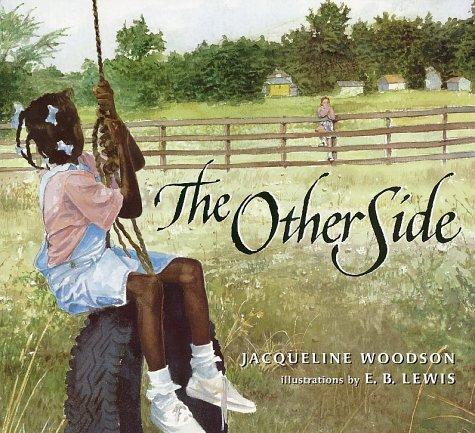
The Other Side by Jacqueline Woodson, illustrated by E. B. Lewis
Get the book on AmazonThe Other Side is a great example. Its Lexile measure is in the primary range, so if you went strictly by the number, you might skip it for upper grades. But how many six-year-olds would pick up on the fence as a metaphor? The book opens deep conversations about segregation that older students are ready for.
You, the teacher, are one of the biggest factors in a text’s complexity. You can raise the rigor of any picture book by asking the right questions.
Text-dependent questions keep students in the text, so they prove their answers with evidence instead of personal connections. I share question stems and an anchor chart for this in my text dependent questions post.
Go deeperInteractive read-alouds build this thinking into every read. My Interactive Read-Aloud mini-course shows the what, why, and how.
I also kept a books of the month shelf in my 4th grade classroom, filled with seasonal picture books. All of my students, my strongest and my most reluctant readers, loved visiting that shelf.
For personal narrative
For figurative language and sensory details
For social studies and science
That’s exactly why I created Better Than Basal: reading activities and writing prompts that get several standards out of the picture books you already read aloud. For grades 3-5, choose from Volume 1 (40 read alouds), Volume 2 (30), Volume 3 (40), Nonfiction (10), and Celebrating Diversity (10).


Want more ideas like these? Find resources by grade and topic.
