These mentor sentences fit grammar into the Gail Gibbons activities you already use in science, with six lessons built on her nonfiction books about space, animals, and weather. Students study one sentence from books like Stargazers, Bats, and Tornadoes!, then use the same skill in their own writing, from complex sentences and prepositional phrases to relative adverbs.
Teach each lesson the week you read the book aloud, so students get a second look at the science while they work on the grammar.
Each day, students spend 10 to 15 minutes with the same sentence, working with it in a new way: noticing, labeling, revising, and writing their own. I’ve already done the thinking for every day, right down to sample revisions and imitations, so you can open the lesson plan and go!
The books are not included. I chose favorite read-alouds that most school libraries already have.
How the mentor sentence routine works:
1
Notice: students read the sentence and talk about what they notice. Your lesson plan lists what to look for.
2
Label: students label the parts of the sentence, with the week’s focus skill front and center.
3
Revise: students revise the sentence, and the lesson plan gives you a sample revision.
4
Imitate: students write their own sentence in the author’s style and structure, with a sample in the lesson plan.
5
Quiz: a short assessment with editing practice shows you which skills to bring back.
What’s included:
6 mentor sentence lessons, one for each book, and each one includes:
A teacher sentence page to display
A student sentence page to glue into notebooks
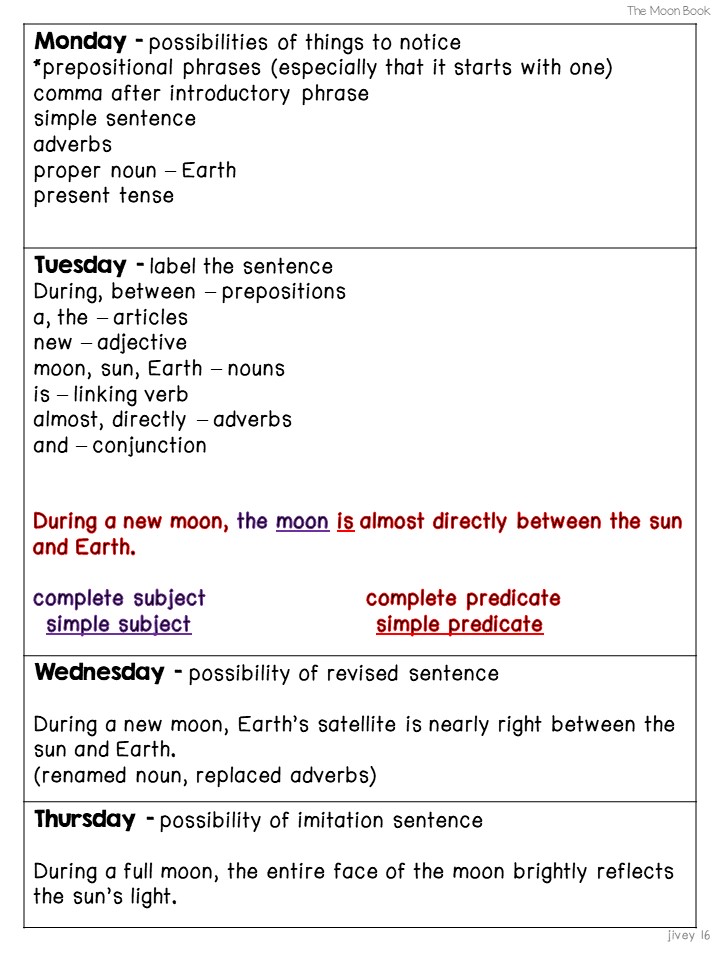
A lesson plan page with ideas and answers for all four days of the routine
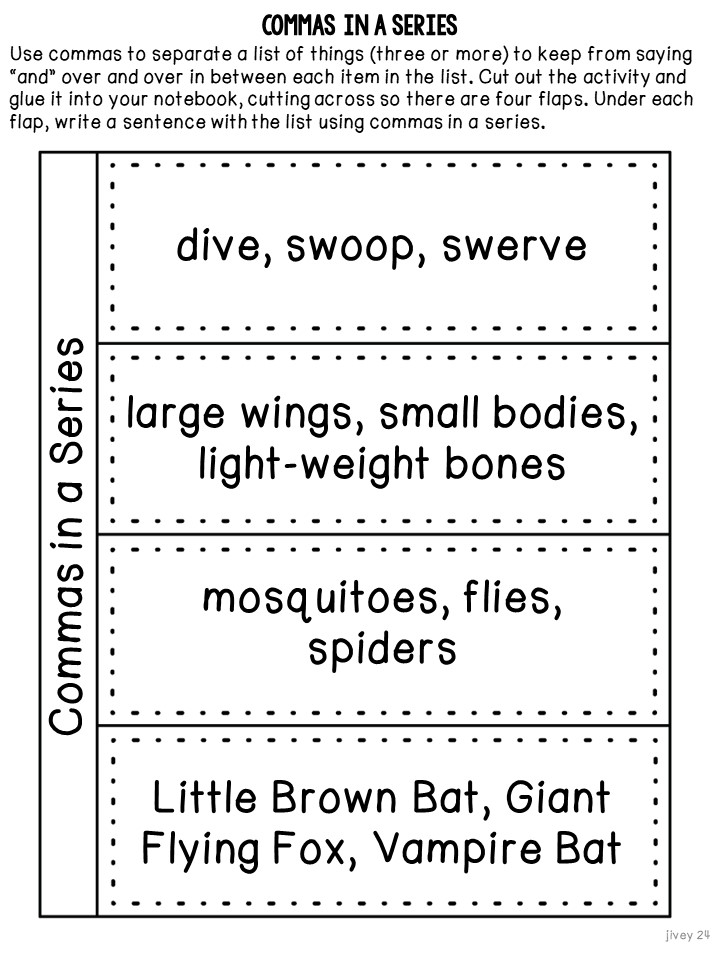
An interactive notebook activity for the focus skill
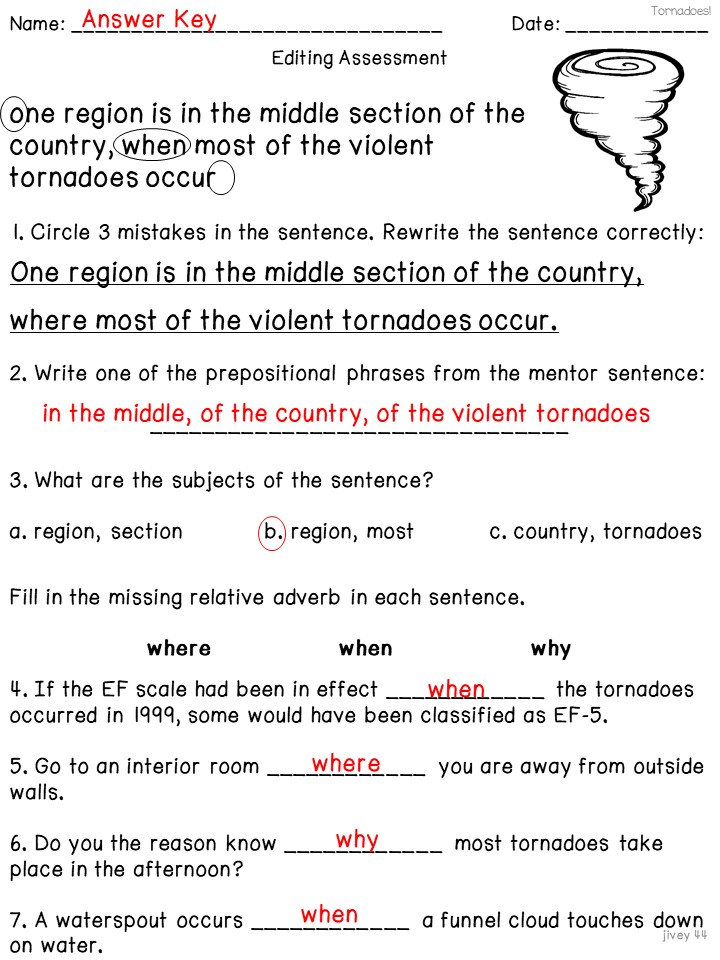
A quiz with editing practice and an answer key
Books and grammar skills:
Stargazers: complex sentences
The Moon Book: prepositional phrases
Bats: commas in a series, with versions with and without the Oxford comma
Spiders: compound predicates with vivid verbs
Tornadoes!: relative adverbs
Hurricanes!: comparative and superlative adjectives
Why use mentor sentences for grammar?
Fix-the-sentence drills hand students a sentence full of mistakes. If they don’t already know the rule, they can’t spot the errors, and fixing someone else’s mistakes doesn’t show them what a strong sentence looks like. That’s why the practice so rarely shows up in their own writing.
Mentor sentences flip that! Each week starts with a model sentence from a published author, and students soak up the grammar by noticing it, talking about it, and trying it in a sentence of their own. They pick up craft along the way, too: figurative language, descriptive words and phrases, and sentence variety they can borrow for their own writing.
Research backs up teaching grammar in context instead of in isolation. A large review of writing studies for grades 4 to 12 found that grammar taught in isolation did not improve students’ writing (Graham and Perin, 2007).
The routine stays the same every week, so students of any ability know exactly what to expect. Each week focuses on one or two skills, but students also meet new and earlier skills in every sentence, and that spiral review keeps them in front of students all year!
This mini-unit doesn’t include the full introduction to the routine. That’s in Unit 1 of Volume 1, Volume 2, or Volume 3, with photos and day-by-day directions.