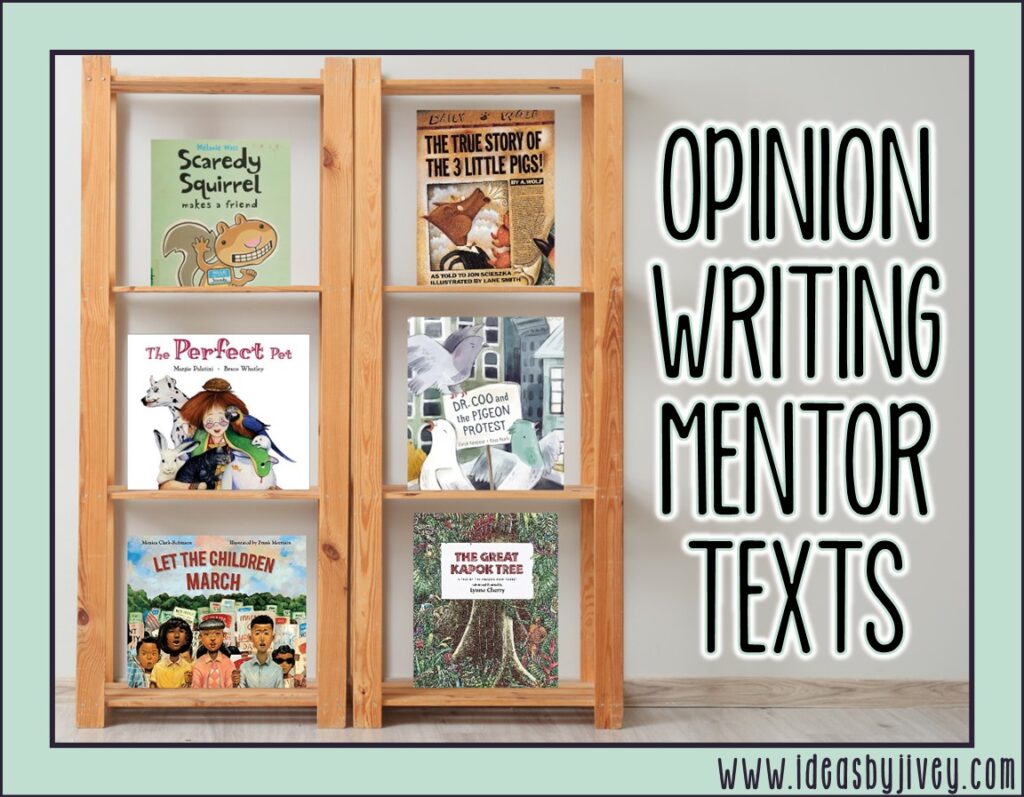
Opinion writing mentor texts give students a character to agree or disagree with before they ever write an opinion of their own. When I taught 4th grade, picture books did a lot of the heavy lifting: my students argued about whether a wolf was lying, decided what makes the perfect friend, and weighed whether a rainforest tree was worth more standing. Here are the books I lean on, the lesson I use with each, and how I got students forming opinions in the first place.
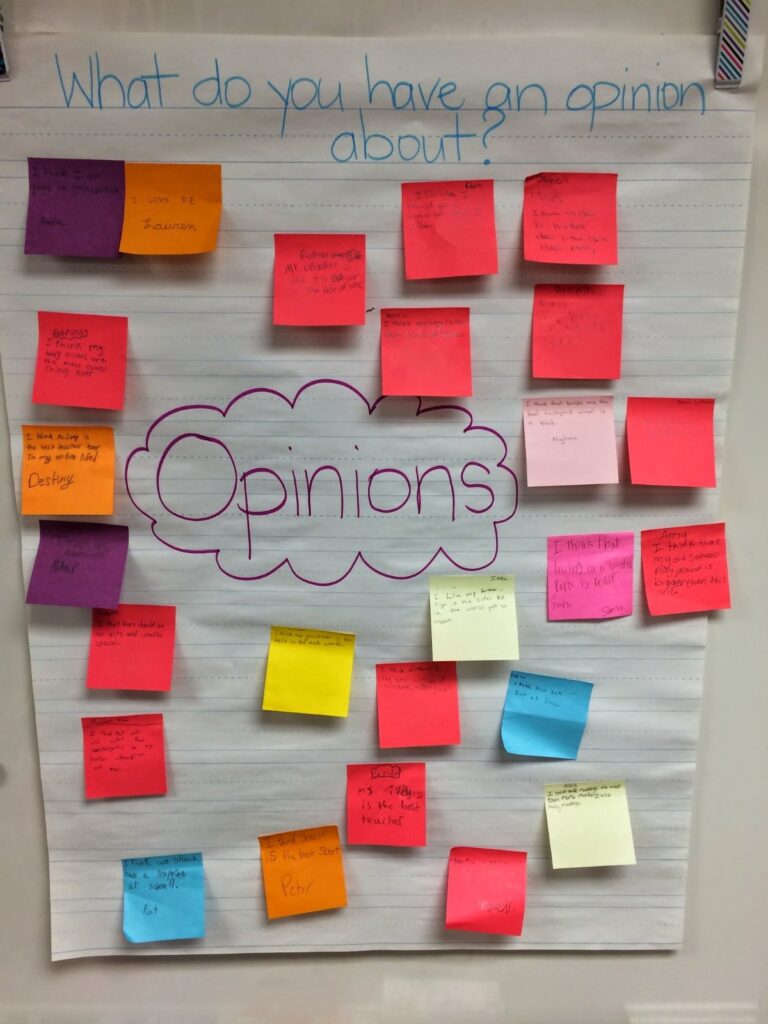
Kids never run out of opinions, so the first job is helping them notice they have them. I asked each student to write one sentence that showed an opinion on a sticky note, about anything at all. The notes ranged from “Ms. Ivey is the best teacher in the world!” to “My brother is the cutest kid, yet also the meanest.” I read them aloud, and the class gave a thumbs up or thumbs down to show whether each one really was an opinion.
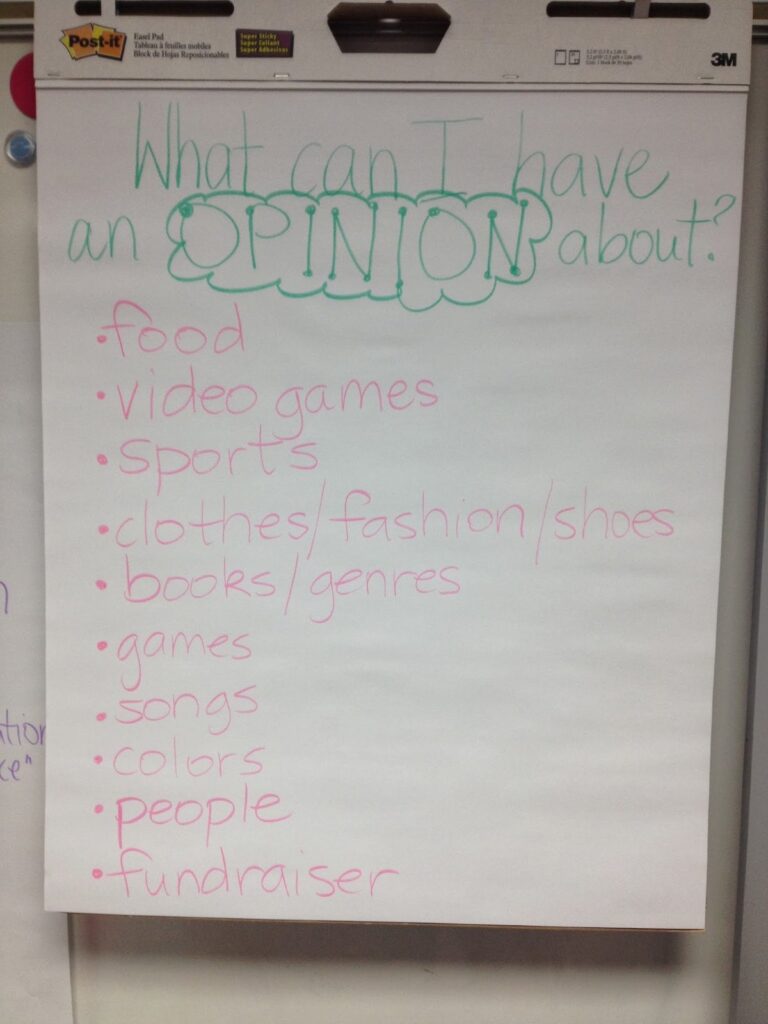
Another way to get them thinking is a chart of things we can have an opinion about. I made this one with my class, and my students suggested everything from video games to fashion to people.
The first written piece stayed small and familiar. We were studying weather in science, so students wrote one paragraph about their favorite type of weather. The organizer has a box to introduce the opinion, three boxes for a transition and a reason with details, and a box to restate the opinion a different way. Later, the same format grows into an introduction, three body paragraphs, and a conclusion.

Free organizer
My favorite type of weather opinion organizer: an opinion, three reasons with transitions, and a closing.
Get the organizerBefore students write, it helps to name the difference, because the line between the two is thin. Opinion writing shares a point of view: students take a stand, choose a side, and tell the reader why with supporting details. Persuasive writing takes it a step further. The writer still shares an opinion but also wants the reader to agree, so they use reasons, evidence, and answers to the other side to change the reader’s mind or get them to act.
Here’s the example I like. A student could write an opinion piece about a food they can’t stand and why. A persuasive piece would try to convince someone never to eat it again.
Quick checkOpinion: here’s what I think and why. Persuasive: here’s what I think, and here’s why you should think so too.
These opinion writing mentor texts are in the order I’d teach them, starting with books that make an opinion easy to spot and ending with texts students use as evidence.
This post contains affiliate links to books on Amazon. As an Amazon Associate, I earn from qualifying purchases, at no extra cost to you.
Scaredy Squirrel’s opinion changes over the course of the book, which makes it a great first mentor text. At first, he’s sure it’s better to be alone than to have a friend, because friends are probably germy biters. Then he decides a goldfish might be the perfect friend. By the end, he figures out that some friends aren’t biters at all (still a little germy and slobbery, though).
After we read, my students made a list of what makes the perfect friend in their opinion, then wrote about it. It was early in the year, so it doubled as a conversation about being a good friend.
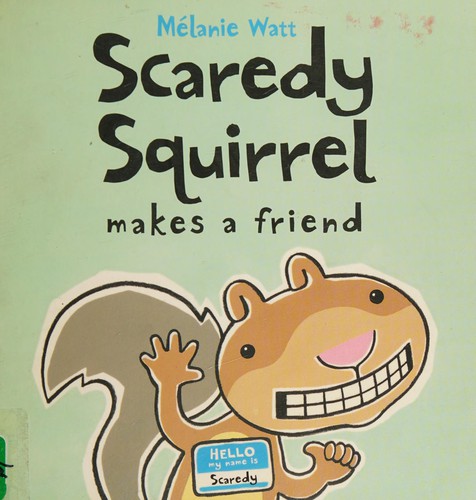
Scaredy Squirrel Makes a Friend by Mélanie Watt
Get the book on AmazonThe wolf tells “his side” of what happened to the three little pigs, and students decide whether he’s lying or telling the truth. The catch is that an opinion doesn’t mean much without evidence, so they have to prove it from the book.
I wrote up the full lesson, with student work and the free organizer, in my True Story of the Three Little Pigs activities post.
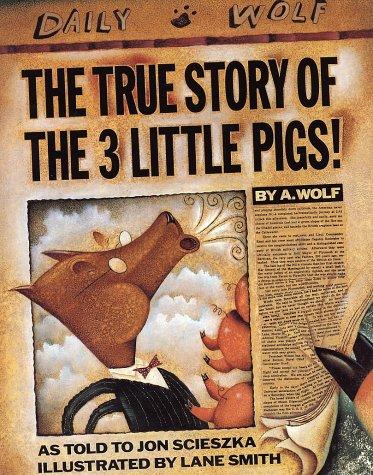
The True Story of the 3 Little Pigs! by Jon Scieszka, illustrated by Lane Smith
Get the book on AmazonElizabeth and her parents have very different opinions about what makes a good pet, so this book is perfect for a T-chart of each side and the reasons behind it. Elizabeth gives a reason for every pet she wants, but she never thinks about what her parents will say back. That makes it easy to show why answering the other side matters.
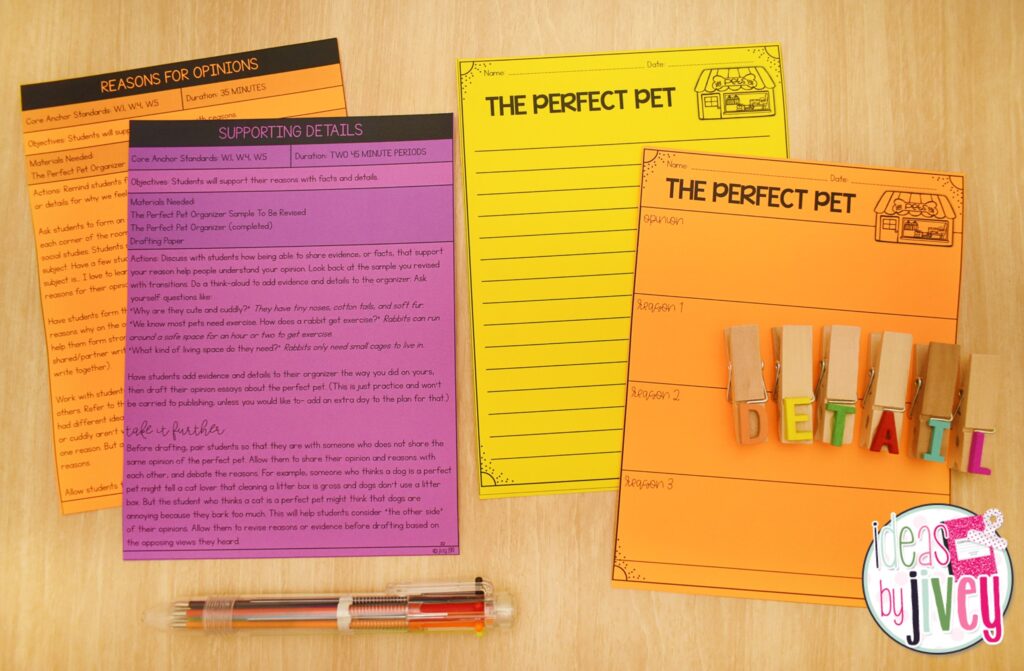
Students then plan their own opinion about the perfect pet. To warm up, I turn the room into four corners, one for each school subject. Students go to their favorite, and I keep asking “Why?” and “What else?” until the reasons come out. On the organizer, their reasons have to be different from each other. A pet that’s cute and a pet that’s cuddly are really the same reason.
The same organizer carries the next two lessons. First, students revise their reasons with transitions, so “The first reason is” becomes “First of all.” Then they add facts and details to each reason and draft. For a rabbit, “they’re cute and cuddly” turns into tiny noses, cotton tails, and soft fur.
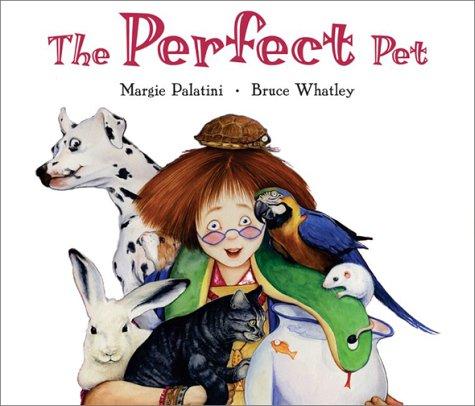
The Perfect Pet by Margie Palatini, illustrated by Bruce Whatley
Get the book on AmazonStrong opinions can turn into protests, and in this book the pigeons are the activists. They want to live alongside people and be respected. Students identify the reasons the pigeons feel disrespected, then look closely at the letter Dr. Coo delivers to the mayor to see how he persuades.
Then the book becomes a model for problem and solution. Dr. Coo finds a compromise that works for both sides, so students do the same. They brainstorm opinions people disagree about (“Some people believe ___, but I believe ___”), choose a problem, and outline an opinion essay that ends with a solution. The example in the lessons is about video games: playing too much can affect health and friendships, so the solution is time limits.
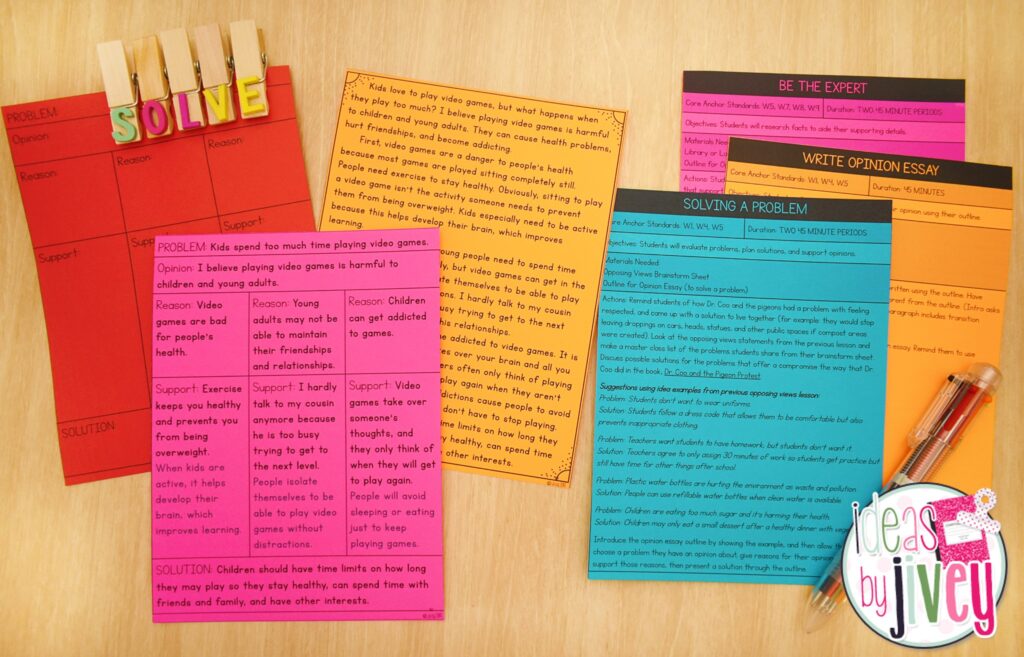
Next, students research their problem to add facts to their outline (I call that lesson Be the Expert), then write the essay.
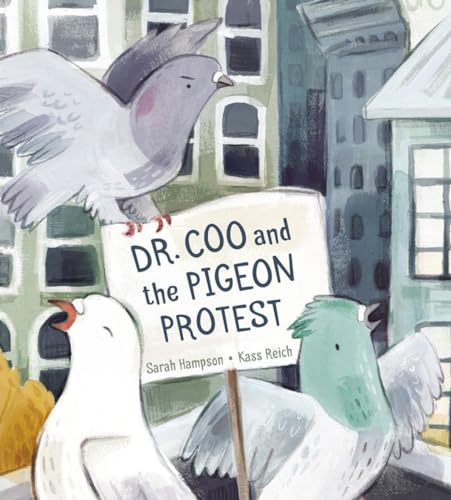
Dr. Coo and the Pigeon Protest by Sarah Hampson
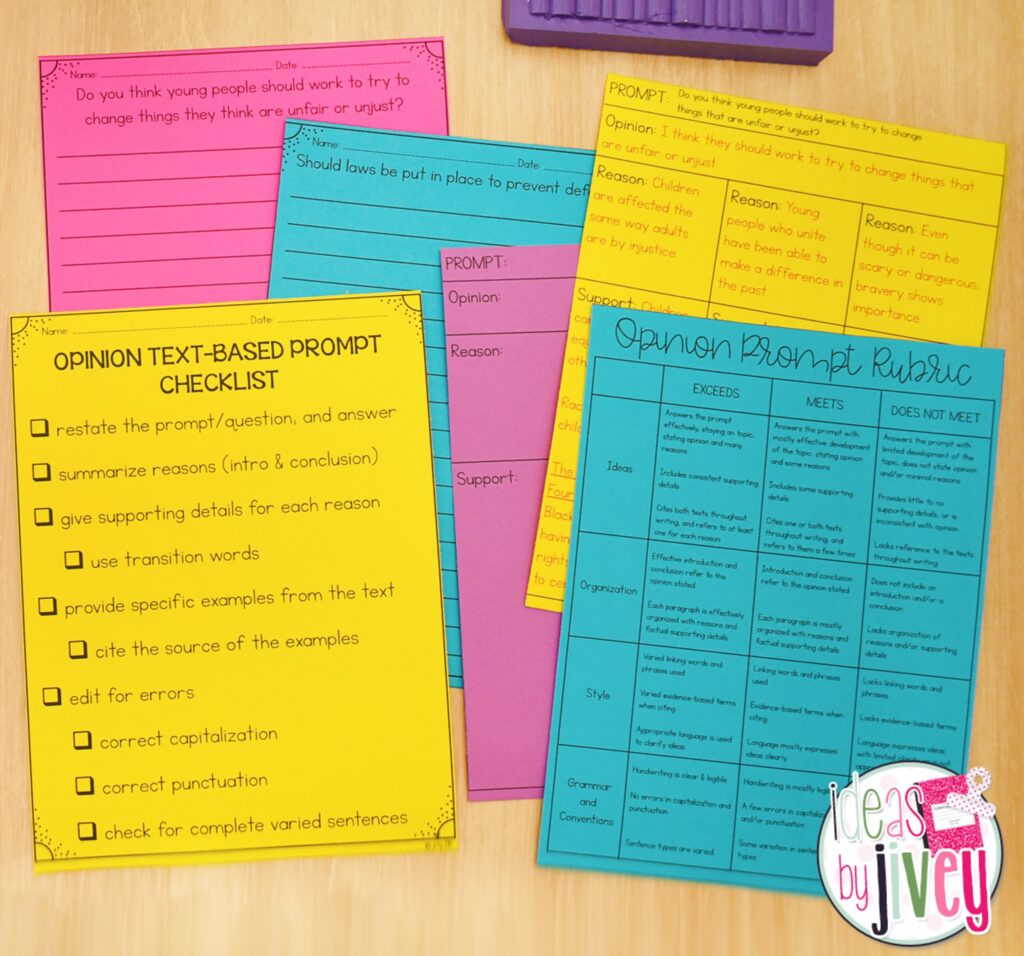
Get the book on AmazonNot every one of these opinion writing mentor texts is make-believe. This book tells the story of the children who really marched for civil rights in Birmingham in 1963. Paired with an article about the Greensboro Four, it anchors an example essay for a text-based prompt: Do you think young people should work to try to change things they think are unfair or unjust?
Before students see the checklist, they look for what the example essay does well. Most of the list comes from them: restate the prompt and answer it, summarize the reasons in the introduction and conclusion, give details for each reason, use transitions, and cite the source of each example. Then they work backward to outline the essay.
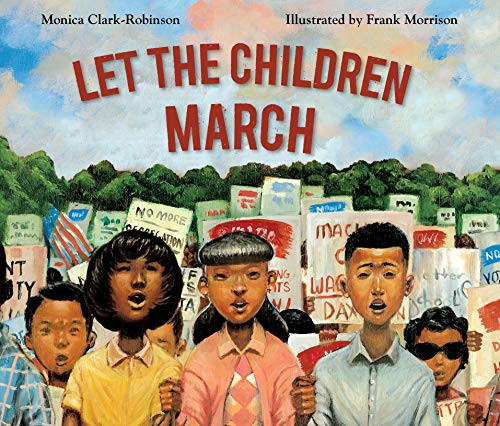
Let the Children March by Monica Clark-Robinson, illustrated by Frank Morrison
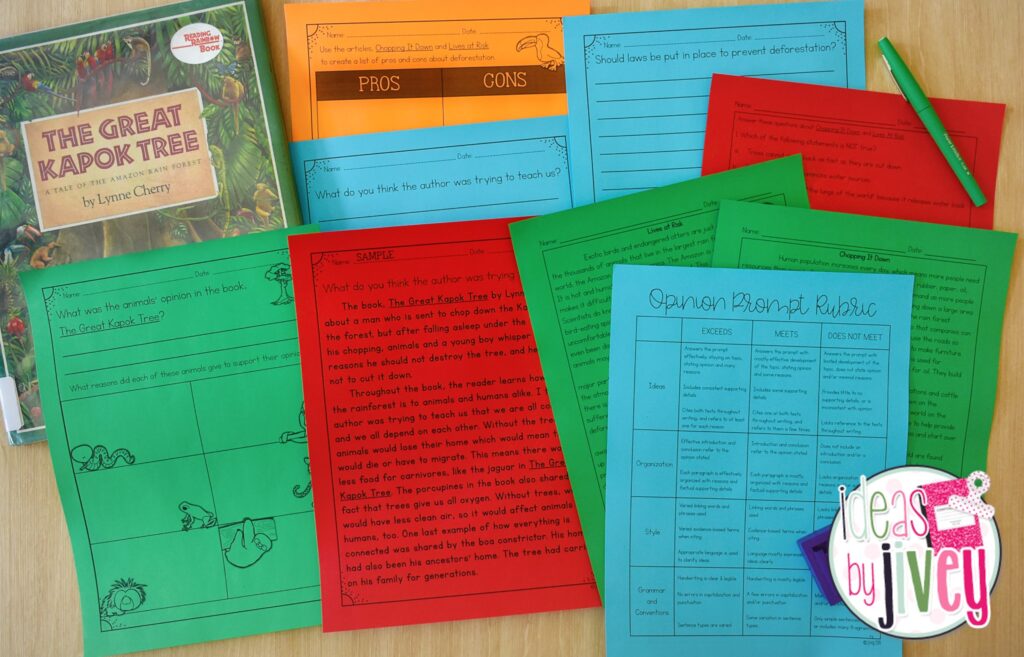
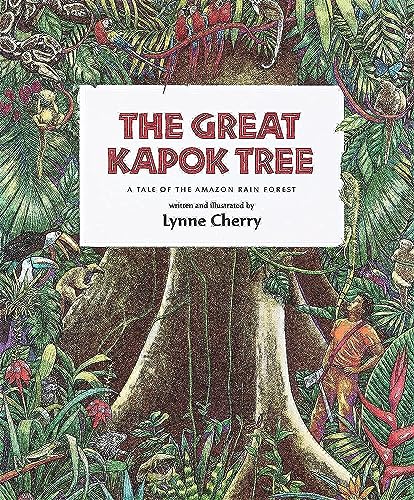
Get the book on AmazonA man sets out to cut down a giant kapok tree, falls asleep, and the rainforest animals take turns whispering their reasons he shouldn’t. Students identify each animal’s reason, then write about what they think the author was trying to teach us.
This book leads into the last text-based prompt. Students read two articles about the rainforest, “Chopping It Down” and “Lives at Risk,” make a pros and cons T-chart about deforestation, form their own opinion, and answer: Should laws be put in place to prevent deforestation? The rubric scores ideas, organization, style, and grammar and conventions.
The Great Kapok Tree by Lynne Cherry
Get the book on AmazonEvery lesson with these opinion writing mentor texts, from The Perfect Pet through The Great Kapok Tree, is in my Everything but the Books opinion writing unit for 4th and 5th grade. It has 29 lesson plans that take about three weeks, with mentor sentences from the books, articles, prompts, checklists, and rubrics. The books aren’t included. You can get it on its own or in the Everything but the Books bundle with my informational and narrative writing units.

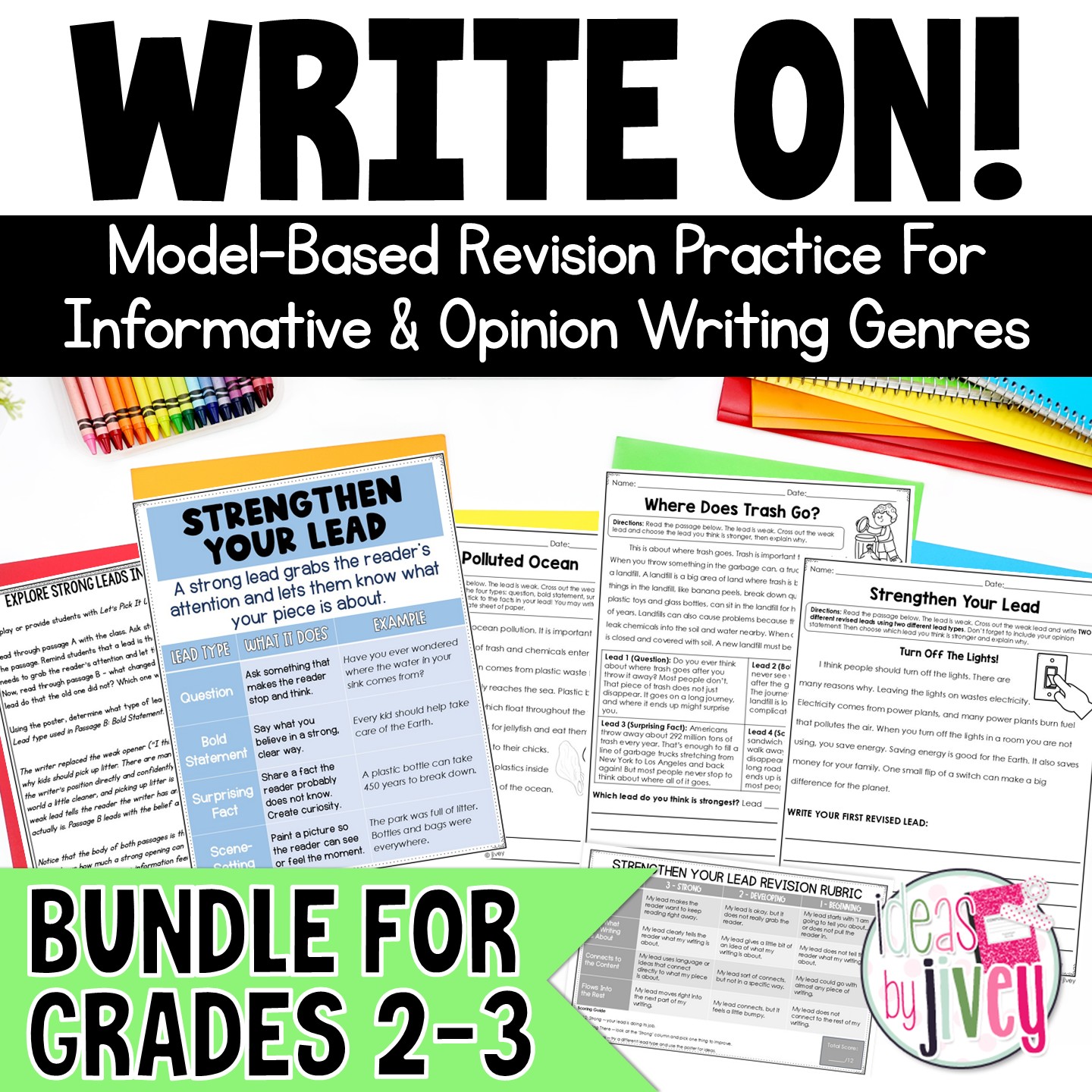
Once students have a draft, my Write On! revision mini-lessons for opinion and informational writing teach one revision move at a time, like writing a stronger hook or backing up a reason with proof. There’s a 4th-5th grade bundle and a 2nd-3rd grade bundle. For a closer look at hooks, see my post on opinion writing hooks.
Want to try persuasive writing with one mentor text first? My free mini-course walks you through a full week with I Wanna Iguana.

Free mini-course
Maximize your time with mentor texts
A week of reading, grammar, and writing lessons built around I Wanna Iguana, plus a planning template for getting more out of one mentor text. Students finish the week with a persuasive letter.