Read enough student papers, and you’ll start to notice the same opening line over and over: “This essay is about…” or “I think that…”
It doesn’t matter the topic or the student… that sentence (or a close cousin of it) shows up constantly. It’s not because those kids don’t have anything to say. They just don’t know yet that a lead is allowed to do more than announce the topic.
So how do you actually teach that?
Let me give you a hint… it’s not telling them to “make this more interesting!” in the margin of their writing piece.
That note doesn’t give a 9-year-old anything they can act on! What works is showing them, side by side, exactly what changes when a lead does its job: hooking the reader.
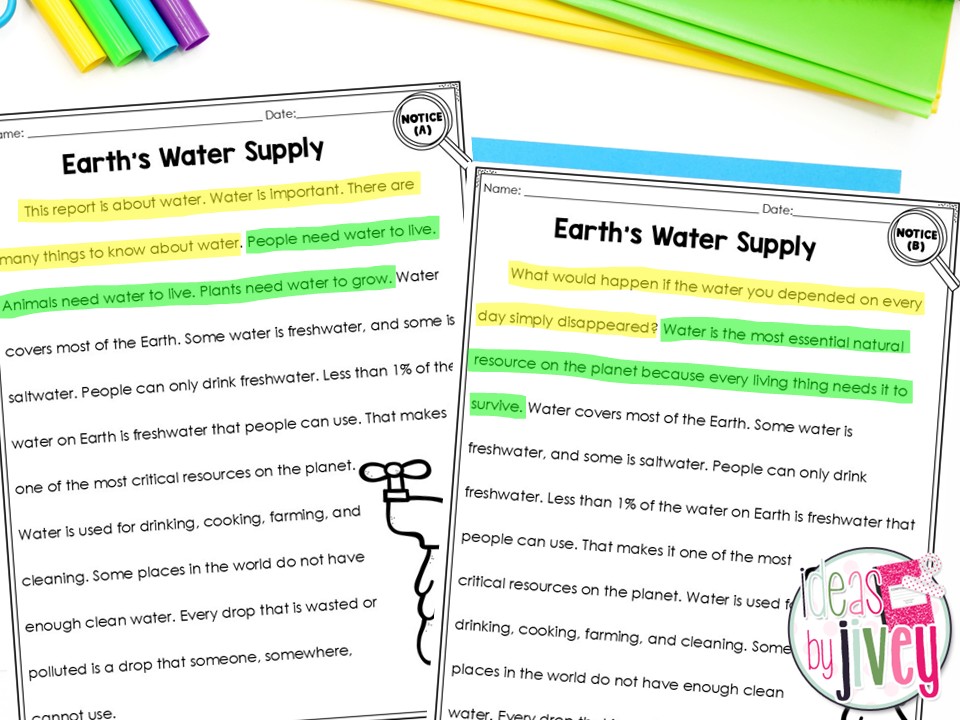
Don’t just tell them… show them! Compare two passages with everything identical EXCEPT for the opening lines.
Weak lead: “This report is about water. Water is important. There are many things to know about water.”
Strong lead: “What would happen if the water you depended on every day simply disappeared?”
Notice that the body of both passages is the same. Not one fact was added or taken away.
The only thing that changed was those first few sentences, which were added to create engagement and combine repetitive sentences, and yet the whole piece reads completely differently because of it.
That’s the moment you want students to notice on their own before you hand them a label for it.
Display both passages and just ask what’s different here, and what does the second one do that the first one doesn’t? Kids are surprisingly good at naming this once you point them at it directly.
This task works the same way whether you’re teaching leads for informational writing or opinion writing! The mechanics don’t change even though the content does.
Once students have noticed the difference for themselves, that’s when you can give them the vocabulary for it.
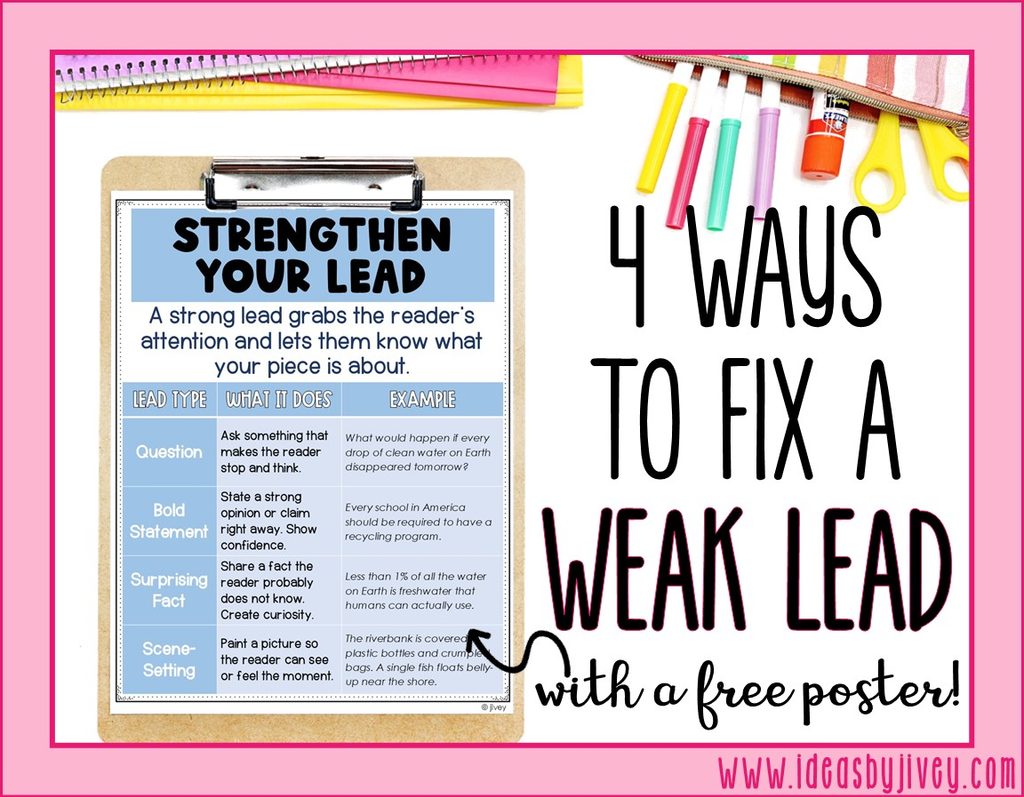
Here are four ways you can teach students to strengthen a lead:
QUESTION: ask something that makes the reader stop and think
BOLD STATEMENT: make a claim right from the jump
SURPRISING FACT: share something the reader probably doesn’t know
SCENE-SETTING: paint a picture the reader can see or feel
Try this tomorrow. Have students pull out something they’ve already written, any draft- it doesn’t have to be finished. Ask them to read just their first sentence and decide: does it grab the reader’s attention, or does it just announce the topic?
If it’s just announcing, that’s the paper to work with. Have them try out one of the strong leads. (Nothing else on the page needs to change yet.)
It doesn’t have to be an elaborate lesson! Getting them to notice when a lead could be stronger is the first step.
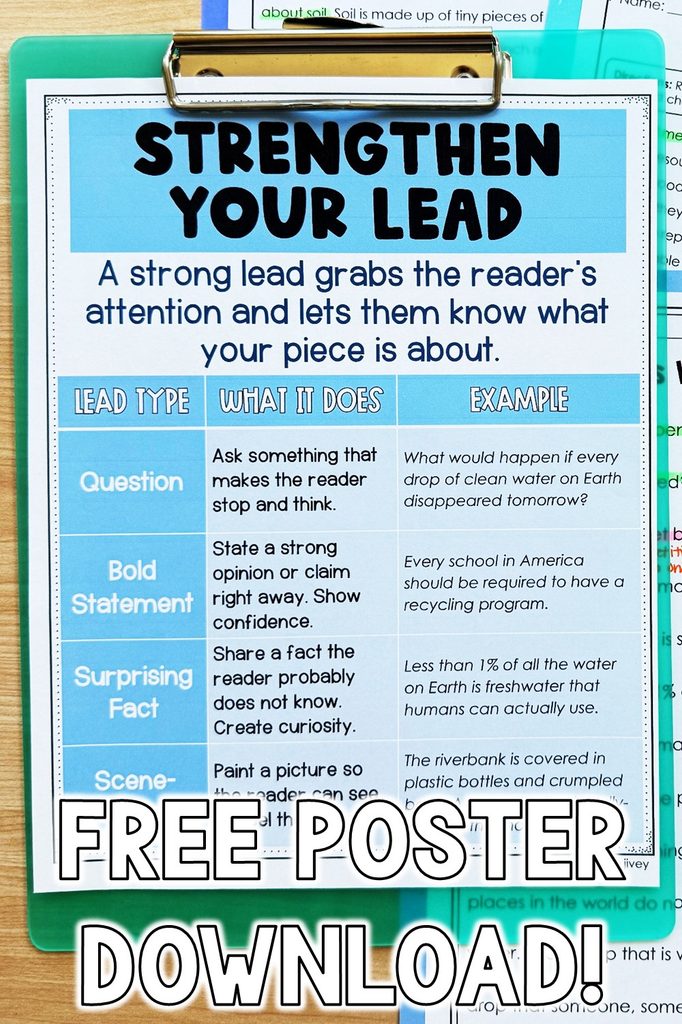
Print it, hang it in your writing center, or have students include it in their notebooks for a reference.
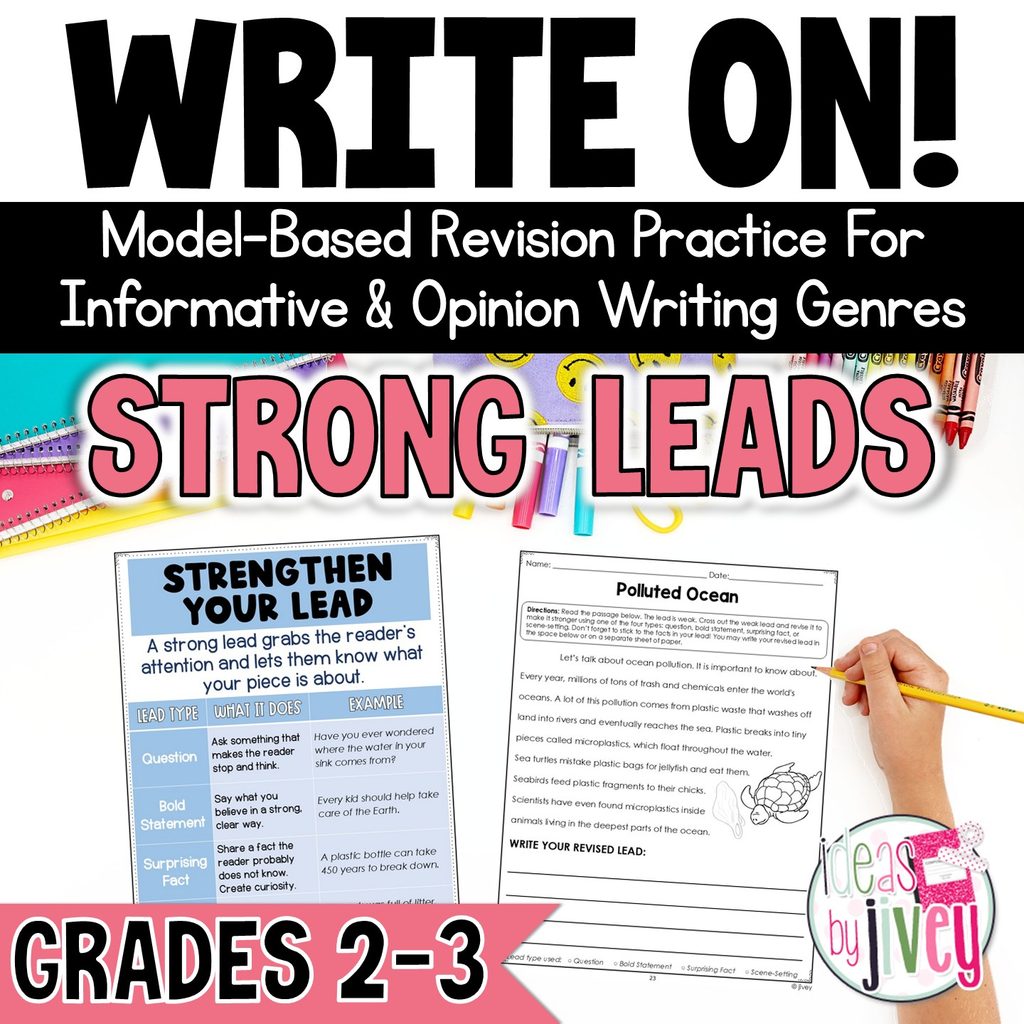
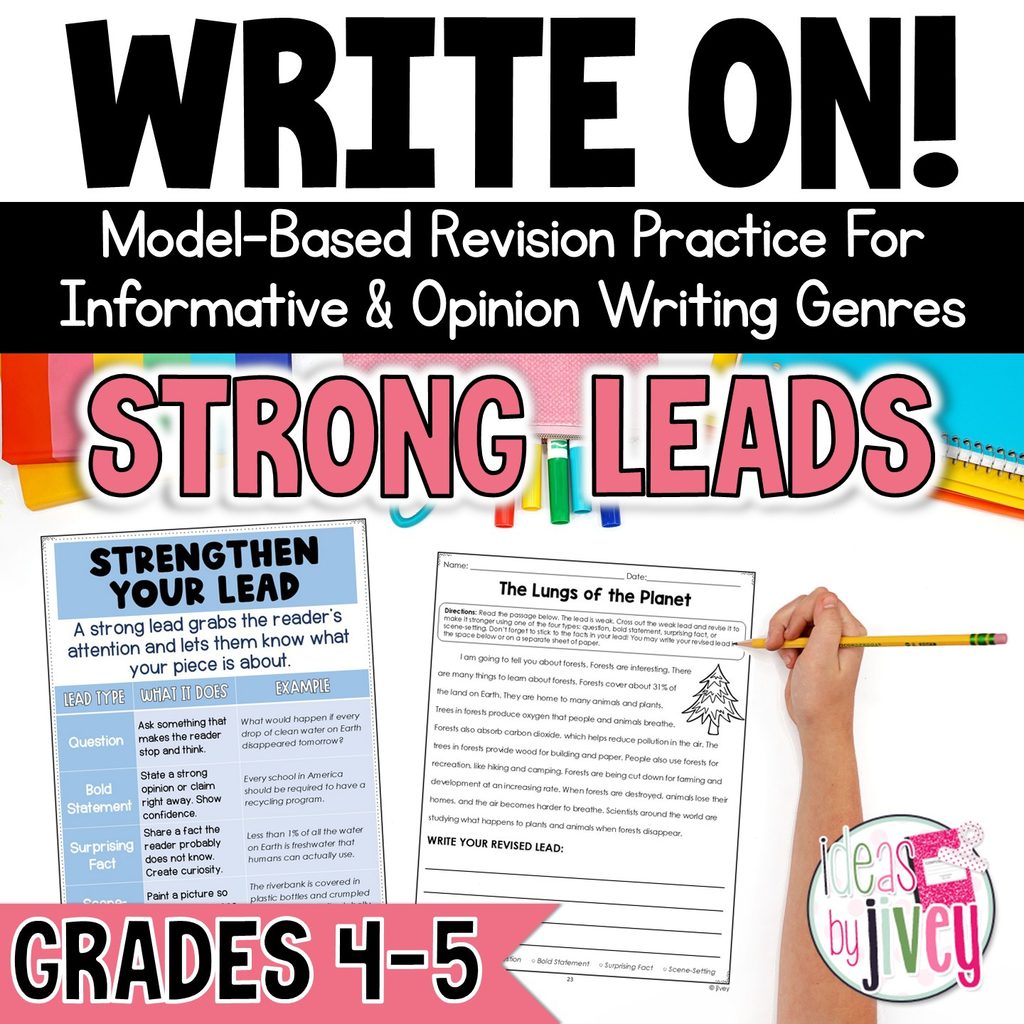
And if you want the whole thing, not just the poster, check out my Strengthen Your Lead unit, which walks students from noticing weak vs. strong leads in real passages, to writing and comparing two leads of their own, to revising an assessment piece using everything they’ve learned. It’s built to teach both informational and opinion writing!