Rainbow Editing: A Free Color-Coded Checklist for Editing and Revising

Rainbow editing gives each editing check its own color, so students can see what’s in their writing and what’s missing. I started using it when my students kept telling me they had edited and revised, but I never saw any proof. Here’s how it worked, plus the free rainbow editing checklist my students used.
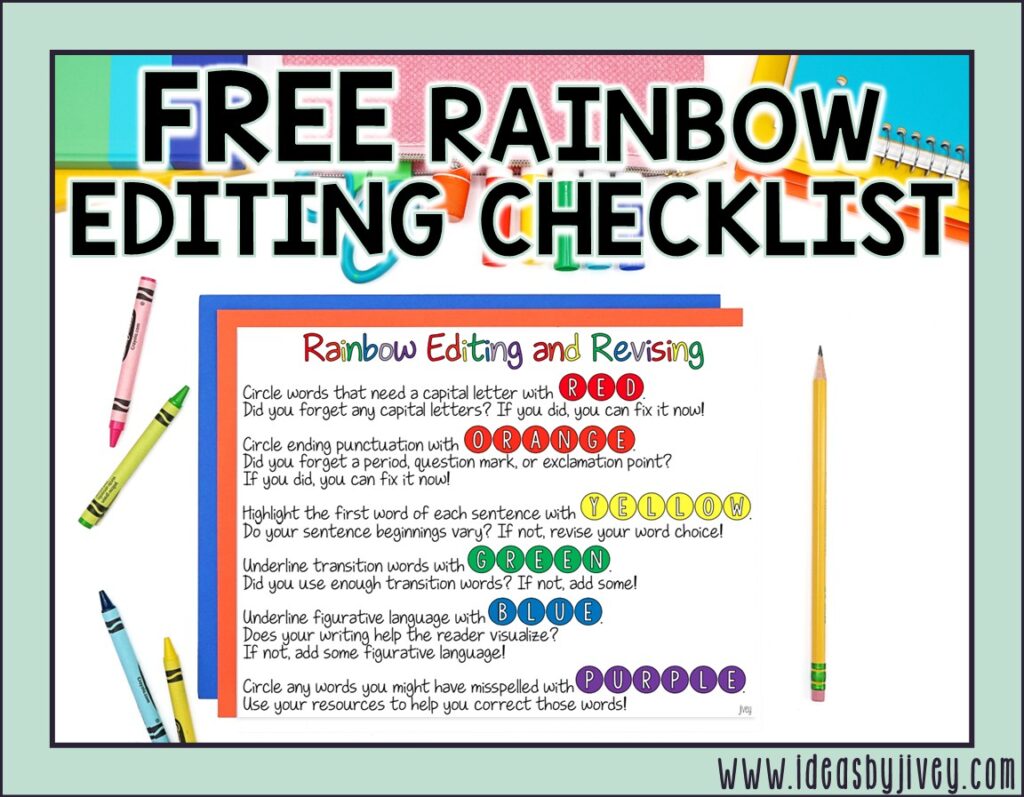
Free rainbow editing checklist with a color for each editing and revising step

Free checklistThe rainbow editing checklist is free. Jump to the free checklist

What is rainbow editing?

When my class was writing our snow globe stories, I ran into a problem you might recognize: when it came time to edit and revise, students would read their stories and SAY they had edited and revised, but I never saw any real proof that they had.

So I made a checklist that gives each editing check its own color. Students mark their draft with each color, so both of you can see what’s there and what’s missing:

  • Red: Circle words that need a capital letter.Did you forget any capital letters? If you did, you can fix it now!
  • Orange: Circle ending punctuation.Did you forget a period, question mark, or exclamation point?
  • Yellow: Highlight the first word of each sentence.Do your sentence beginnings vary? If not, revise your word choice!
  • Green: Underline transition words.Did you use enough transition words? If not, add some!
  • Blue: Underline figurative language.Does your writing help the reader visualize? If not, add some figurative language!
  • Purple: Circle any words you might have misspelled.Use your resources to help you correct those words!

How rainbow editing helps students revise

It was the best way I found to make students actually PAY ATTENTION to what they were reading. Once the colors were on the page, we talked about what they showed:

  • Red and orange circles: how much writing was between them? A long stretch meant a giant run-on sentence.
  • Yellow and green: if all of the sentence beginnings and transition words were the same, it was time to change them up.
  • Blue lines: only one or two meant it was time to add more figurative language.
Student marking a draft with rainbow editing colors
Student draft marked with rainbow editing circles and underlines

Student drafts marked with rainbow editing colors

Students could tell when they needed “more color,” and they worked to fix it. It made a real difference in my classroom.

Next step: teaching students how to fix what they find

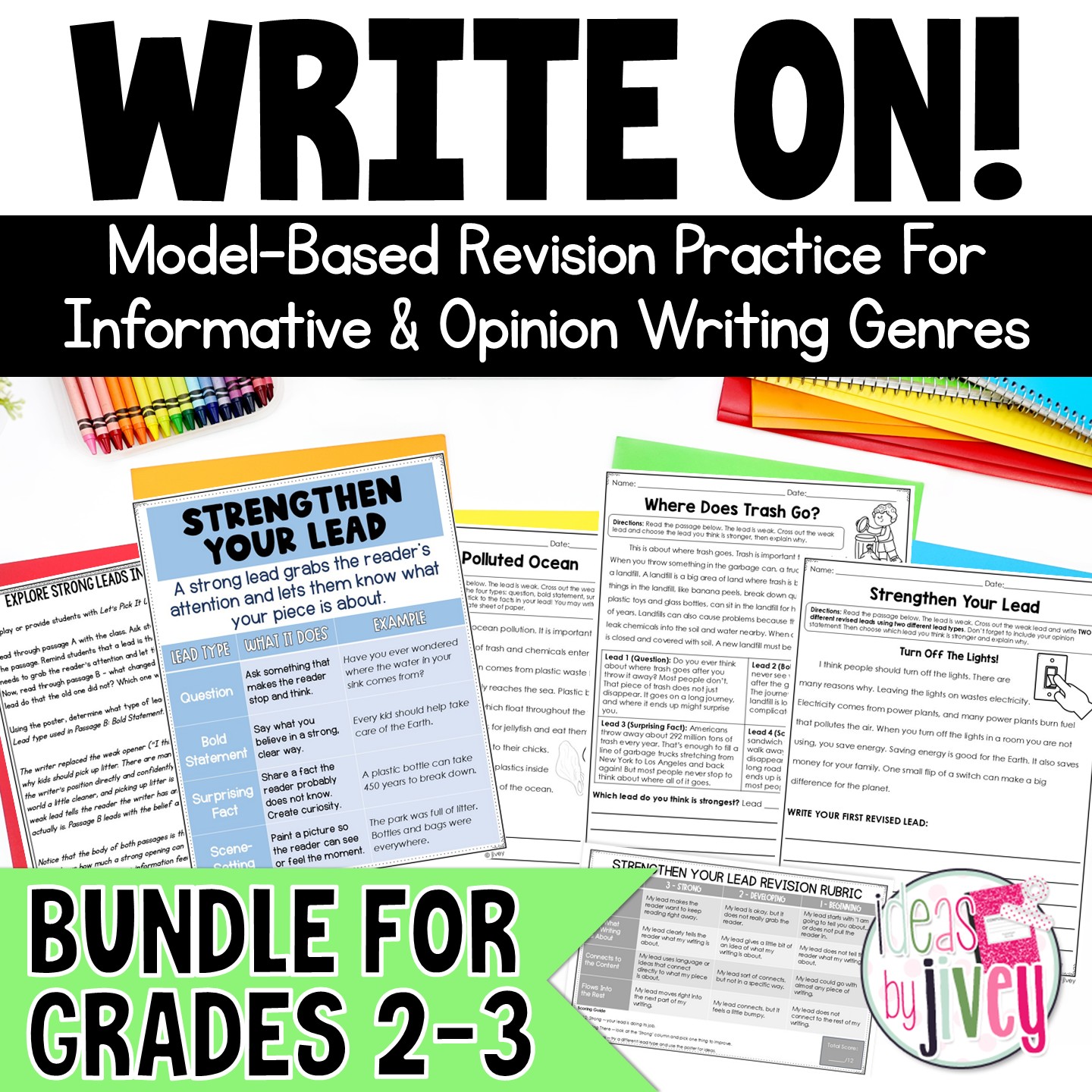
Rainbow editing shows students where to look. When your students move into opinion and informational writing, these Write On! revision mini-lessons teach them how to fix what the colors point out:

Ready to teach revision step by step?

Free rainbow editing checklist: red for capitals, orange for end punctuation, yellow for sentence beginnings, green for transitions, blue for figurative language, purple for spelling

Free rainbow editing checklist: the one-page checklist my students used, with a color and a question for each check.

Get the free checklist
Keep reading

Jivey signature