$150.00 Original price was: $150.00.$99.00Current price is: $99.00.
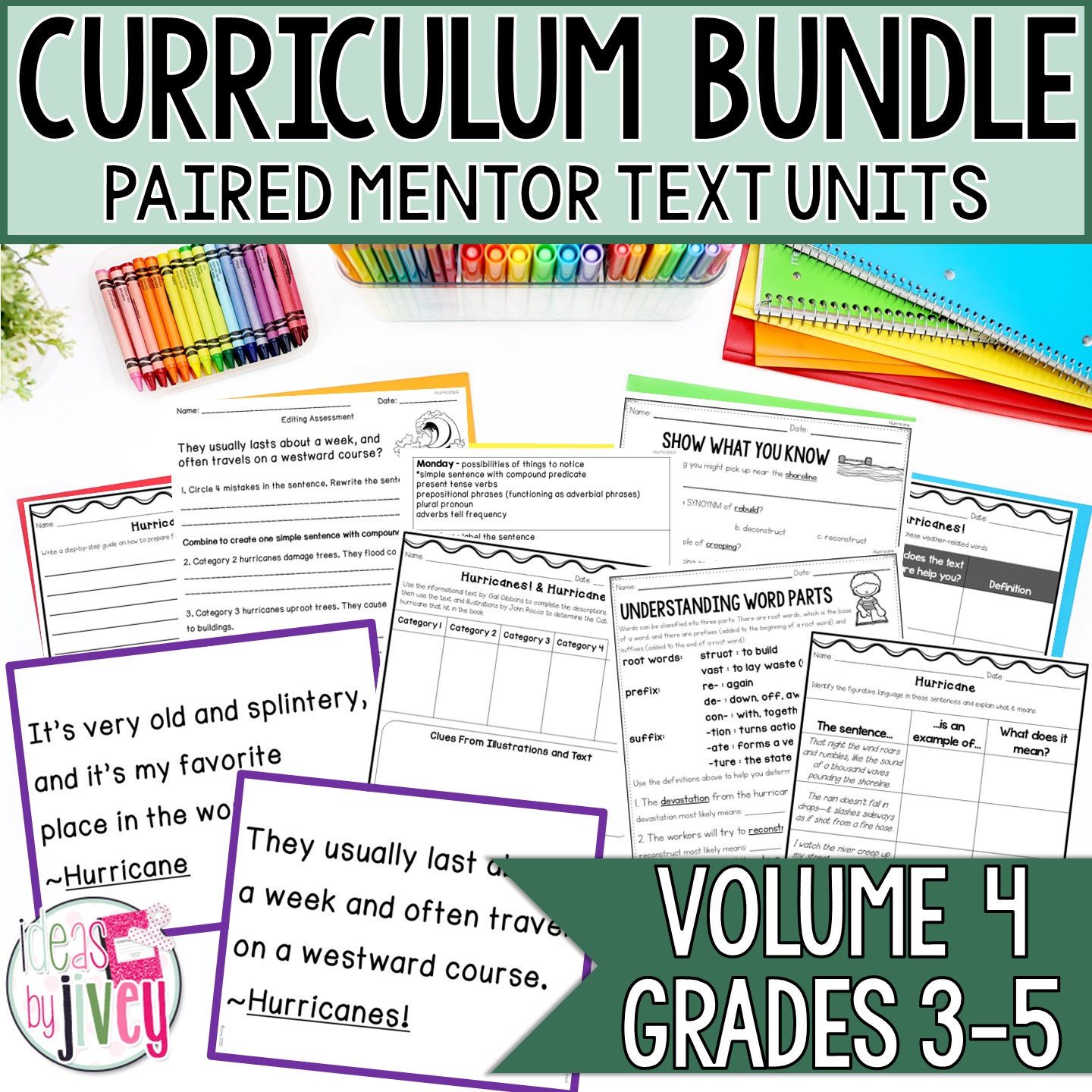
This yearlong mentor sentences curriculum for 3rd, 4th, and 5th grade pairs picture books instead of teaching from one text at a time. Each of the 20 units combines two books: a fiction and nonfiction pairing, two books on a shared theme, or two texts built for direct comparison, giving you 40 weeks of grammar, vocabulary, reading comprehension, and writing instruction across 40 total books.
Every activity in a unit uses both paired books together instead of treating them as separate lessons. Grammar comes from a mentor sentence drawn from that week’s book. Vocabulary comes from Tier 2 and Tier 3 words in the same text. Reading comprehension activities build across the full two-week unit, so skills from the first book carry into the second instead of starting over. The writing prompt ties back to each book’s theme. Nothing is taught in isolation, and by the end of each unit, students have compared, connected, and written across two real texts.
Each mentor text unit will provide TWO weeks of activities for two different picture books. (see the book list below)
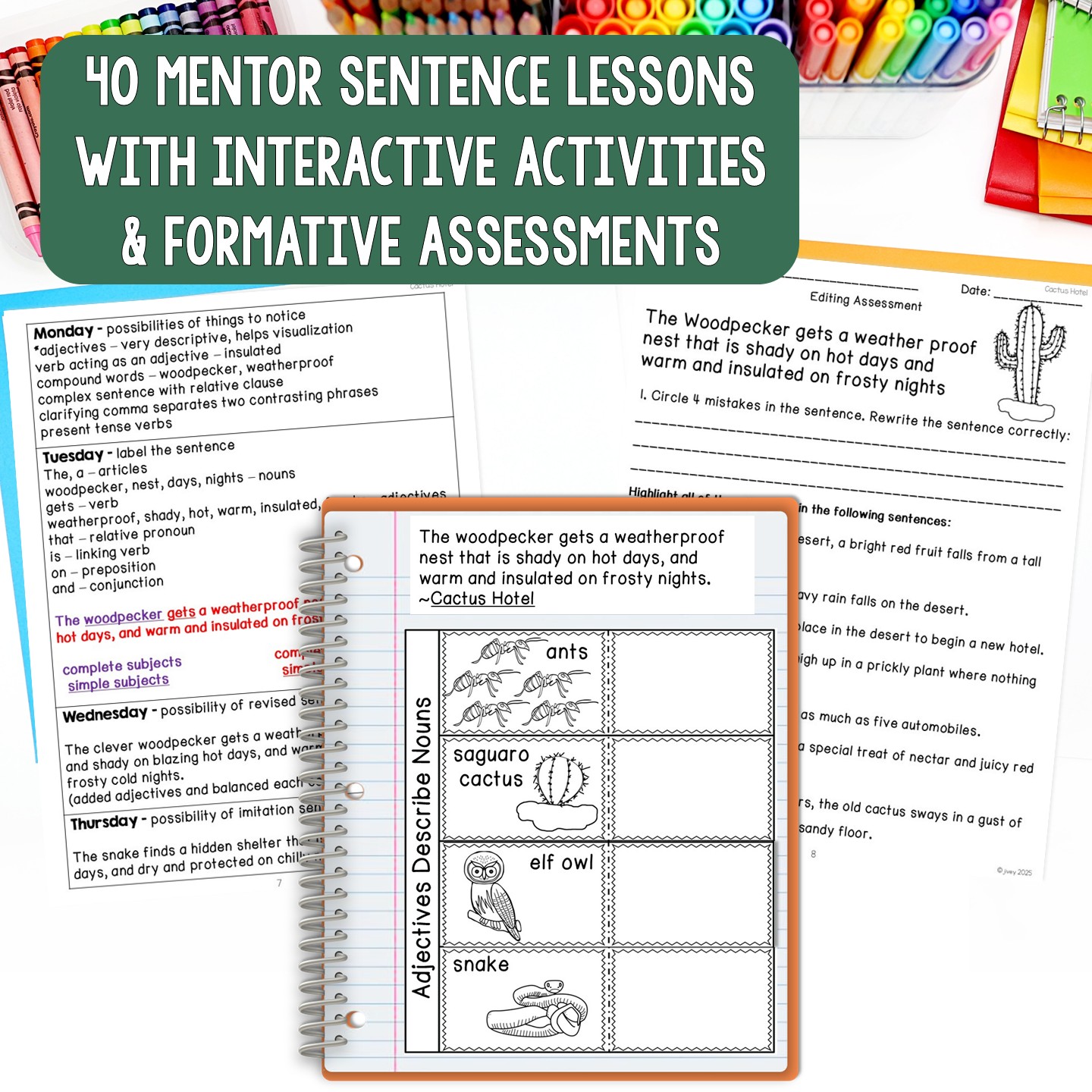
★ Mentor Sentence Lessons | Grammar and author’s craft in context
Each week’s mentor sentence is drawn directly from that week’s picture book. Lessons follow a four-day structure: noticing, discussing, revising, and imitating, so students encounter grammar as writers rather than as test-takers. Each lesson includes a teacher sentence page, a student sentence page, a four-day lesson plan, and a CCSS-aligned quiz with an answer key.
★ Interactive Language Arts Activities | Skill reinforcement for the mentor sentence focus
Companion activities give students additional practice with the grammar skill from each mentor sentence lesson.
★Reading Comprehension Activities | Text-based skill instruction across both books
Reading activities are designed to build across every two-week unit. Skills from week one carry into week two, so students aren’t starting over with each new text. Activities cover skills including inferring, summarizing, identifying theme, analyzing character traits, explaining figurative language, comparing characters and texts, citing evidence, integrating information from two sources, and more!
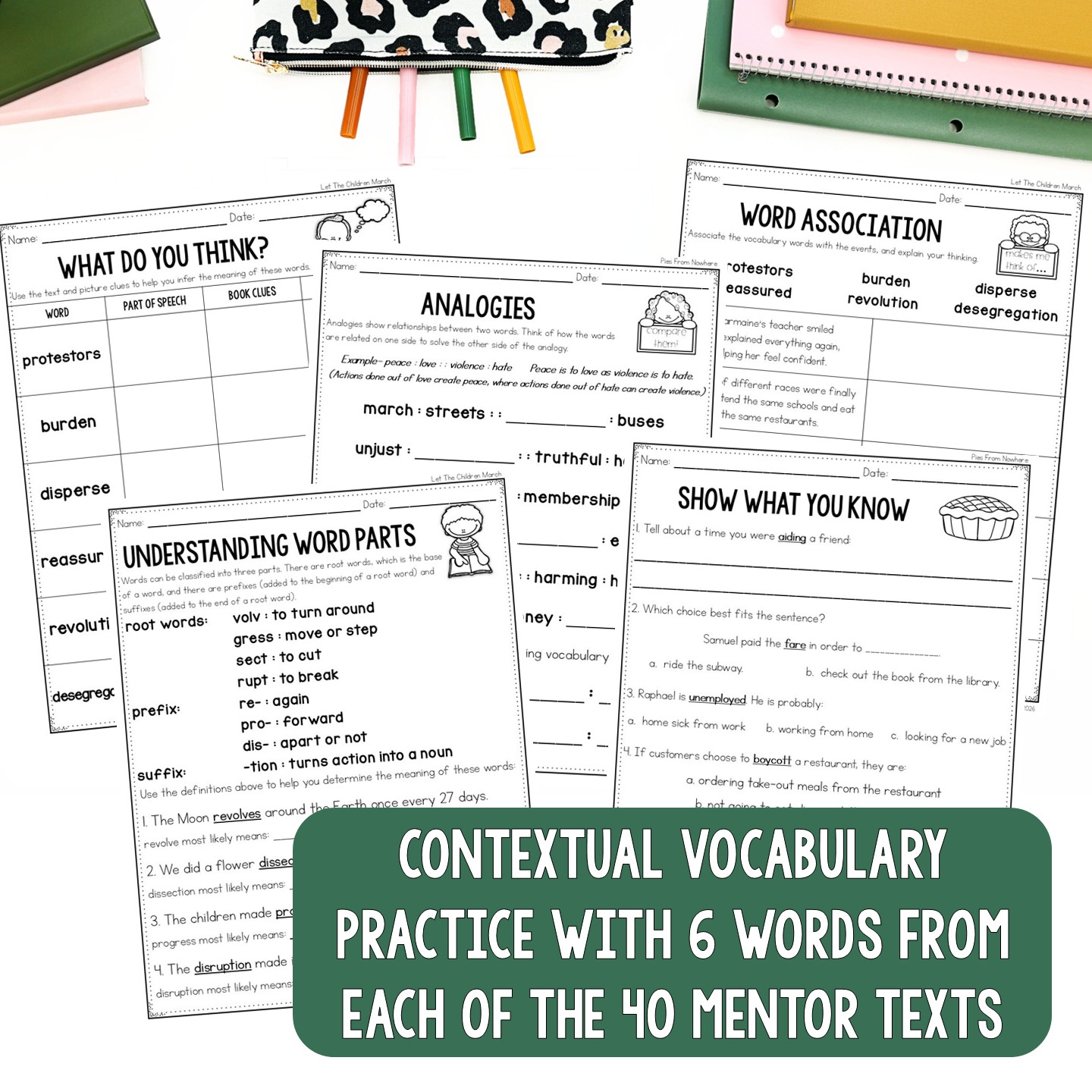
★ Contextual Vocabulary Activities | Tier 2 and Tier 3 words from each book
Vocabulary is taught directly from the mentor texts, not from isolated word lists. Activities are designed for repeated exposure and meaningful use in speaking and writing.
★ Writing Prompts | One per week, tied to each book’s theme or topic
Every book has a corresponding writing prompt that connects to the theme, idea, or content of that specific text. Prompts give students a purposeful reason to write in response to what they just read.
★ ALL activities are also provided as links to Google Slides for Digital Learning! ★
VOLUME 4 UNITS:
You will want to make sure you have access to the books listed below to complete the lessons properly. They are not included, but most can likely be found in your library, or even as online read-alouds!
Check out all of the books that are used in the bundle here!
My First Day by Phùng Nguyên Quang & Same, Same but Different by Jenny Sue Kostecki-Shaw
-reading activities for theme, mood and symbolism, sequencing setting, text and illustration evidence, theme, and integrate information from two texts as well as mentor sentences for subjects and predicates and subject/verb agreement
Eraser by Anna Kang and Linus the Little Yellow Pencil by Scott Magoon
-reading activities for inferring feelings, comparing character relationships, idioms and puns meanings, and comparing minor characters in two texts as well as mentor sentences for pronoun-verb agreement and indefinite pronouns
The Jade Bracelet by Hà Dinh and Your Name is a Song by Jamilah Thompkins-Bigelow
-reading activities for citing evidence, theme, tracking character changes, quote evidence, author’s language, and comparing stories as well as mentor sentences for vivid verbs and quotation marks
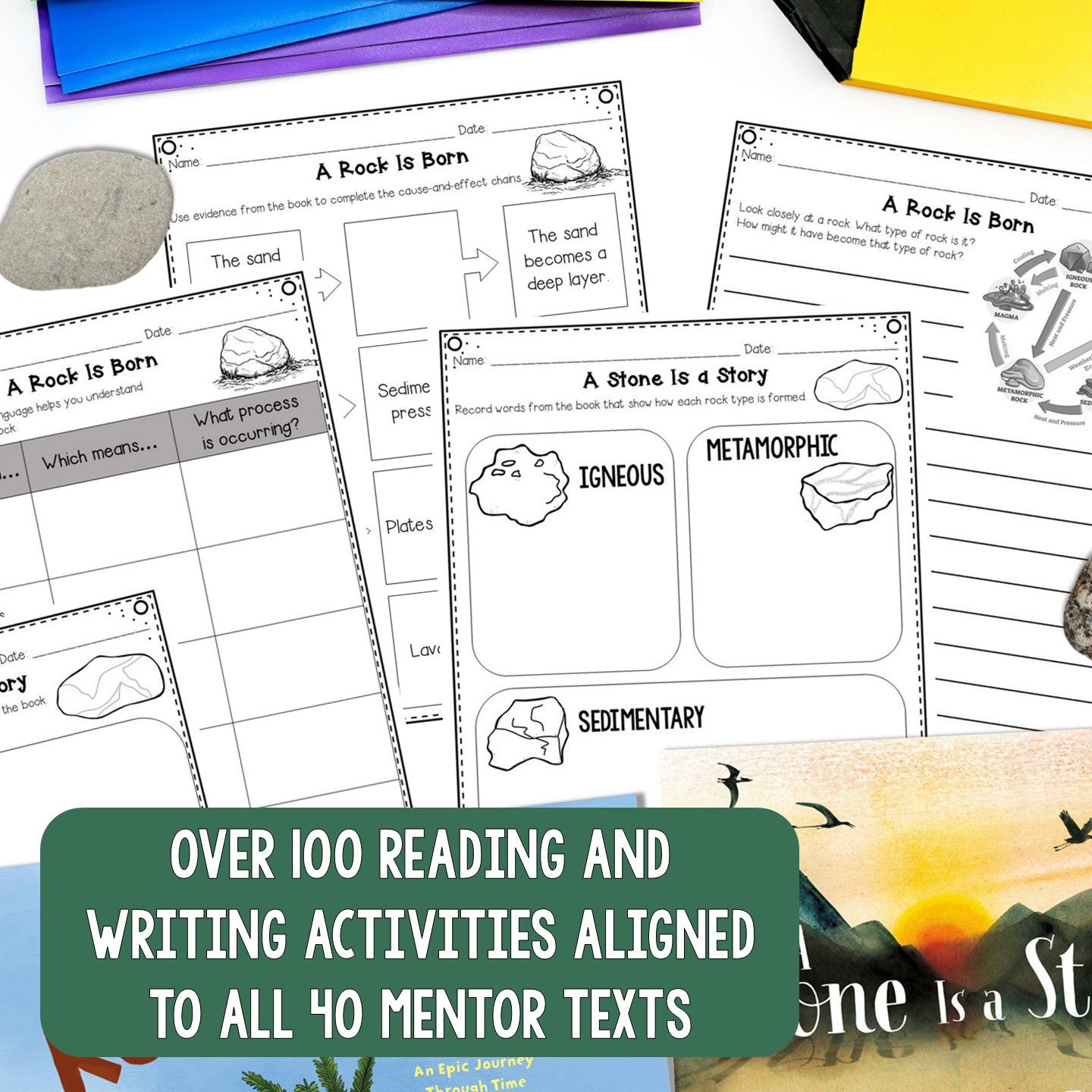
A Rock Is Born by Richard Ho and A Stone Is a Story by Leslie Barnard Booth
-reading activities for identifying key details, cause and effect chains, using author’s language to connect to domain vocabulary, writing factual captions for illustrations, and integrating information from both texts, as well as mentor sentences for correcting sentence fragments and using vivid verbs
Hurricanes! by Gail Gibbons & Hurricane by John Rocco
-reading activities for supporting main idea, theme, cause-effect relationships, figurative language, defining words with text features and illustrations, and integrating information from both books, as well as mentor sentences for combining sentences and compound sentences
The Cool Bean and The Smart Cookie by Jory John and Pete Oswald
-reading activities for citing evidence, theme, tracking character changes, and comparing characters in two texts as well as mentor sentences for distinguishing between adverbs and prepositions
Stumpkin by Lucy Ruth Cummins and Pumpkin Circle: The Story of a Garden by George Levenson
-reading activities for text and illustration evidence, character changes, theme, main idea, cause and effect, and author’s language, as well as mentor sentences for similes and metaphors
Leif and the Fall by Adam Grant and Allison Sweet Grant and Fall Leaves by Loretta Holland
-reading activities for inferring, summarizing, character trait, main idea, cause and effect, and integrating information from two texts, as well as mentor sentences for homonyms and commas in a series
Odder: An Otter’s Story by Katherine Applegate (*the picture book, not novel!) and The Spirit of Springer by Amanda Abler
-reading activities for making inferences, figurative language, comparing the book to a video, supporting a claim with evidence, creating a timeline, and identifying similarities in the two texts, as well as mentor sentences for irregular verbs and helping verb agreement with collective nouns
Merry and Hark: A Christmas Story by April Genevieve Tucholke and The Urban Owls by Christian Cooper
-reading activities for citing explicit details, point of view, comparing settings, identifying turning points, matching evidence to a topic, supporting author’s claims, and identifying similarities in the two texts, as well as mentor sentences for ordering adjectives and comparatives/superlatives
Hidden Hope by Elisa Boxer & The Whispering Town by Jennifer Elvgren
-reading activities for citing text evidence, main idea, vivid language, analyzing a primary source, supporting inferences, character trait evidence, and comparing characters from two books, as well as mentor sentences for expanding and combining sentences
Let The Children March by Monica Clark-Robinson & Pies From Nowhere by Dee Romito
-reading activities for citing evidence in text and images, theme, figurative language, cause and effect, symbolism, and comparing events and individual from the two books, as well as mentor sentences for compound and complex sentence structures
Love, Z by Jessie Sima & Love by Matt de la Peña
-reading activities for citing evidence, theme, metaphors, inferring, summarizing, and comparing both books, as well as mentor sentences for introductory phrases and prepositional phrases
Give Bees a Chance by Bethany Barton & The King of Bees by Lester Laminack
-reading activities for citing text evidence, identifying and supporting a main idea, cause and effect, supporting an inference, identifying contributing actions, and comparing and integrating information from both books, as well as mentor sentences for complex sentences
The Tree Lady by H. Joseph Hopkins & Seeds of Change by Jen Cullerton Johnson
-reading activities for identifying the central message, major turning points, problems/obstacles/solutions, similes, and similarities and differences between the two women, as well as mentor sentences for relative pronouns and past-perfect verb tense OR consistent verb tenses (both verb skills are provided – utilize what your students need!)
The Littlest Drop by Sascha Alper & Follow The Moon Home by Philippe Cousteau and Deborah Hopkinson
-reading activities for theme, character comparisons, illustration contributions, identifying facts and author’s purpose, story elements/structure, and comparing two stories, as well as mentor sentences for adverbs and subject/object pronouns
The Ocean Gardener by Clara Anganuzzi & Coral Reefs by Gail Gibbons
-reading activities for quoting text to answer text-based questions, figurative language, comparing the book to a video about coral farming, sequencing, identifying comparison text structure and organizing information with compare/contrast, and integrating information from both texts, as well as mentor sentences for regular and irregular past tense verbs and subject-verb agreement
Cactus Hotel by Brenda Guiberson & The Ballad of Cactus Joe by Lily Murray
-reading activities for citing evidence, supporting the author’s points, video comparison, supporting a character trait, identifying character change, and integrating information from two texts, as well as mentor sentences for adjectives and rephrasing questions into complete statements
Katie’s Trunk by Ann Turner & The Scarlet Stockings Spy by Trinka Hakes Noble
-reading activities for inferring, theme, character trait, similes, and comparing perspective of two characters between the text, as well as mentor sentences for modal verbs and figurative language
Digging for Words: José Alberto Gutiérrez and the Library He Built by Angela Burke Kunkel and Planting Stories: The Life of Librarian and Storyteller Pura Belpré by Anika Aldamuy Denise
-reading activities for comparing characters, sequence of events, analyzing figurative language, answering text-dependent questions, and comparing people from the two biographies, as well as mentor sentences for metaphors and personification
How is Volume 4 different from Volumes 1-3?
Volume 4 pairs two picture books per unit instead of using one book per week, so students compare and connect across texts, fiction paired with nonfiction, shared themes, or direct comparisons. The lesson structure and components are otherwise the same across all four volumes.
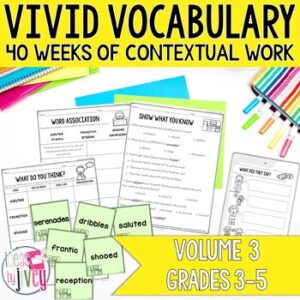
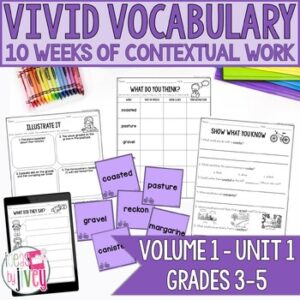
Check out what’s in Volume 1!
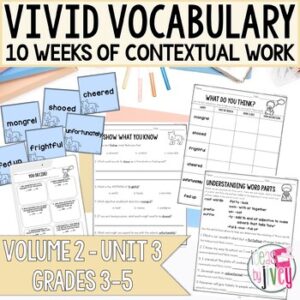
Check out what’s in Volume 2!
Check out what’s in Volume 3!
Do I need to own all 40 books?
Most are available through your school or public library, or as online read-alouds if you don’t have physical copies.
Can I use Volume 4 alongside another volume?
Yes, each volume uses a different set of texts, so they don’t overlap. Many teachers choose one volume per year based on the books they want to use.
Is this enough for a full year of ELA instruction on its own?
It covers 40 weeks of grammar, vocabulary, and reading comprehension instruction anchored to mentor texts. Most teachers pair it with their existing writing curriculum, since the writing prompts are meant to complement, not replace, a full writing program.
Mentor Sentences can be done in ALL grades! Please tell your teacher friends about mentor sentences for their grade:
Kindergarten & ELL (Early Emergent Readers)
First Grade
Second Grade
*****************************************************************************
Please remember, this purchase is for the use of one teacher. It is not intended to be shared. Please use the ‘additional license’ purchase if more than one teacher will be using it. Thank you!
*The mentor sentence lessons I have created are adapted from the ideas of Jeff Anderson. These lessons were born from the routine that worked well in my classroom, and the demos and examples I present are variations of Jeff Anderson’s methods. This is not the only way to “do” mentor sentences in your classroom.*
Copyright © Ideas By Jivey, LLC
All rights reserved by author.
Permission to copy for single classroom use only.
Electronic distribution limited to single classroom use only.
Not for public display.