
$10.00
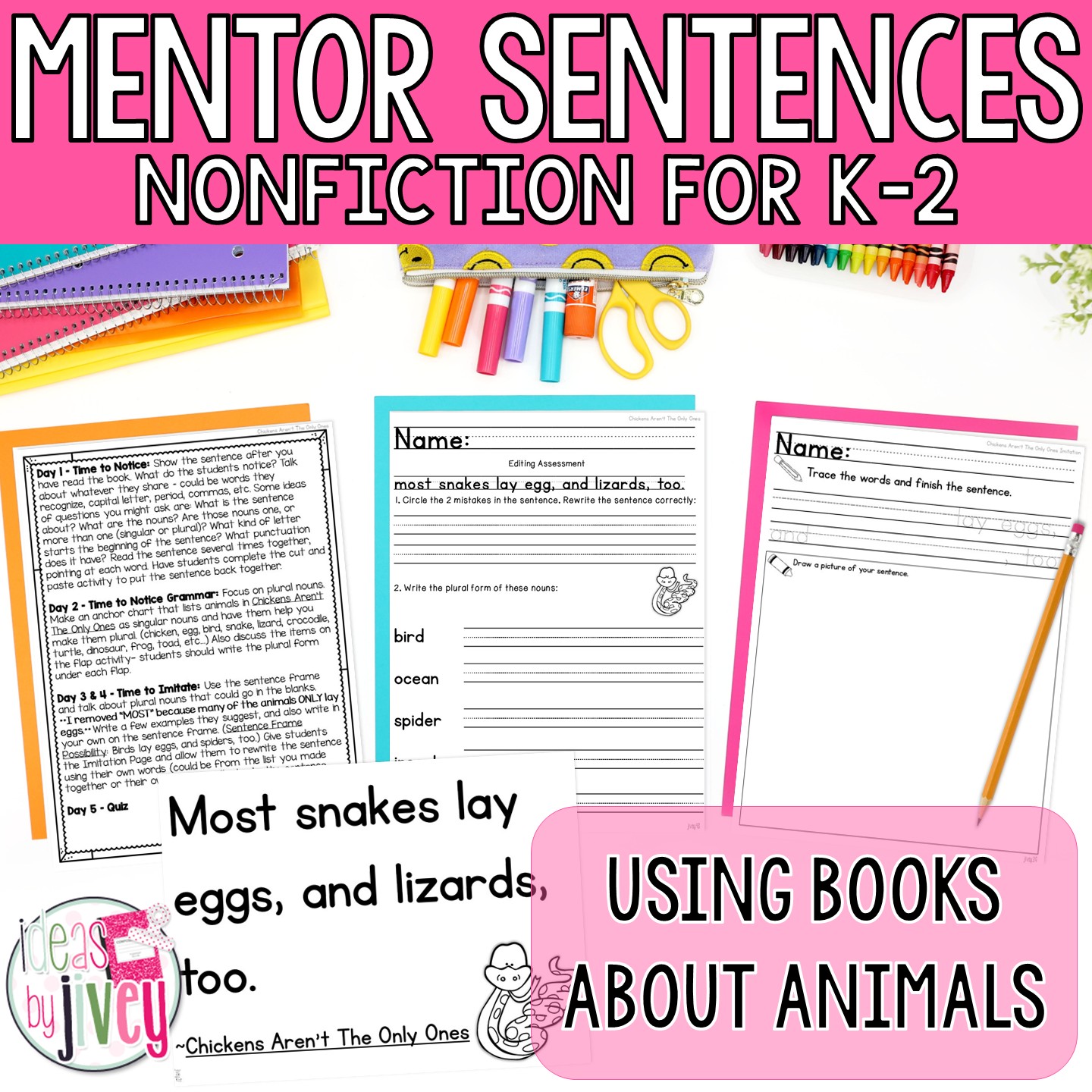
Animal mentor sentences give kindergarten, first, and second grade a short daily routine for reading, grammar, and writing. This nonfiction unit walks you through ten weeks, one animal book each, so students study the sentence, rebuild it, and write their own.
Every week follows the same routine, so students know what to expect:
Never Smile At A Monkey by Steve Jenkins
(verbs)
What Do You Do When Something Wants To Eat You? by Steve Jenkins
(verbs)
Chickens Aren’t The Only Ones by Ruth Heller
(plurals)
Owls by Gail Gibbons
(adjectives)
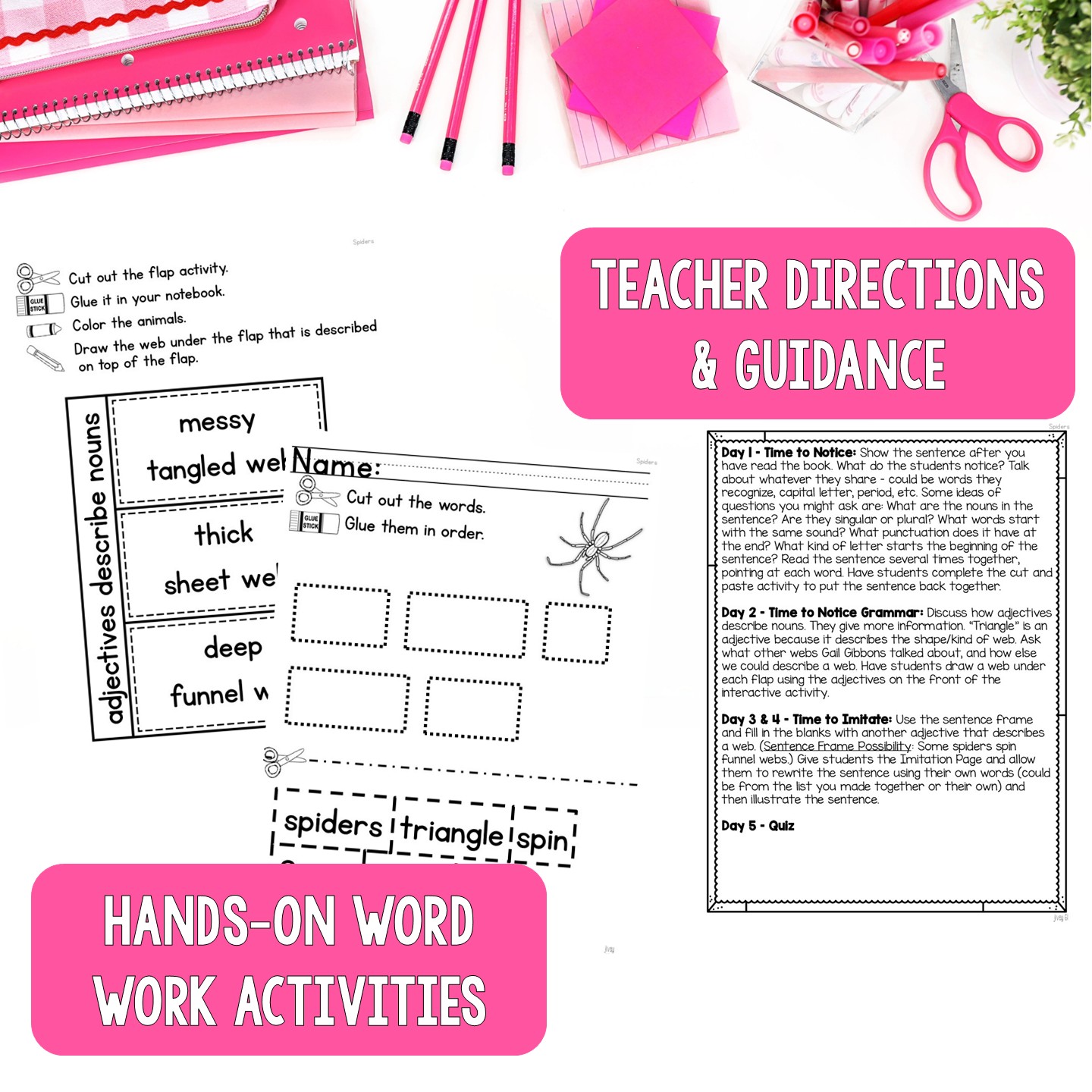
Spiders by Gail Gibbons
(adjectives)
Bats by Gail Gibbons
(adjectives)
One Tiny Turtle by Nicola Davies
(categories)
The Moonflower by Peter and Jean Loewer
(categories)
What If You Had Animal Ears!? by Sandra Markle
(possessives)
What If You Had Animal Hair!? by Sandra Markle
(attributes)
As a former first and second grade teacher, I used to LOVE reading these books, so I know many of you do, too! They are definitely some of my favorites. If you don’t have them in your personal library, check your school media center!
The Nonfiction Reading and Writing Grades 1-2 Companion uses the same ten books, with graphic organizers and a writing prompt for each one.
What is a mentor sentence?
A mentor sentence is a well-written sentence from a real book that students study closely. In this unit, students notice what the author did, rebuild the sentence, and then write an imitation sentence of their own.
Is this unit for kindergarten, 1st grade, or 2nd grade?
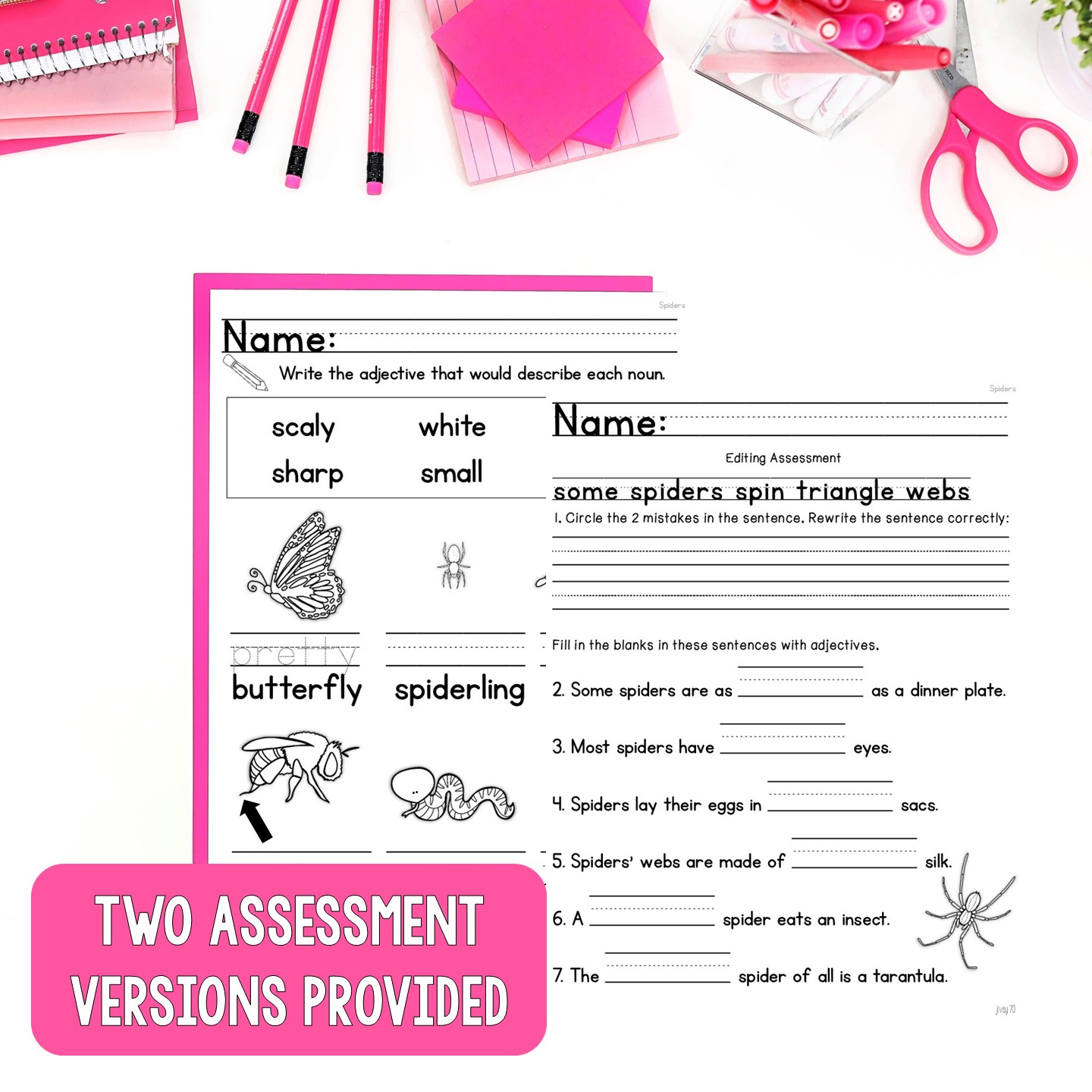
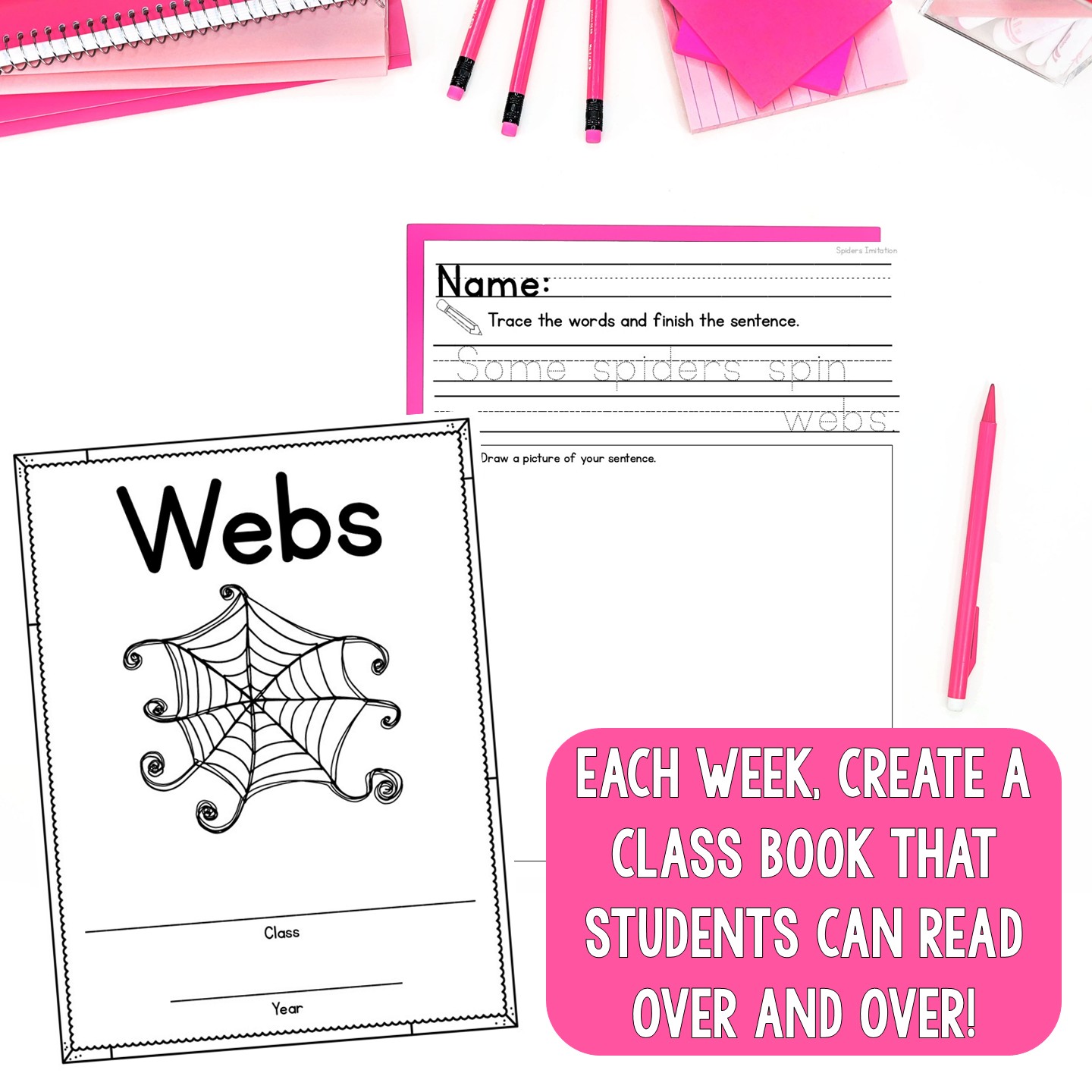
All three! The imitation page comes with and without handwriting guides, and the weekly quiz comes in two versions, one for emergent students and one for second graders. Second grade teachers can also have students do more of the work in their notebooks.
Do I need the animal books?
Yes, you read each book aloud, so you will need a copy of each one you use. A school or public library works.
Is there a reading comprehension companion for these books?
Yes. The Nonfiction Reading and Writing Grades 1-2 Companion covers the same ten books with graphic organizers and a writing prompt for each.
Please remember, this purchase is for the use of one teacher. It is not intended to be shared. Please use the ‘additional license’ purchase if more than one teacher will be using it. Thank you!
*The mentor sentence lessons I have created are adapted from the ideas of Jeff Anderson. These lessons were born from the routine that worked well in my classroom, and the demos and examples I present are variations of Jeff Anderson’s methods. This is not the only way to “do” mentor sentences in your classroom.*
Copyright © 2016 Ideas By Jivey, LLC
All rights reserved by author, Jessica Ivey.
Permission to copy for single classroom use only.
Electronic distribution limited to single classroom use only.
Not for public display.
Thank you. Your review was received and will appear once it has been checked.
Please log in to the account you used to buy this resource. Only customers who bought it from this shop can leave a review.
Great resource
These mentor sentences are a great addition to our daily grammar practice.
Great intro for informational texts
I love using mentor sentences to teach various concepts. This is a great introduction to model nonfiction writing.
Thank you very much. It was very helpful with my kids.
This is an excellent resource that has made my life so much easier. Thank you so much!
Thank you for creating this resource to pair with the mentor texts! My students enjoyed this unit.
This made my life so much easier! Lesson plans, resources… I spread the different weeks out throughout the year and it was awesome!
Mentor sentences was a game changer for me. It was exciting to see the kids take off with both reading and writing.
I enjoyed using this resource with my students. Thank you!


