
$5.60
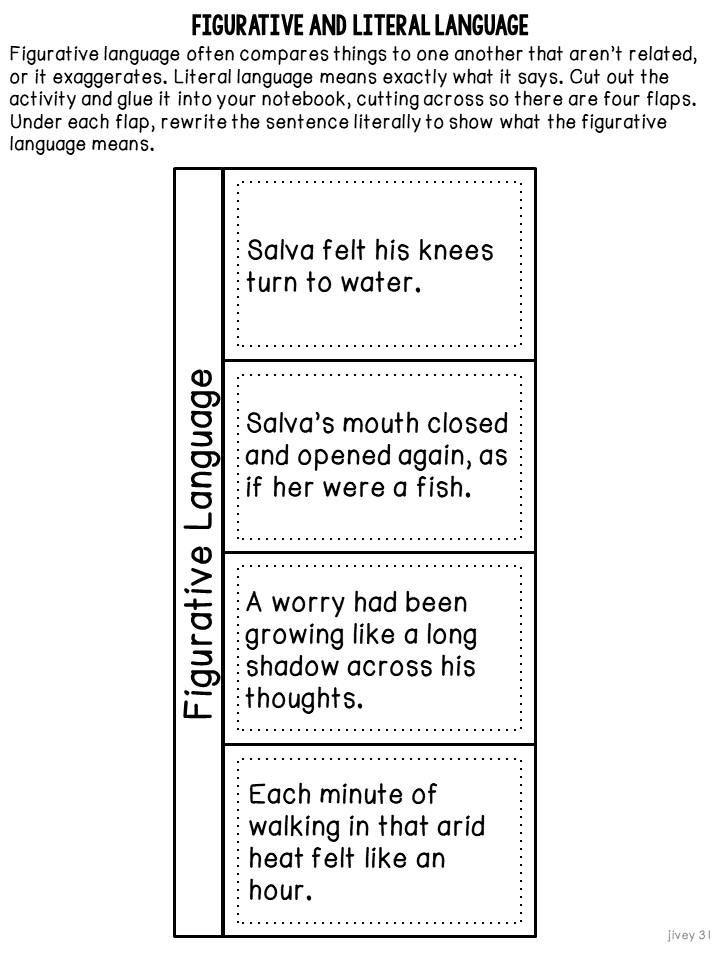
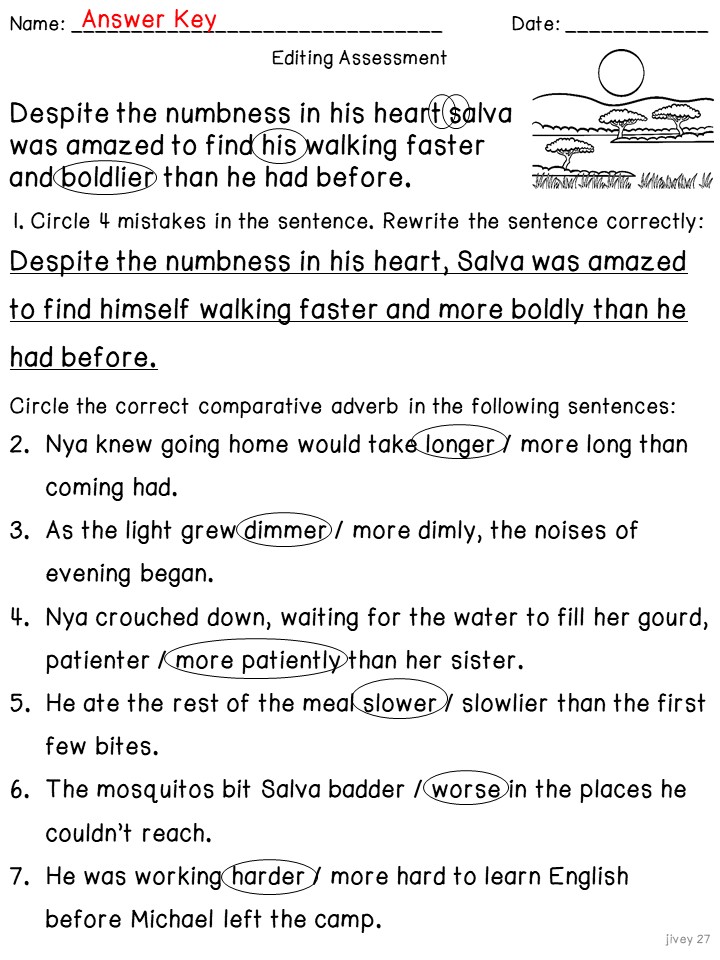
These mentor sentences for A Long Walk to Water tie grammar to the novel your class is reading. Linda Sue Park’s sentences teach vivid verbs, order of adjectives, comparative adverbs, and figurative language, and these A Long Walk to Water activities give you one lesson for each section of the book.
Use it alongside your novel study, or as a supplement while you read the book aloud. Students study a sentence from the chapters they just read, then use the same skill in a sentence of their own!
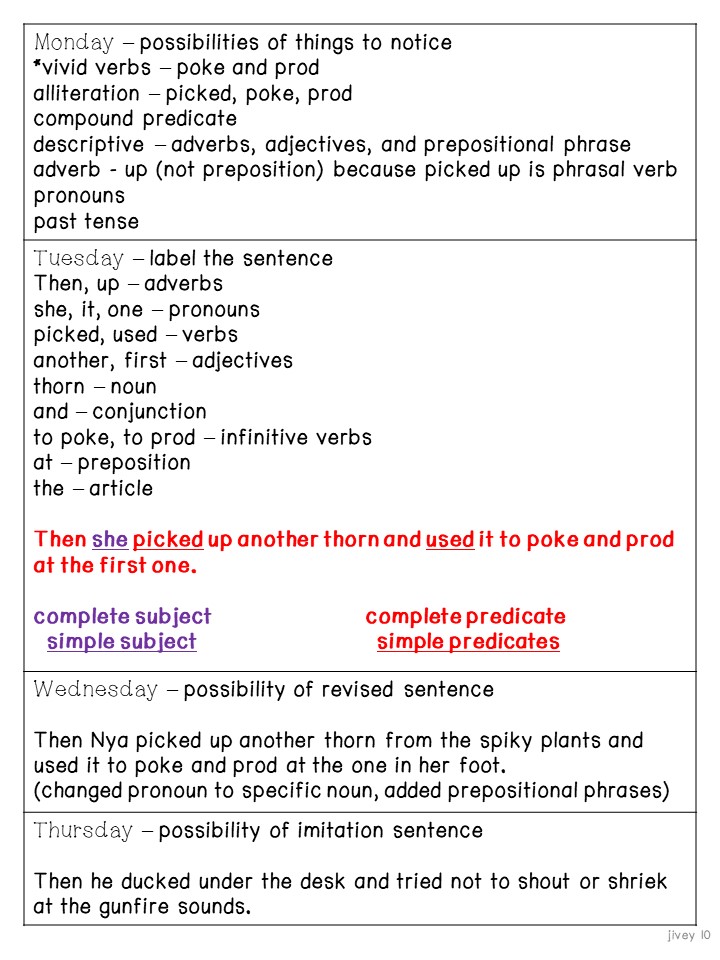
Each day, students spend 10 to 15 minutes with the same sentence, working with it in a new way: noticing, labeling, revising, and writing their own. I’ve already done the thinking for every day, right down to sample revisions and imitations, so you can open the lesson plan and go!
I split the book into five sections, stopping at natural breaks, with one lesson for each. Teach each lesson the week students read that section, or the week after. It’s up to you!
Fix-the-sentence drills hand students a sentence full of mistakes. If they don’t already know the rule, they can’t spot the errors, and fixing someone else’s mistakes doesn’t show them what a strong sentence looks like. That’s why the practice so rarely shows up in their own writing.
Mentor sentences flip that! Each week starts with a model sentence from a published author, and students soak up the grammar by noticing it, talking about it, and trying it in a sentence of their own. They pick up craft along the way, too: figurative language, descriptive words and phrases, and sentence variety they can borrow for their own writing.
Research backs up teaching grammar in context instead of in isolation. A large review of writing studies for grades 4 to 12 found that grammar taught in isolation did not improve students’ writing (Graham and Perin, 2007).
The routine stays the same every week, so students of any ability know exactly what to expect. Each week focuses on one or two skills, but students also meet new and earlier skills in every sentence, and that spiral review keeps them in front of students all year!
My Mentor Sentences for 3-5 page walks through how they work in upper elementary.
This unit doesn’t include the full introduction to the routine. That’s in Unit 1 of Volume 1, Volume 2, or Volume 3, with photos and day-by-day directions.
See all of my mentor sentences for novels.
This purchase is for one teacher. Please don’t share the files with other teachers. Thank you!
Copyright © 2020 Ideas By Jivey, LLC
All rights reserved by author, Jessica Ivey.
Permission to copy for single classroom use only.
Electronic distribution limited to single classroom use only.
Not for public display.
Thank you. Your review was received and will appear once it has been checked.
Please log in to the account you used to buy this resource. Only customers who bought it from this shop can leave a review.
Great Grammar Connection
Great resource to connect grammar lessons to the novel.
A long walk to water
This made grammar practice more fun and helped reinforce comprehension!
We read this book at the start of every school year. Incorporating grammar activities into the reading helps to set up the format for the rest of the year.
Thank you for a great resource to use in my classroom!
This was a great resources to aide my students' understanding of the novel. Thank you
This was just what I needed to fill in some gaps with a programming project I wanted to share with my students.
Used these to supplement a packet that I created and it was perfect!
This is a great novel study, very inclusive. Will continue to use!
Was a great change of pace from our weekly mentor sentences. The kids enjoyed that the sentences went with our story.
Set up very nicely. I like using mentor sentence activities as bellringers and these worked great as we read the novel.
Worked great for my middle school special education students!


