
Show don’t tell is easy to say and hard for students to do. When I asked my class to show, I got writing full of adjectives that still didn’t tell me much of anything. So I gave them cake. Here’s the “Which cake is mine?” lesson that got every student writing right away, plus how my Wintercake unit builds the same skill over a full week.
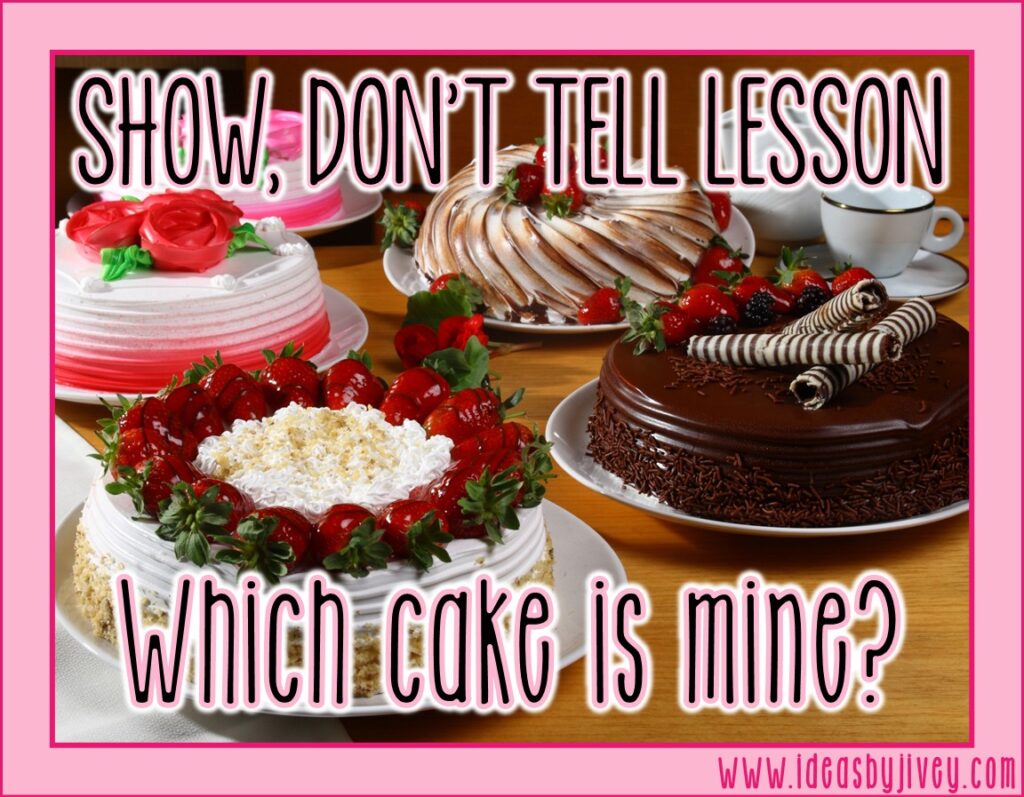
Showing doesn’t mean filling our writing with adjectives. We need a lot of DETAILS. To prove it, I showed my class four chocolate cakes and a paragraph about “my” cake:
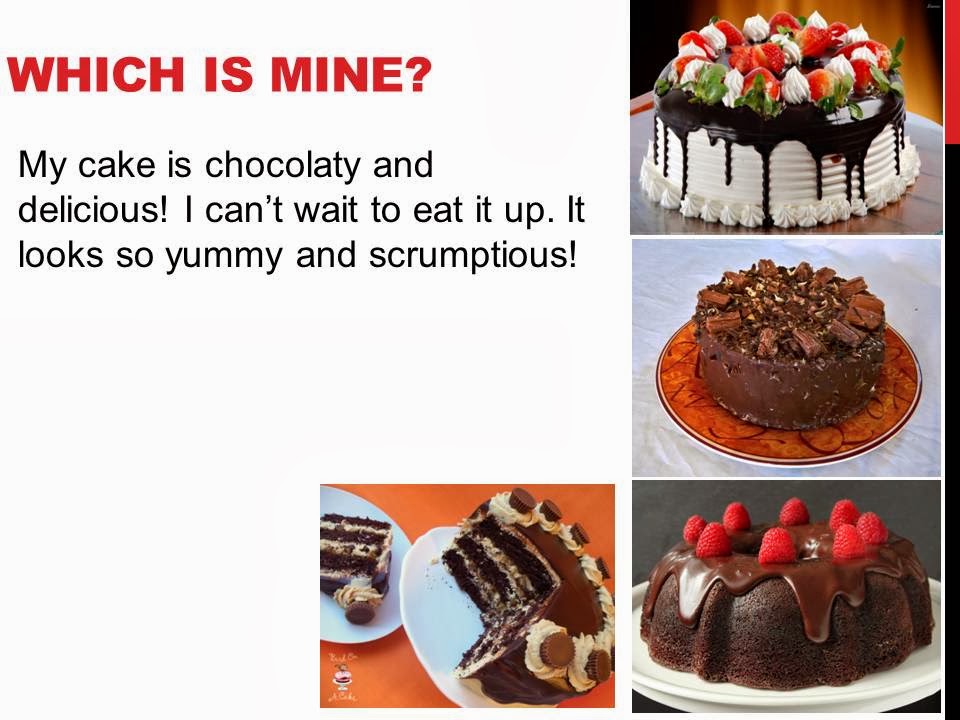
Lots of adjectives, no details. Which cake is it?
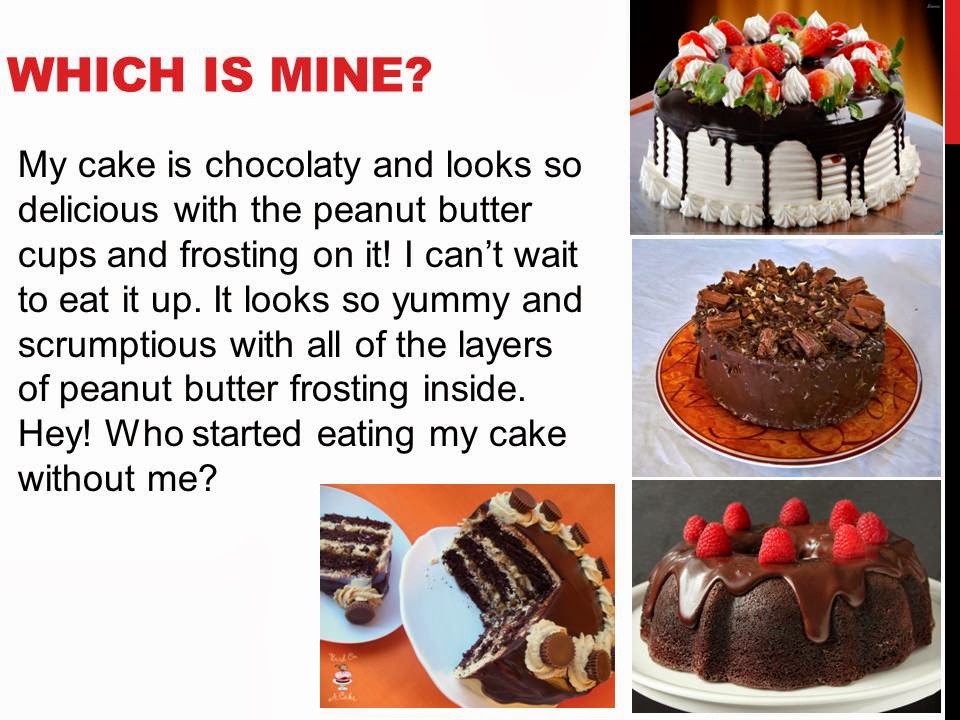
Now you can tell which cake is mine!
We talked about how the first paragraph has great adjectives, but nobody could tell which cake I was describing. All of them have chocolate… and let’s face it, all of them should be eaten up. So I revised my paragraph. NOW you could tell which cake was mine!
Next, students practiced out loud with a partner. Each student described one of the cakes, and their partner had to guess which one it was.
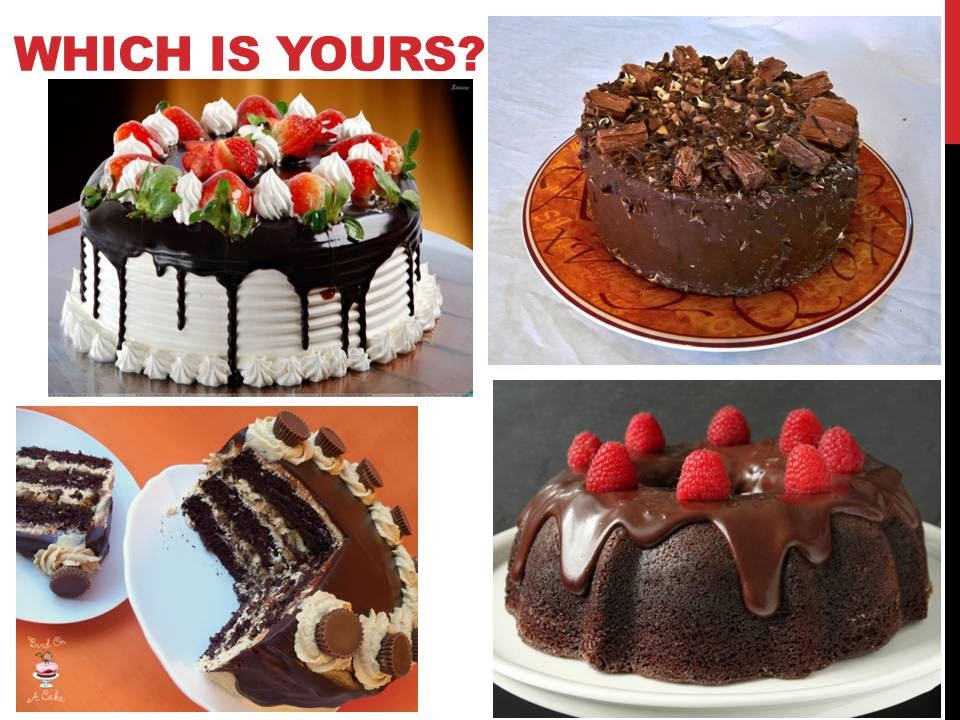
I made sure they weren’t just saying, “My cake is chocolate with raspberries.” We talked about how boring that is! Talking it out before writing is also a great strategy for students who get stuck.
Then students tried show don’t tell on their own. They wrote about one food from a new set of pictures, in secret, so the class could guess which one was theirs.
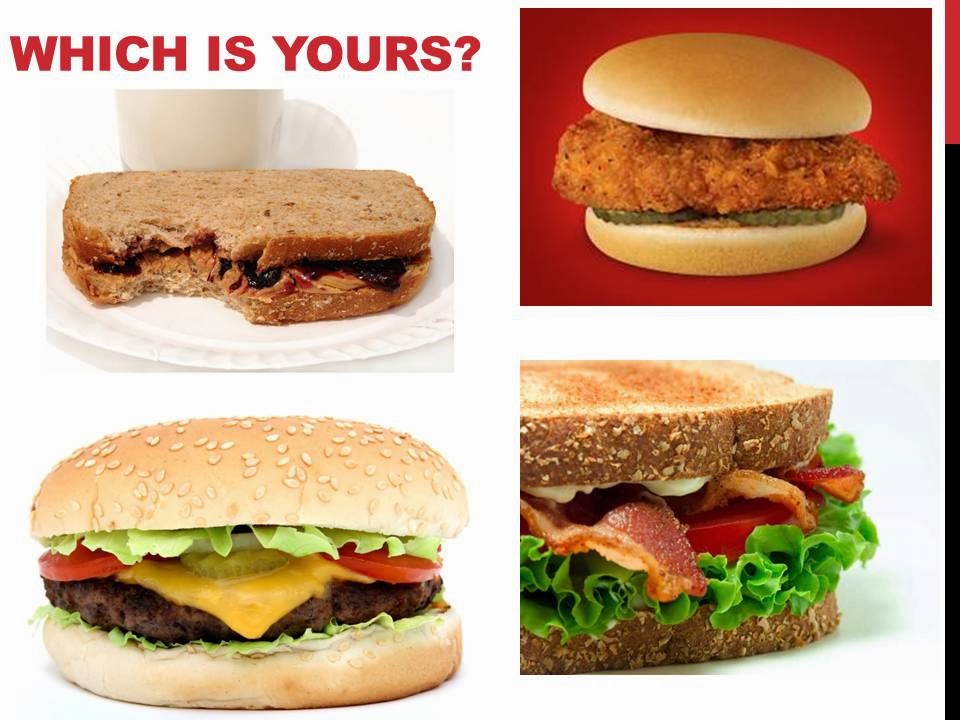
You should have heard the “oooooh”s and “mmmmm”s! Not one student groaned about this writing activity, and not one sat there staring at their paper. They picked up their pencils and started writing right away.
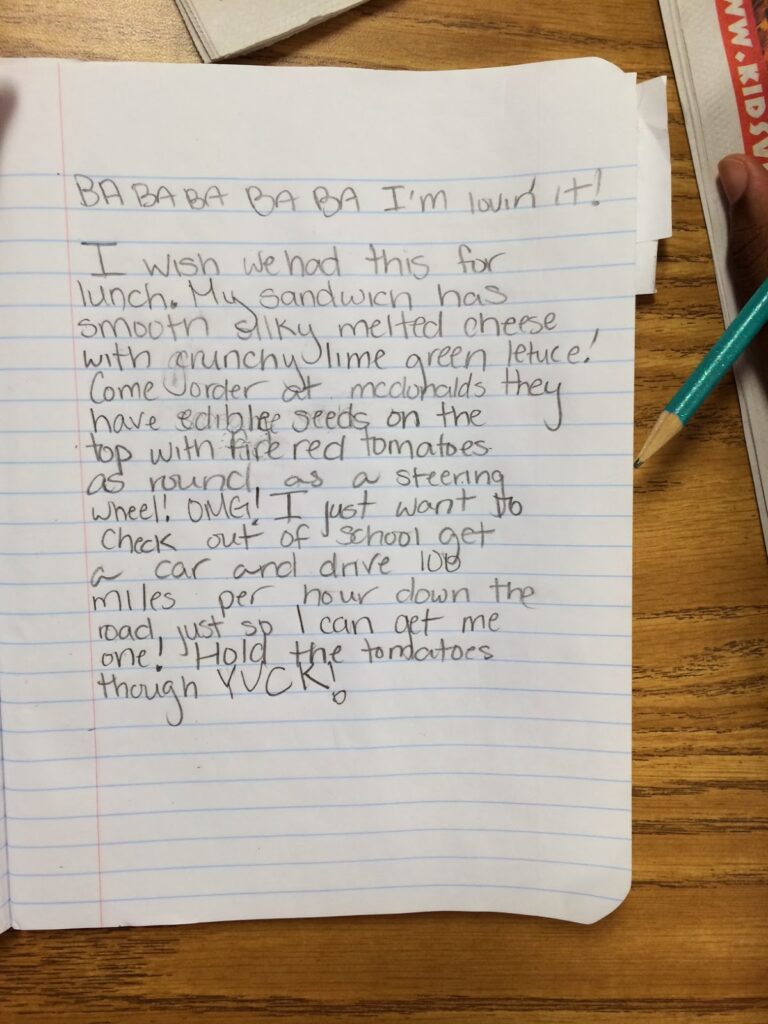
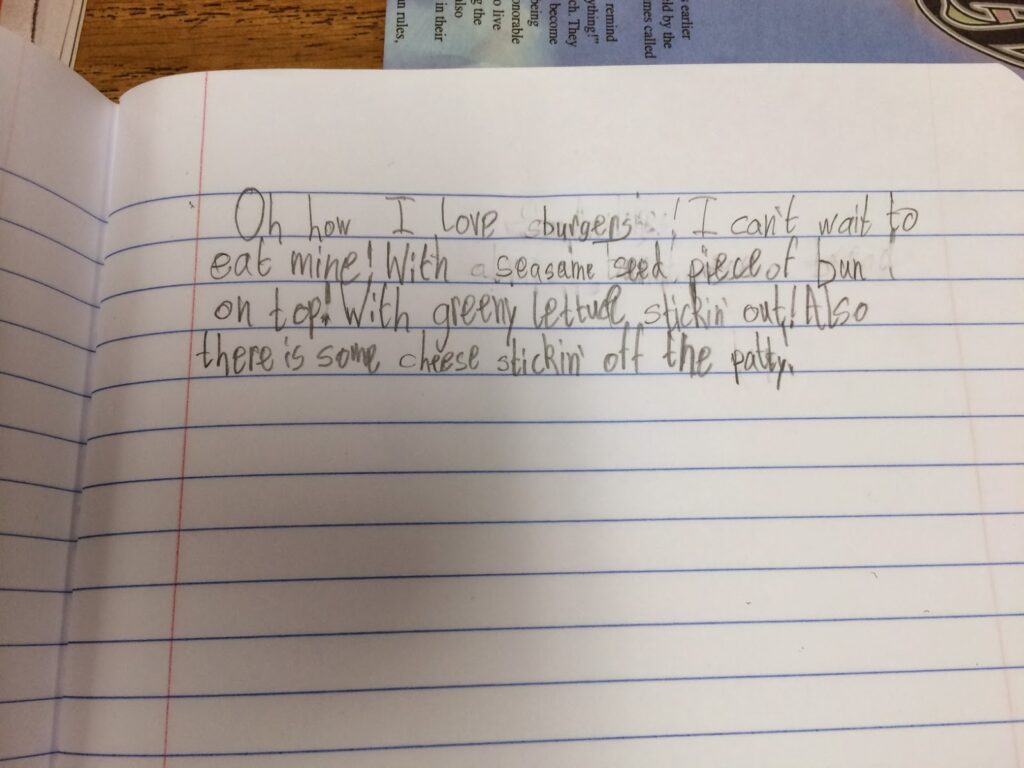
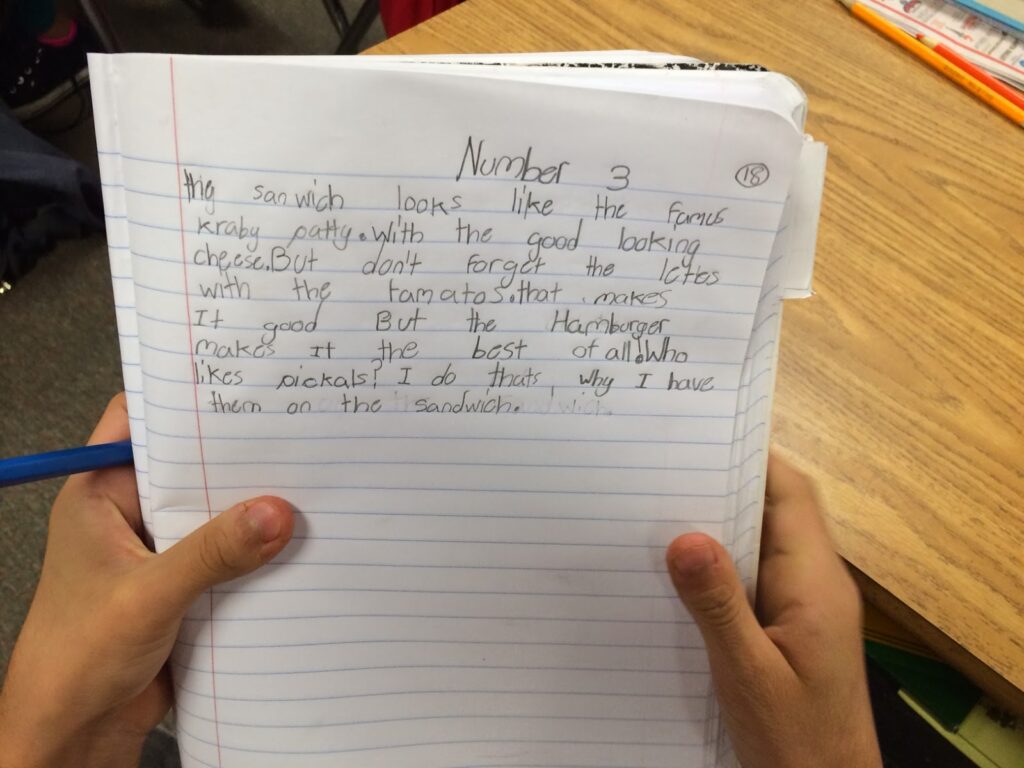
Show don’t tell examples from my students’ secret food descriptions
Every one of these writers used voice, stayed on task, and started writing immediately, which was a huge step for a few of them.
Why it workedA fun topic, a model to follow, and an exciting task: “Make sure we can guess which one is yours!”
Not every writing piece has to be a full five-paragraph essay. Students will still have to write to prompts and about topics they aren’t excited about, but when you grow their love of writing on the fun days, it carries over into the days when they aren’t as excited.
My Wintercake unit builds this same show don’t tell lesson into a full week of descriptive writing. Wintercake by Lynne Rae Perkins is full of rich vocabulary, so it’s a strong model for word choice in show don’t tell writing. It’s also one of my favorite winter read alouds, along with four other mentor texts I use in January.
This post contains affiliate links to books on Amazon. As an Amazon Associate, I earn from qualifying purchases, at no extra cost to you.

Wintercake by Lynne Rae Perkins
Get the book on AmazonShow students a simple paragraph about wintercake and point out how plain it is, especially next to the strong word choice Lynne Rae Perkins uses in the book. Then revise it together. What kind of details can be added? Are there any verbs that could be more vivid?
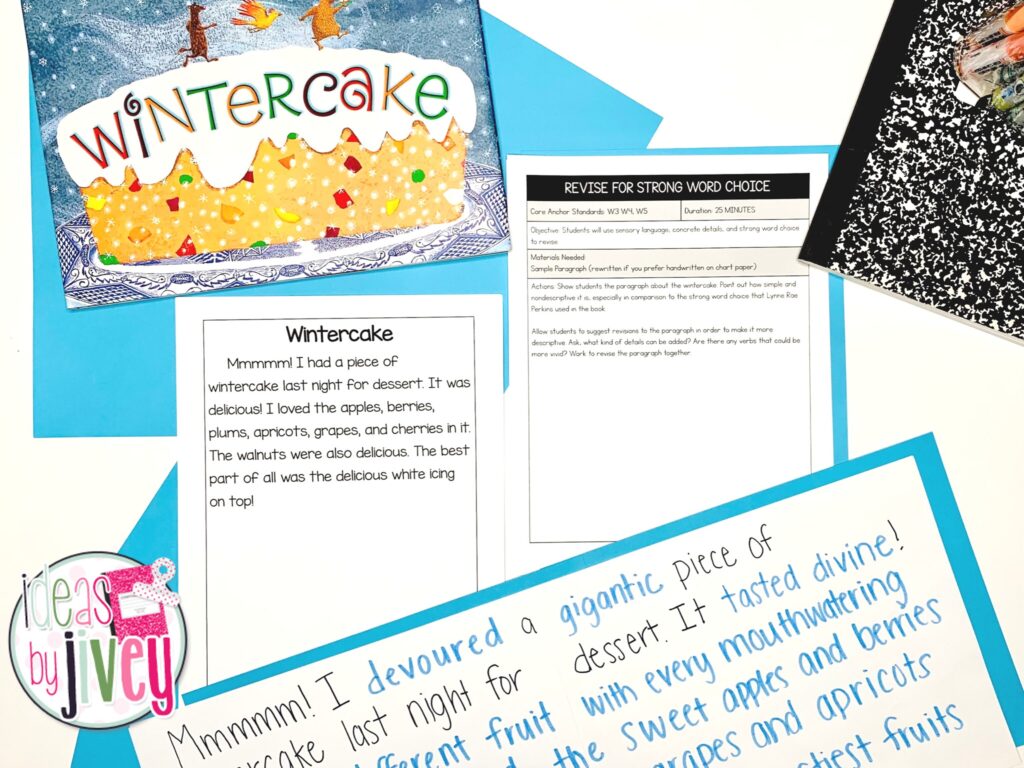
Mmmmm! I had a piece of wintercake last night for dessert. It was delicious! I loved the apples, berries, plums, apricots, grapes, and cherries in it. The walnuts were also delicious. The best part of all was the delicious white icing on top!
Mmmmm! I devoured a gigantic piece of wintercake last night for dessert. It tasted divine! I bit into a different fruit with every mouthwatering bite. I really enjoyed the sweet apples and berries that were baked in. The sour grapes and apricots made my lips pucker. … The yummiest part of the wintercake was the delicious sugary white icing that was drizzled like snow on top!
All of the pictures are cake, so students have to be very specific. With a partner or small group, they take 3-5 minutes per picture to brainstorm a list of descriptions. You can project the pictures, hand out printed copies, or tape them around the room and have six small groups rotate when the timer goes off. Rotating gets students moving, and it keeps them from comparing to the other pictures or getting ahead.
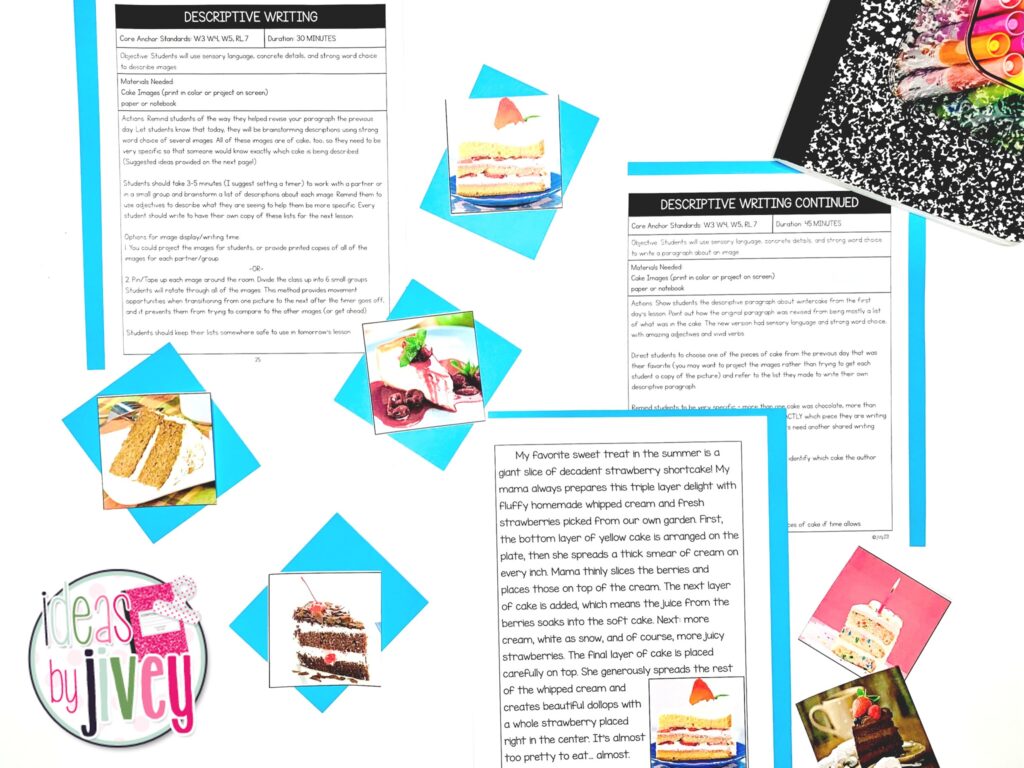
triple layer yellow cake, homemade whipped cream, thinly sliced strawberries, juice soaking into the cake, whipped cream dollop, whole strawberry on top
Look back at the revised wintercake paragraph and how it went from mostly a list to sensory language and strong word choice. Then students choose their favorite cake and use their list to write their own descriptive paragraph. More than one cake is chocolate and more than one has strawberries, so a reader should know EXACTLY which piece they’re describing. The unit includes a sample paragraph about strawberry shortcake for another shared writing model.
Finally, students trade paragraphs and guess which cake the author described, just like “Which cake is mine?”
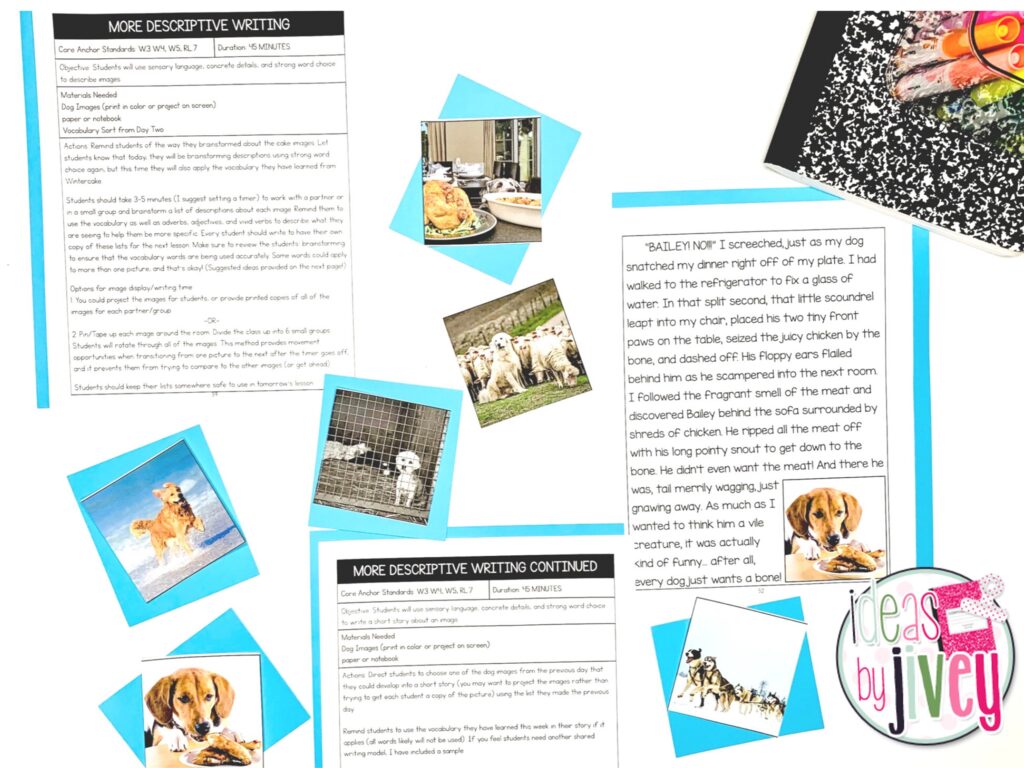
Next, students brainstorm the same way about six dog pictures, but this time they also use the vocabulary they learned from Wintercake, along with adverbs, adjectives, and vivid verbs. Then they pick one dog and develop their list into a short story. The unit includes a sample story about a dog named Bailey who snatches dinner right off the plate.
Dogs and dialogueDog pictures work for dialogue, too. See how students give them a voice in my writing dialogue from pictures post.
My Wintercake unit includes all of these lessons with the cake and dog pictures, samples, and printables, and it’s part of Mentor Text Club, 2nd Edition.

Showing instead of telling isn’t only for stories. When students move into opinion and informational writing, my Replace Vague Words revision mini-lessons for 2nd-3rd grade and 4th-5th grade teach them to trade words like “fun” and “big” for specific ones a reader can picture, such as naming the exact thing or adding a measurable detail.


