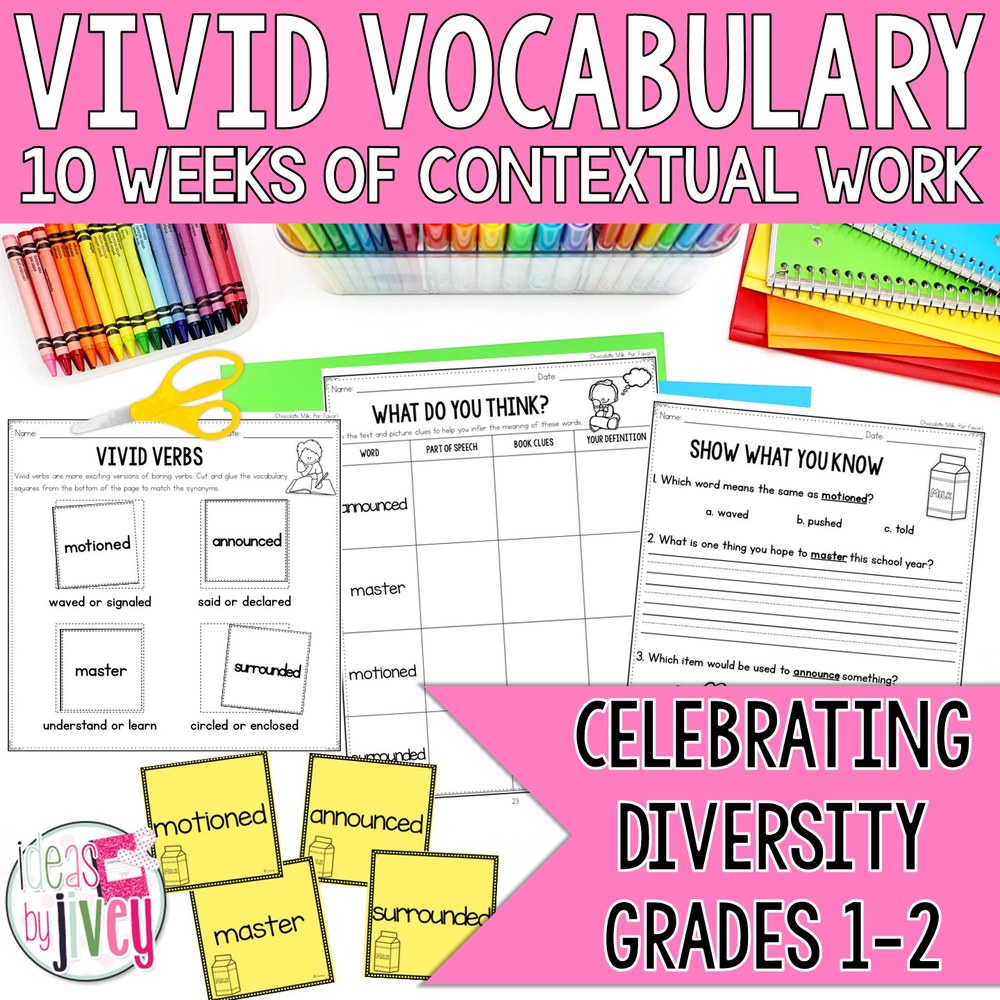
This Science of Reading-aligned Celebrating Diversity vocabulary companion teaches new words in context from picture books like My Name Is Yoon, The Invisible Boy, and Ada Twist, Scientist. Making sure students feel represented in culture, gender, race, religion, and family structure is so important, and these books help your students see themselves in the story and learn about others who aren’t like them.
Each book’s set is built around four tier 2 words from the book, along with some tier 3 words when a book uses them. Students meet every word in the book first, gather clues from the text, and work out what it means before they practice using it. There are no word lists to memorize and no copying definitions out of a dictionary.
The books are not included. I chose favorite read-alouds that most school libraries already have.
How each book’s set works
1
Word cards for the week’s words
2
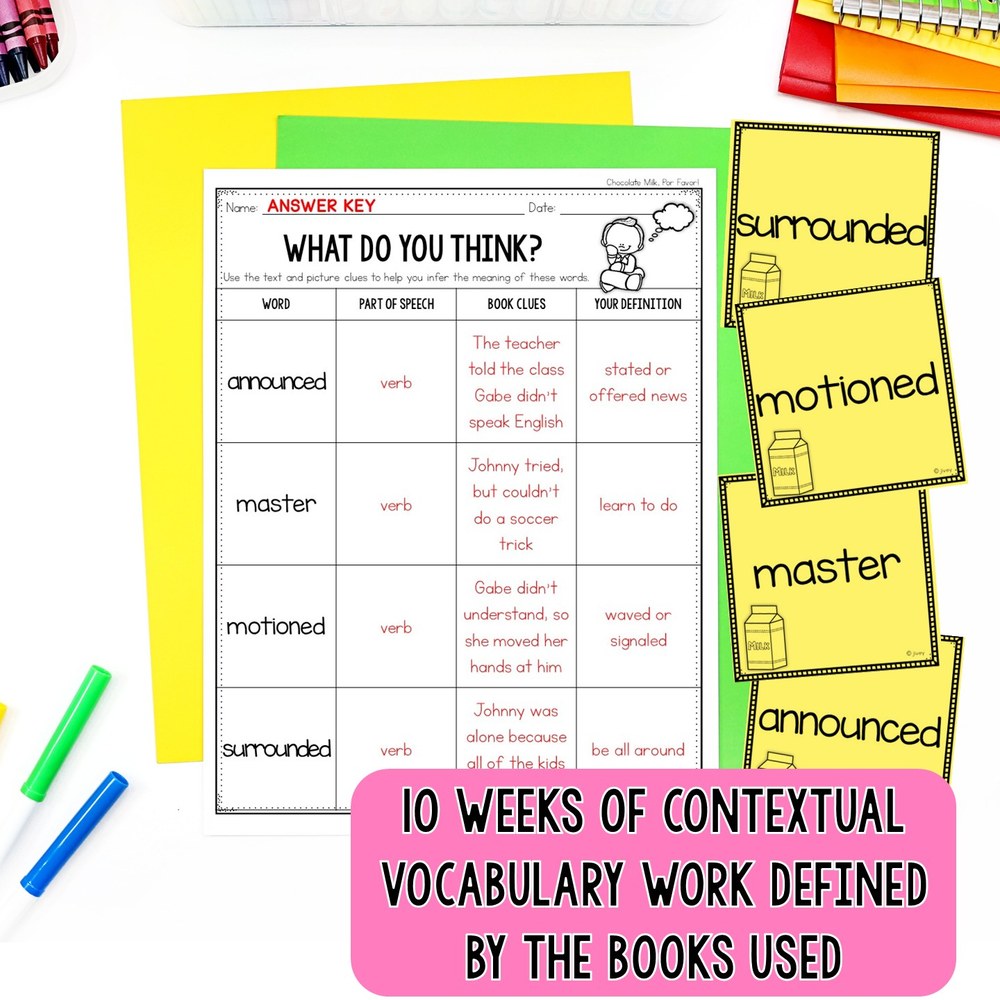
What Do You Think? Students record each word’s part of speech and the clues the book gives, then write what they think it means in their own words.
3
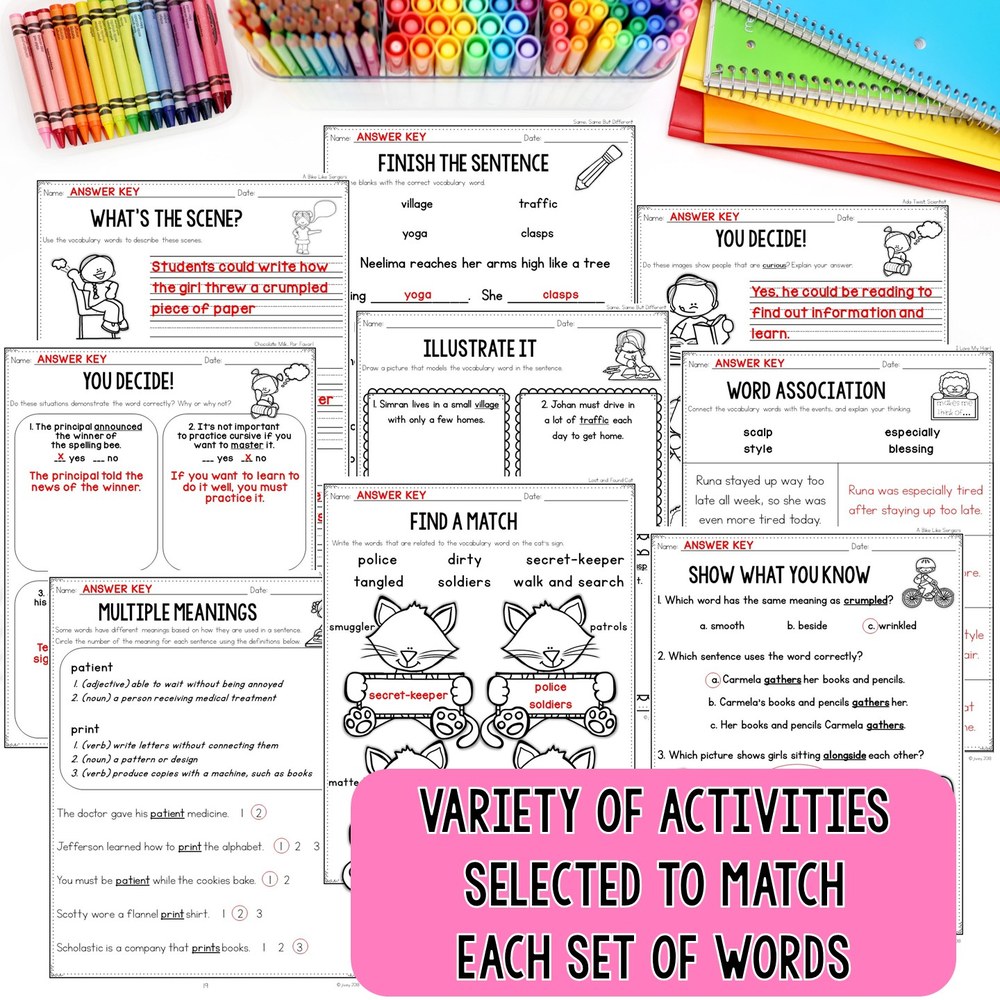
Practice pages that change with the book and its words. Depending on the book, students use context clues to finish sentences, match words to pictures, work with antonyms, describe a scene, or decide whether a word fits a situation and explain why.
4
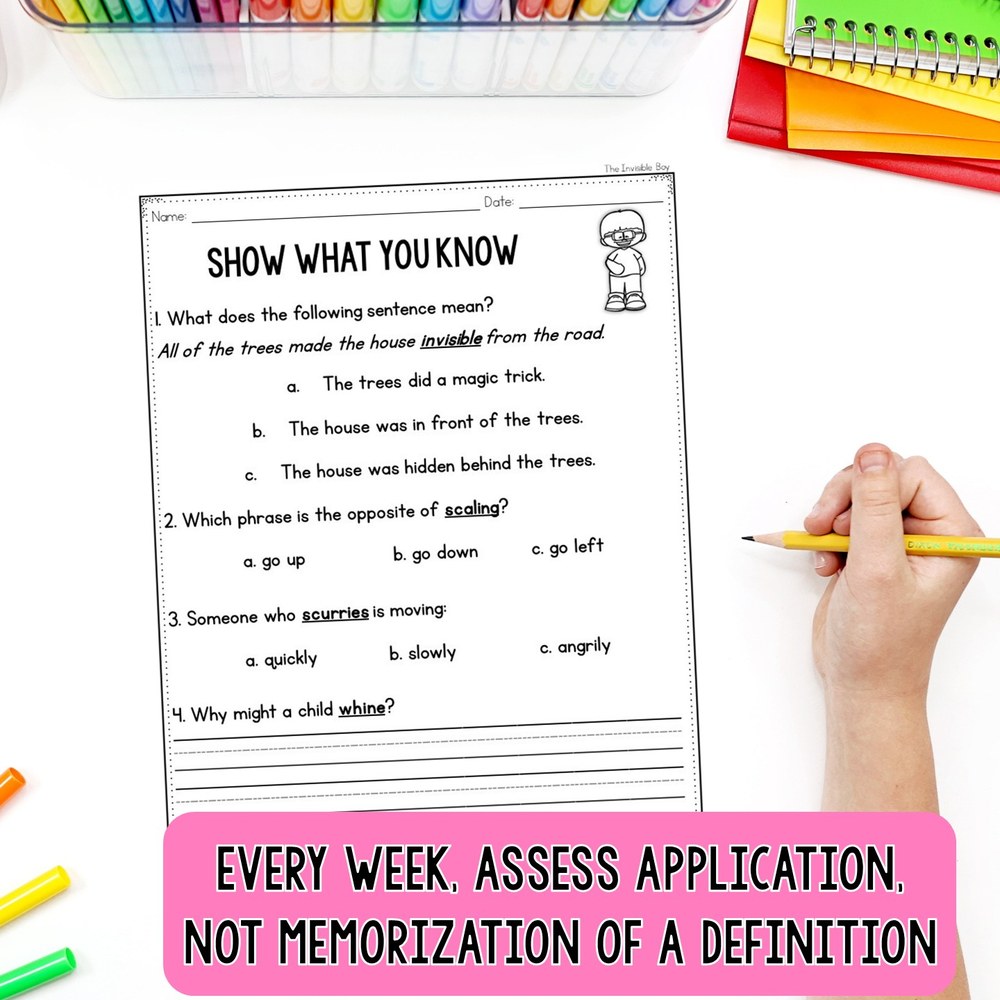
Show What You Know, a quick formative check on the week’s words
What’s included:
A vocabulary set for each of the 10 books
Open-ended activities that work with any words, so you can bring back words from earlier weeks
Answer keys for the activities and assessments
Links to Google Slides versions for digital practice
Books used in this set:
My Name Is Yoon by Helen Recorvits
Chocolate Milk, Por Favor! by Maria Dismondy
The Invisible Boy by Trudy Ludwig
Same, Same But Different by Jenny Sue Kostecki-Shaw
Crow Boy by Taro Yashima
Lost and Found Cat by Doug Kuntz and Amy Shrodes
Ada Twist, Scientist by Andrea Beaty
I Love My Hair! by Natasha Anastasia Tarpley
A Bike Like Sergio’s by Maribeth Boelts
Latke, the Lucky Dog by Ellen Fischer
Why teach vocabulary this way?
Many tier 2 words aren’t new ideas for students. They’re more precise ways to say things students already say with simpler words: horrible instead of “very bad,” or scrunched instead of “squished up.” Students will meet these words again and again, in books and in conversation, so they’re worth teaching well. When students learn a word inside a story they already know, the book shows them exactly what the word adds. Using each word several times, in different ways, helps students start choosing it in their own writing and speaking.