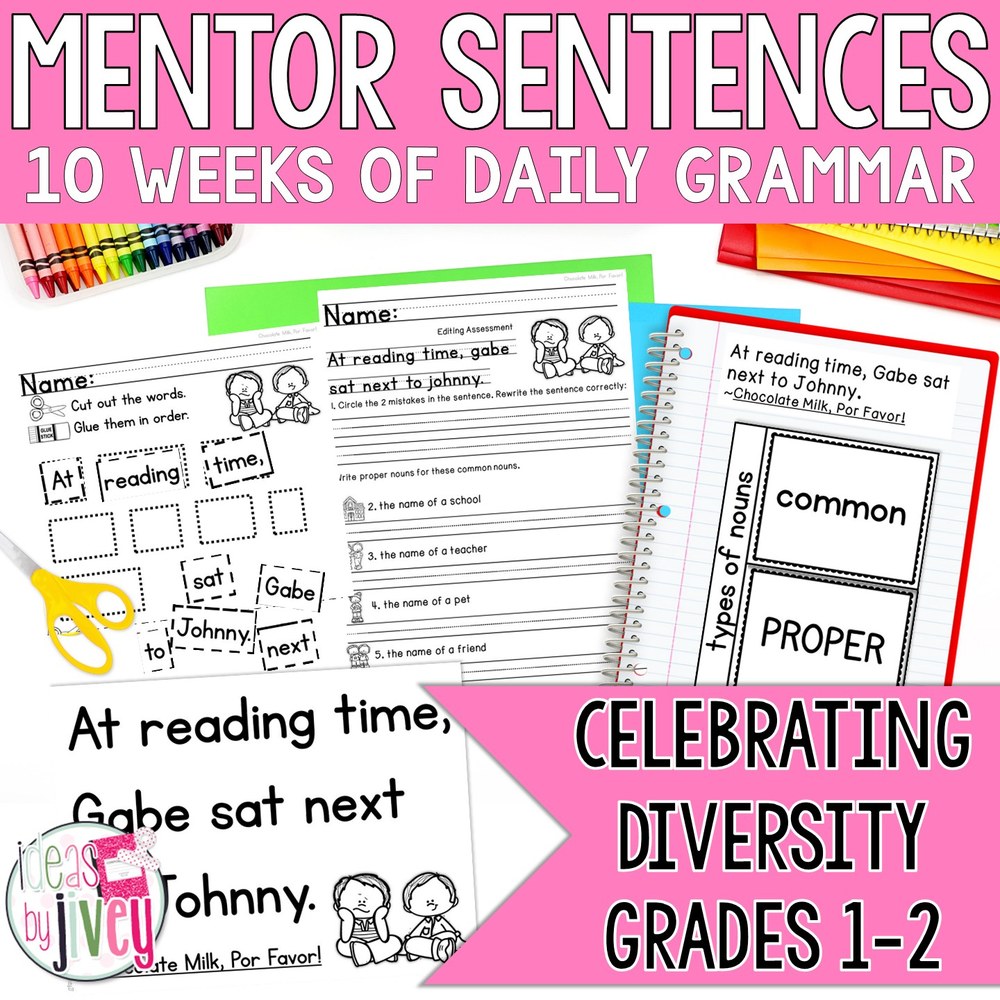
In these mentor sentences, students rebuild one sentence from a picture book each week, learn the skill inside it, and then write and illustrate a sentence of their own. The sentences come from picture books that celebrate diversity, from My Name Is Yoon and The Invisible Boy to Ada Twist, Scientist and A Bike Like Sergio’s, and the skills run from nouns and verbs to possessive nouns and prepositions. It’s so important for students to feel represented in culture, gender, race, religion, and family structure, and these books help your students see themselves in the story and learn about others who aren’t like them, too.
I chose these 10 books because they’re ones I love to read aloud, and they give students so much to talk about!
Each day, students work with the same sentence in a new way: listening, noticing, rebuilding it, and writing and illustrating their own. Your 2nd graders and your emergent readers each get their own version of the student pages, so everyone works with the same book at the right level. You don’t need to be a grammar expert to teach it, because the directions for every day are already written out for you!
Most of the books are in school and public libraries, and many are available as online read-alouds.
How the mentor sentence routine works:
1
Notice: students listen to the book, then notice words, punctuation, and parts of the sentence.
2
Rebuild: students read the words of the sentence, and emergent readers cut and glue them back in order.
3
Learn the skill: a flap activity teaches the week’s grammar skill.
4
Revise: 2nd graders revise the sentence, with a sample revision in the directions.
5
Imitate: students use a sentence frame to write their own sentence, read it, and illustrate it.
6
Class book: student pages go into a class book they can read again and again.
7
Quiz: a short quiz on the week’s skill, with a version for emergent readers and one for 2nd graders.
Start here if mentor sentences are new to you. This unit opens with a 9-page introduction to the routine, with photos and day-by-day directions.
What’s included:
A 9-page introduction to the routine with photos and day-by-day directions
10 mentor sentence lessons, one for each book, and each one includes:
A teacher sentence page
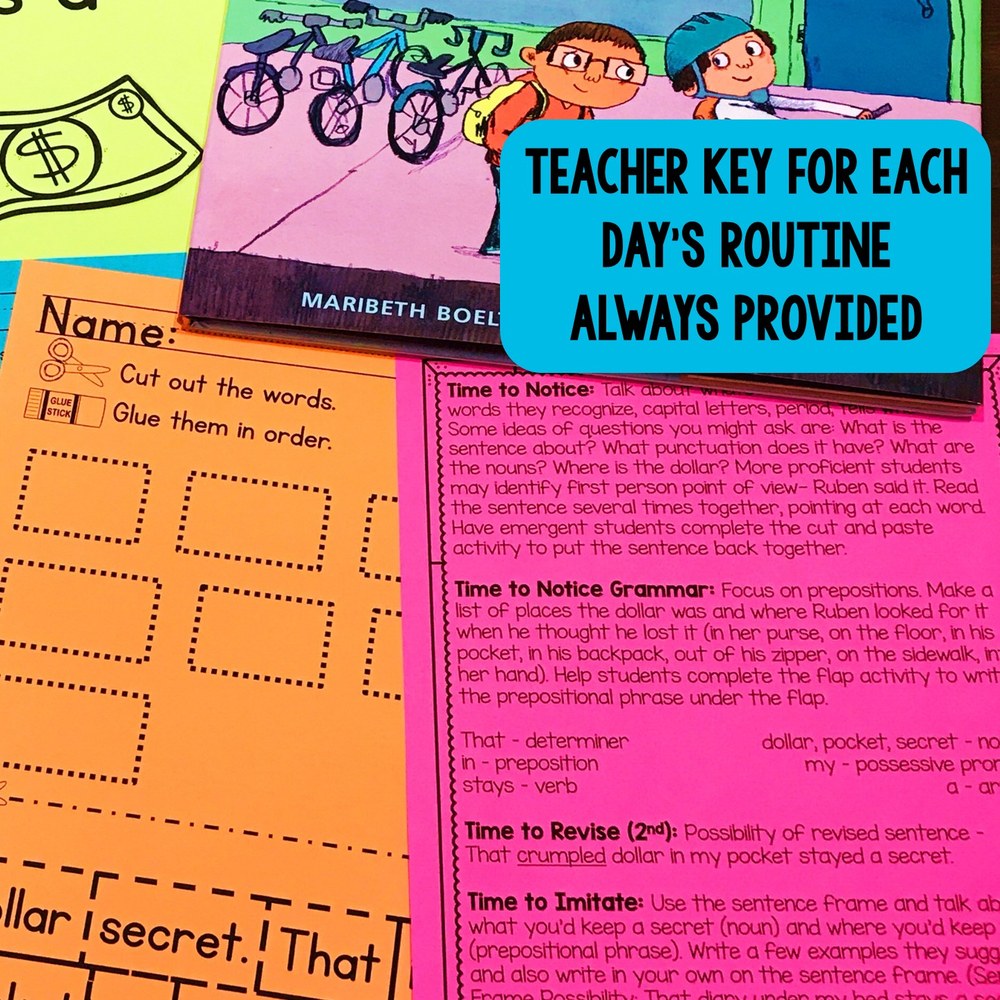
Directions and guidance for each day
Two student sentence pages: one for 2nd graders, and one for emergent readers with the words out of order to cut and glue back in order
A flap activity for the week’s skill
A sentence frame for the teacher imitation
A student imitation page, with and without handwriting support
A class book cover in color and in black and white
A quiz on the week’s focus skill, in two versions: one for emergent readers and one for 2nd graders
Books and grammar skills:
My Name Is Yoon by Helen Recorvits: nouns
Chocolate Milk, Por Favor! by Maria Dismondy: proper nouns
The Invisible Boy by Trudy Ludwig: verbs
Same, Same But Different by Jenny Sue Kostecki-Shaw: attributes in categories
Crow Boy by Taro Yashima: adjectives
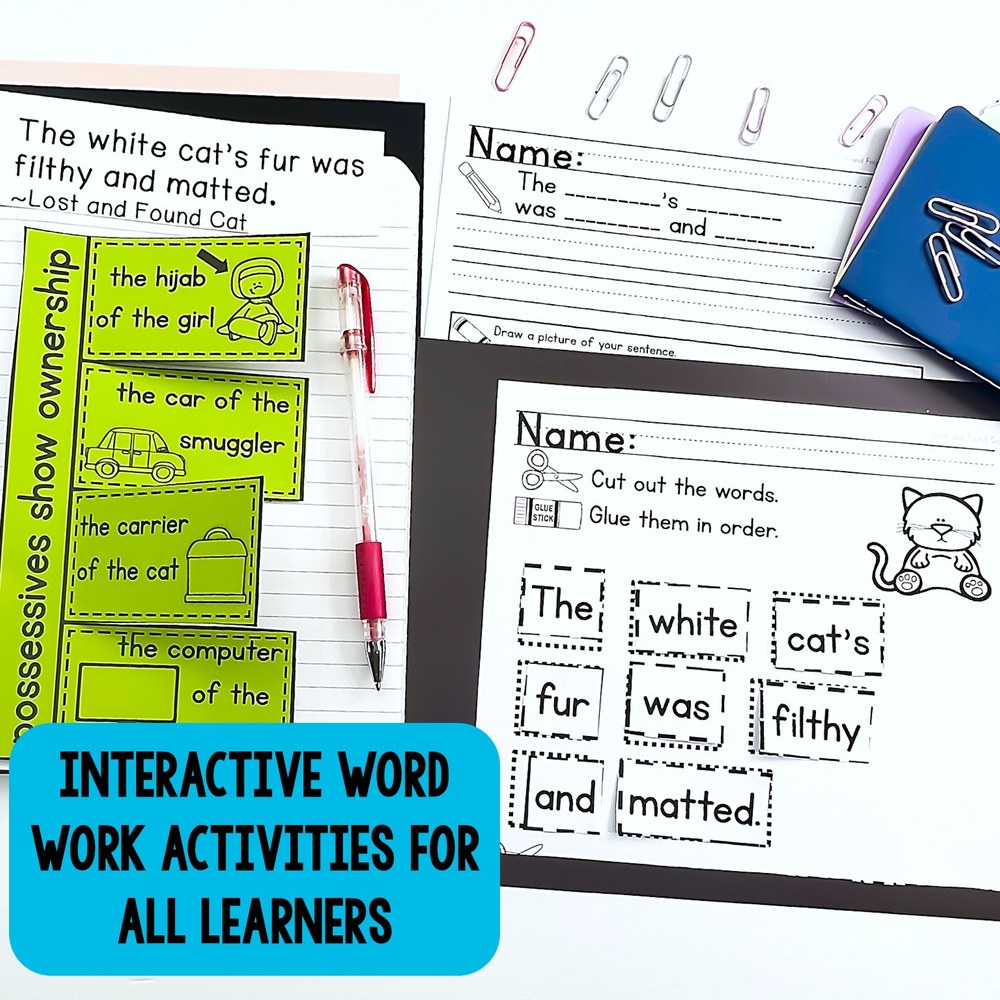
Lost and Found Cat by Doug Kuntz and Amy Shrodes: possessive nouns
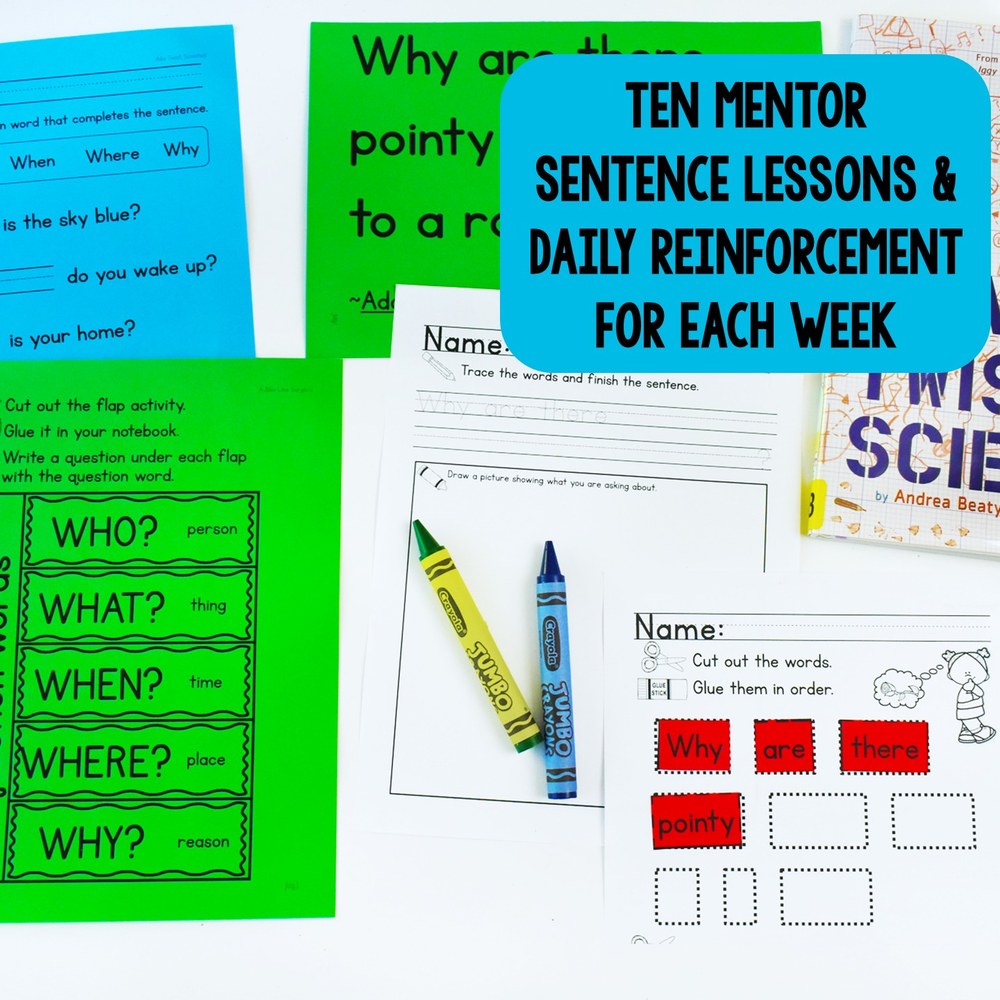
Ada Twist, Scientist by Andrea Beaty: question words
I Love My Hair! by Natasha Anastasia Tarpley: giving reasons with because
A Bike Like Sergio’s by Maribeth Boelts: prepositions
Latke, the Lucky Dog by Ellen Fischer: ordinal numbers as adjectives
Why use mentor sentences for daily grammar practice?
Fix-the-sentence drills hand students a sentence full of mistakes. If they don’t already know the rule, they can’t spot the errors, and fixing someone else’s mistakes doesn’t show them what a strong sentence looks like. That’s why the practice so rarely shows up in their own writing.
Mentor sentences flip that! Each week starts with a model sentence from a published author, and students soak up the grammar by noticing it, talking about it, and trying it in a sentence of their own. They pick up craft along the way, too: strong verbs, describing words, and sentence patterns they can borrow for their own writing.
The routine stays the same every week, so students of any ability know exactly what to expect. Each week focuses on one or two skills, but students also meet new and earlier skills in every sentence, and that spiral review keeps them in front of students all year!
New to mentor sentences? My Mentor Sentences for K-2 page walks through how they work in the primary grades.
Where this unit fits:
Use this unit as an add-on to your year of mentor sentences, or as your starting point if mentor sentences are new to you. You don’t have to teach the lessons in order, and I included several foundational skills in case you start the year with it.