$10.00
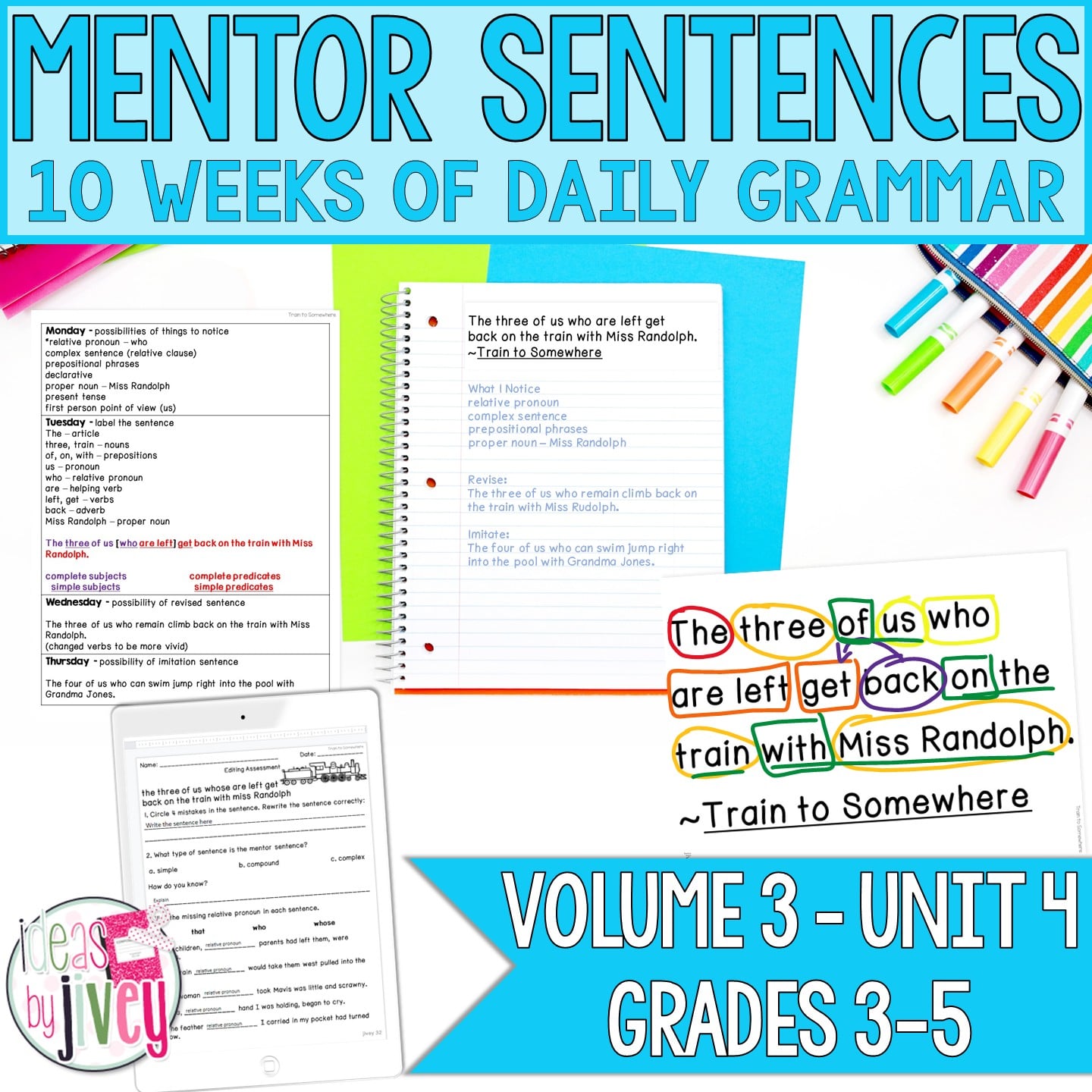
You can teach Mentor Sentences Volume 3, Unit 4 any time of the year. Its 10 weeks of daily grammar for 3rd, 4th, and 5th grade cover dialogue, relative pronouns and adverbs, superlative adjectives, similes, and inverted subject and verb, with sentences from books like Last Stop on Market Street, Jumanji, and Gleam and Glow.
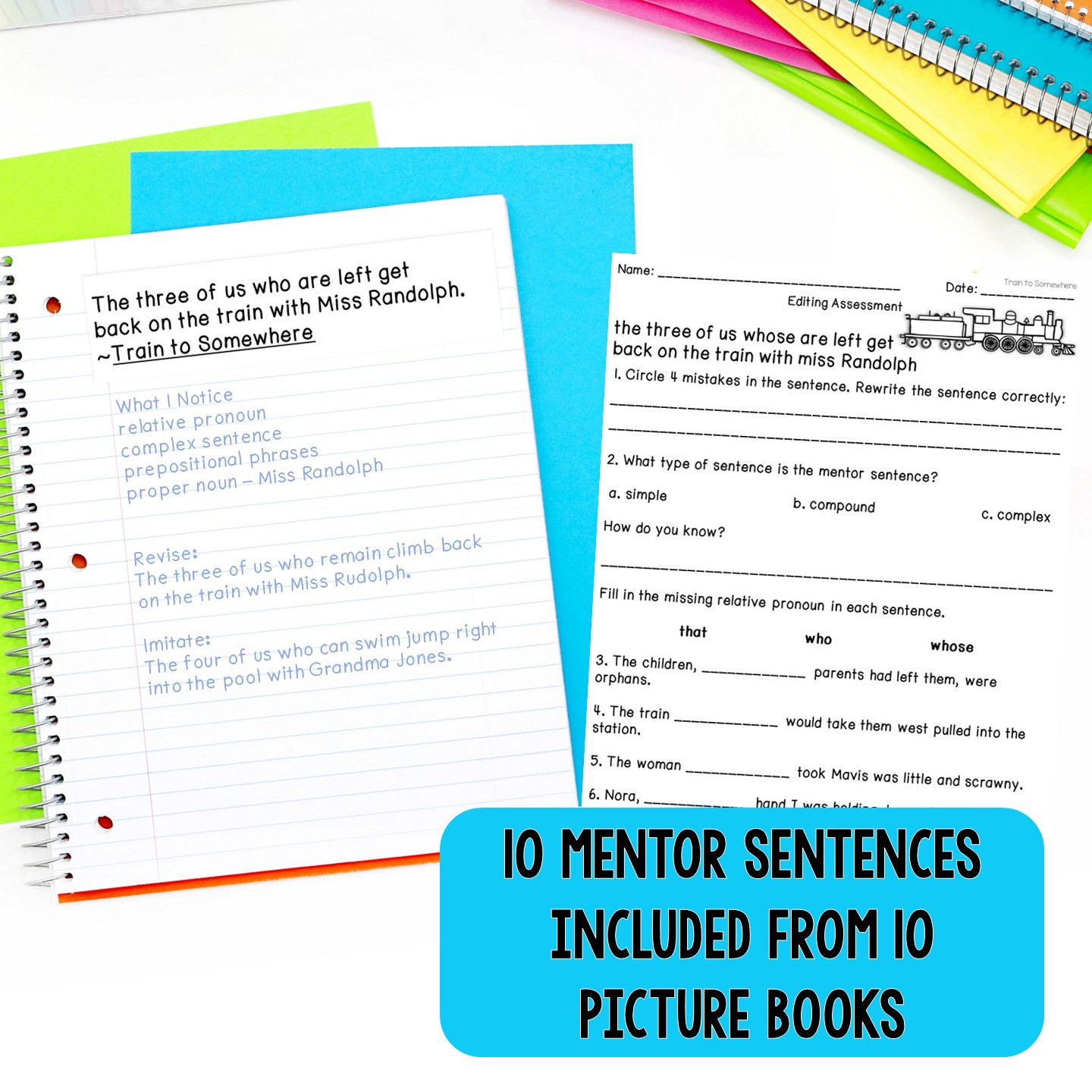
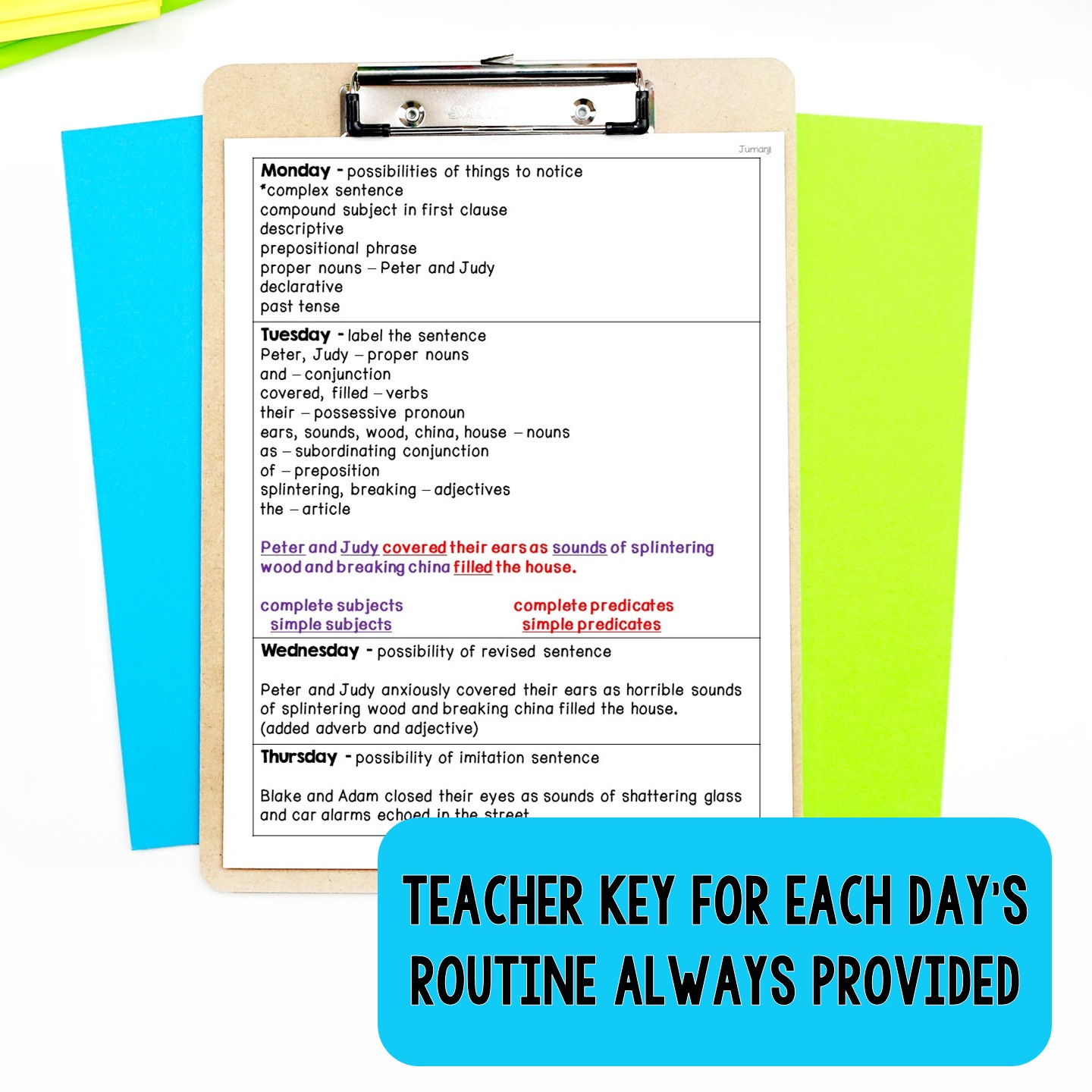
Each day, students spend 10 to 15 minutes with the same sentence, working with it in a new way: noticing, labeling, revising, and writing their own. You don’t need to be a grammar expert to teach it. I’ve already done the thinking for every day, right down to sample revisions and imitations, so you can open the lesson plan and go!
The books are not included. I chose favorite read-alouds that most school libraries already have.
Fix-the-sentence drills hand students a sentence full of mistakes. If they don’t already know the rule, they can’t spot the errors, and fixing someone else’s mistakes doesn’t show them what a strong sentence looks like. That’s why the practice so rarely shows up in their own writing.
Mentor sentences flip that! Each week starts with a model sentence from a published author, and students soak up the grammar by noticing it, talking about it, and trying it in a sentence of their own. They pick up craft along the way, too: figurative language, descriptive words and phrases, and sentence variety they can borrow for their own writing.
Research backs up teaching grammar in context instead of in isolation. A large review of writing studies for grades 4 to 12 found that grammar taught in isolation did not improve students’ writing (Graham and Perin, 2007).
The routine stays the same every week, so students of any ability know exactly what to expect. Each week focuses on one or two skills, but students also meet new and earlier skills in every sentence, and that spiral review keeps them in front of students all year!
New to mentor sentences? My Mentor Sentences for 3-5 page walks through how they work in upper elementary.
Volume 3 has four 10-week units. I put Units 1 to 3 in the order I taught them, so the skills spiral and get harder as the year goes on. Unit 4 can be used to fill gaps in between the seasonal books throughout the year. You don’t have to follow the unit order. The free Volume 3 At-A-Glance lists every book and skill in the volume so you can plan out your year.
All 40 weeks are in the Volume 3 Bundle, which has all four units.
Volume 1 and Volume 2 use different books, so teachers in different grades at the same school don’t repeat lessons.
This purchase is for one teacher. Please don’t share the files with other teachers. Thank you!
Copyright © 2016 Ideas By Jivey, LLC
All rights reserved by author, Jessica Ivey.
Permission to copy for single classroom use only.
Electronic distribution limited to single classroom use only.
Not for public display.
Thank you. Your review was received and will appear once it has been checked.
Please log in to the account you used to buy this resource. Only customers who bought it from this shop can leave a review.
The Best
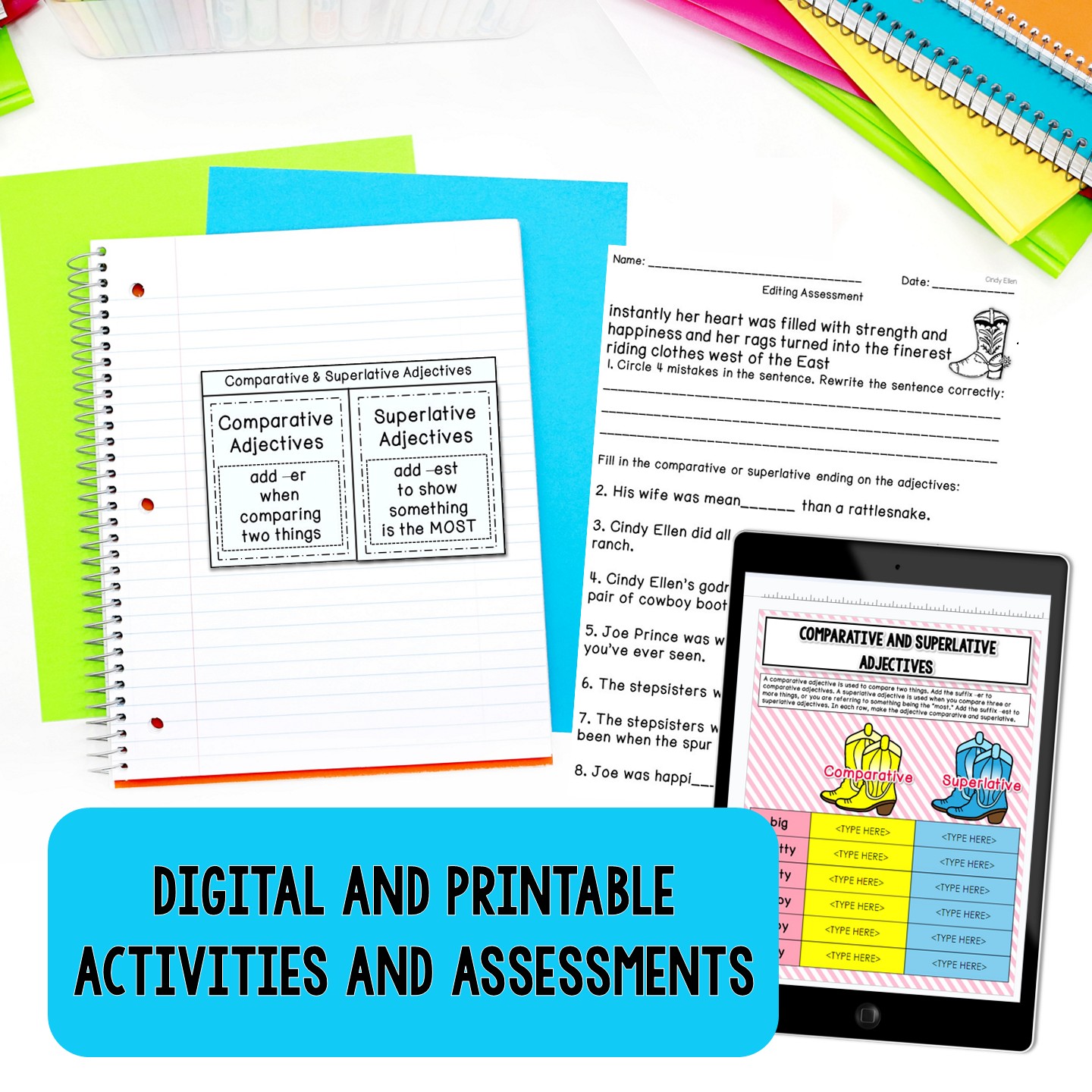
This was so great to have! I loved the interactive notebook parts that helped reinforce the weekly focus.
My kids love these activities. I have seen their sentence structures improved greatly since the beginning of the year. I would highly recommend these.