
$10.00
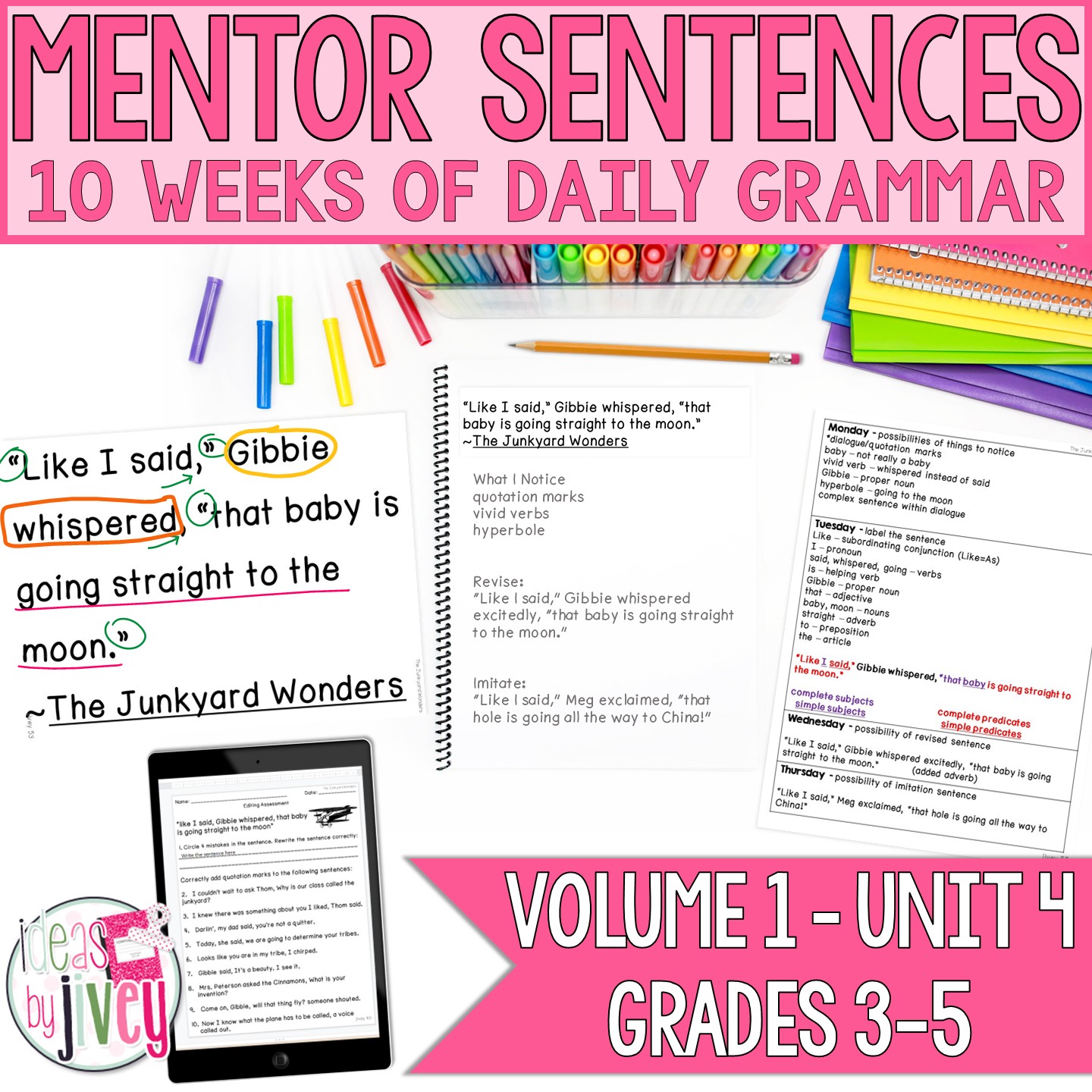
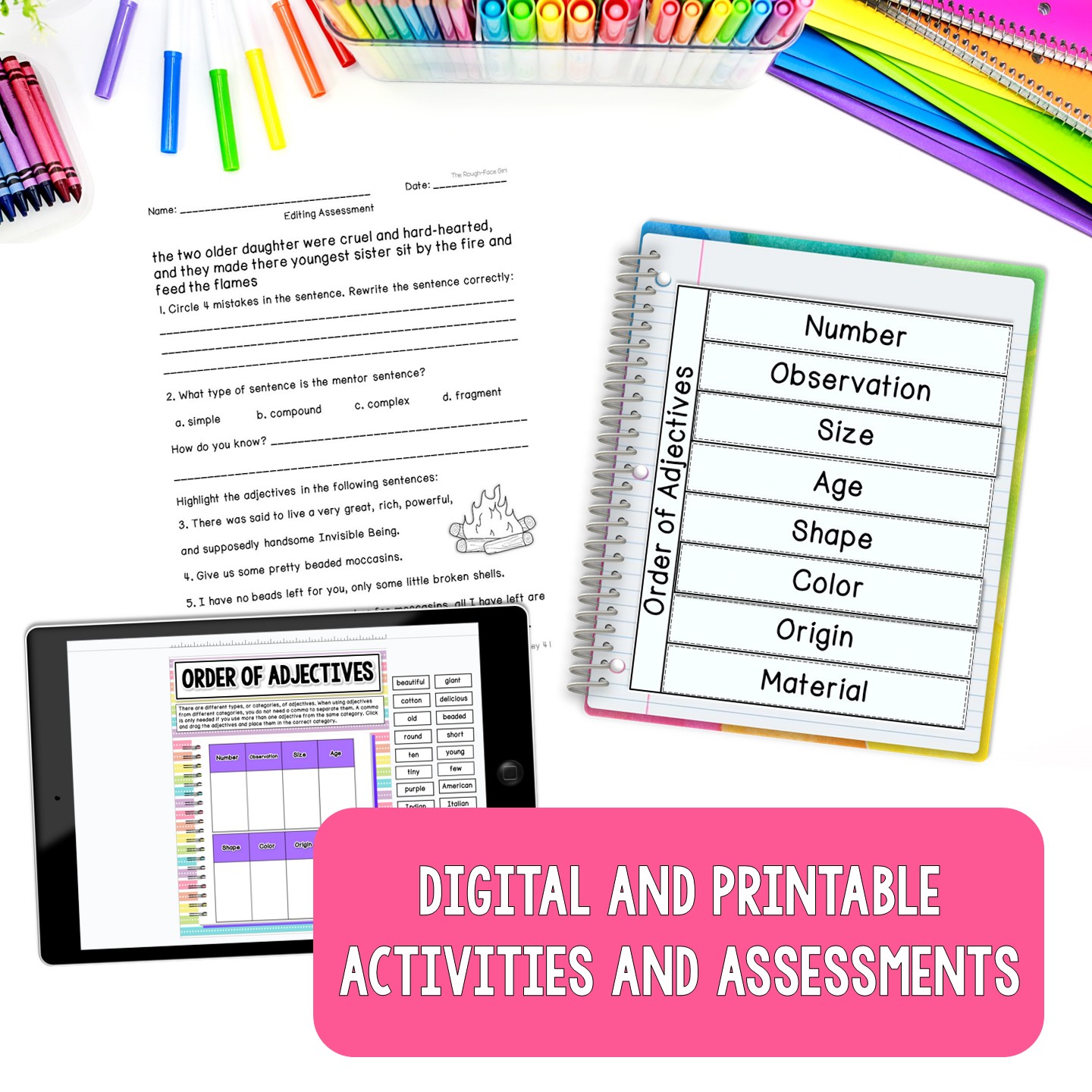
Mentor Sentences Volume 1, Unit 4 isn’t tied to a season, so its 10 weeks of daily grammar can fill the gaps between seasonal books wherever your year needs them. The books, including Roller Coaster, Henry’s Freedom Box, and The Raft, cover relative pronouns and adverbs, prepositional phrases, vivid verbs, and quotation marks for 3rd, 4th, and 5th grade.
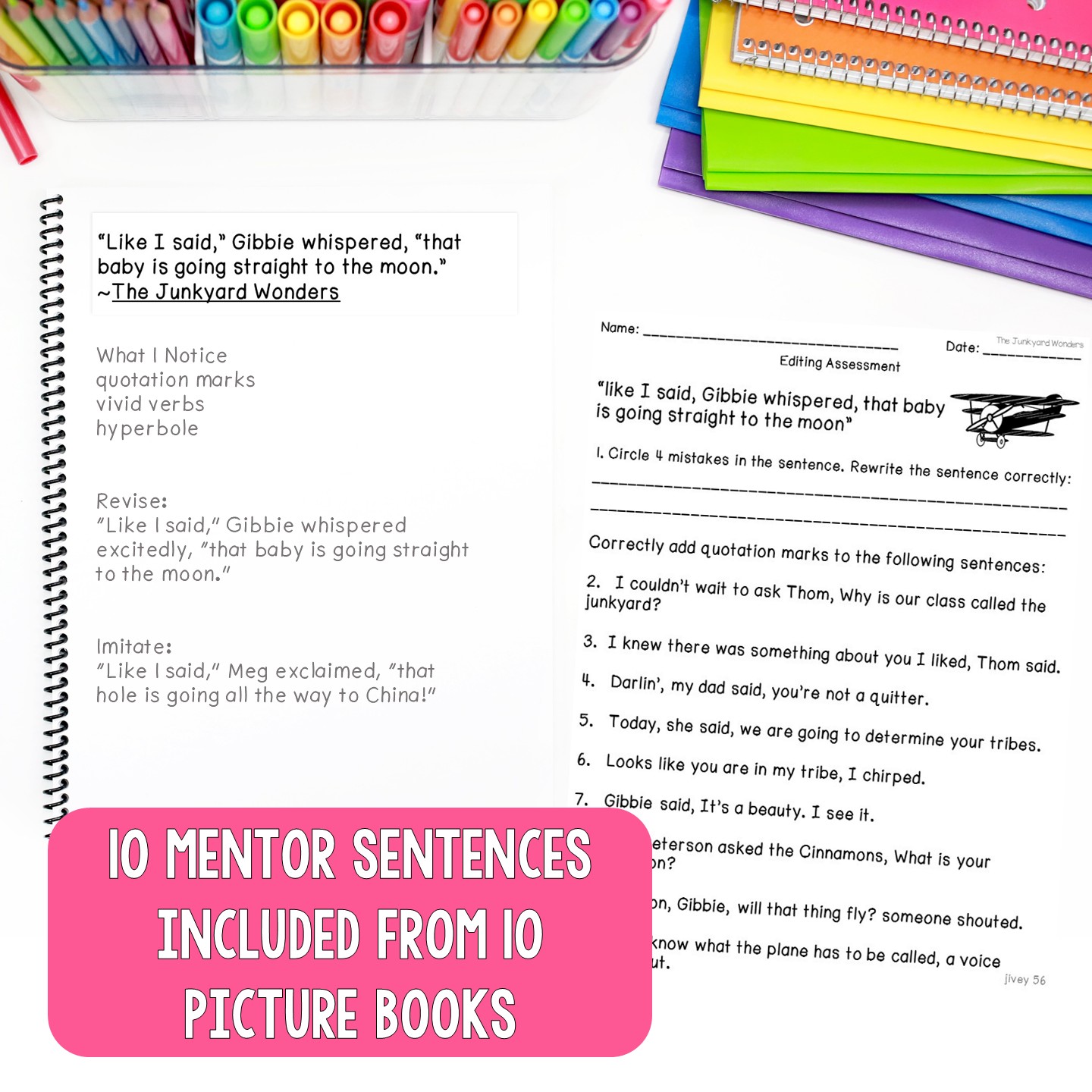
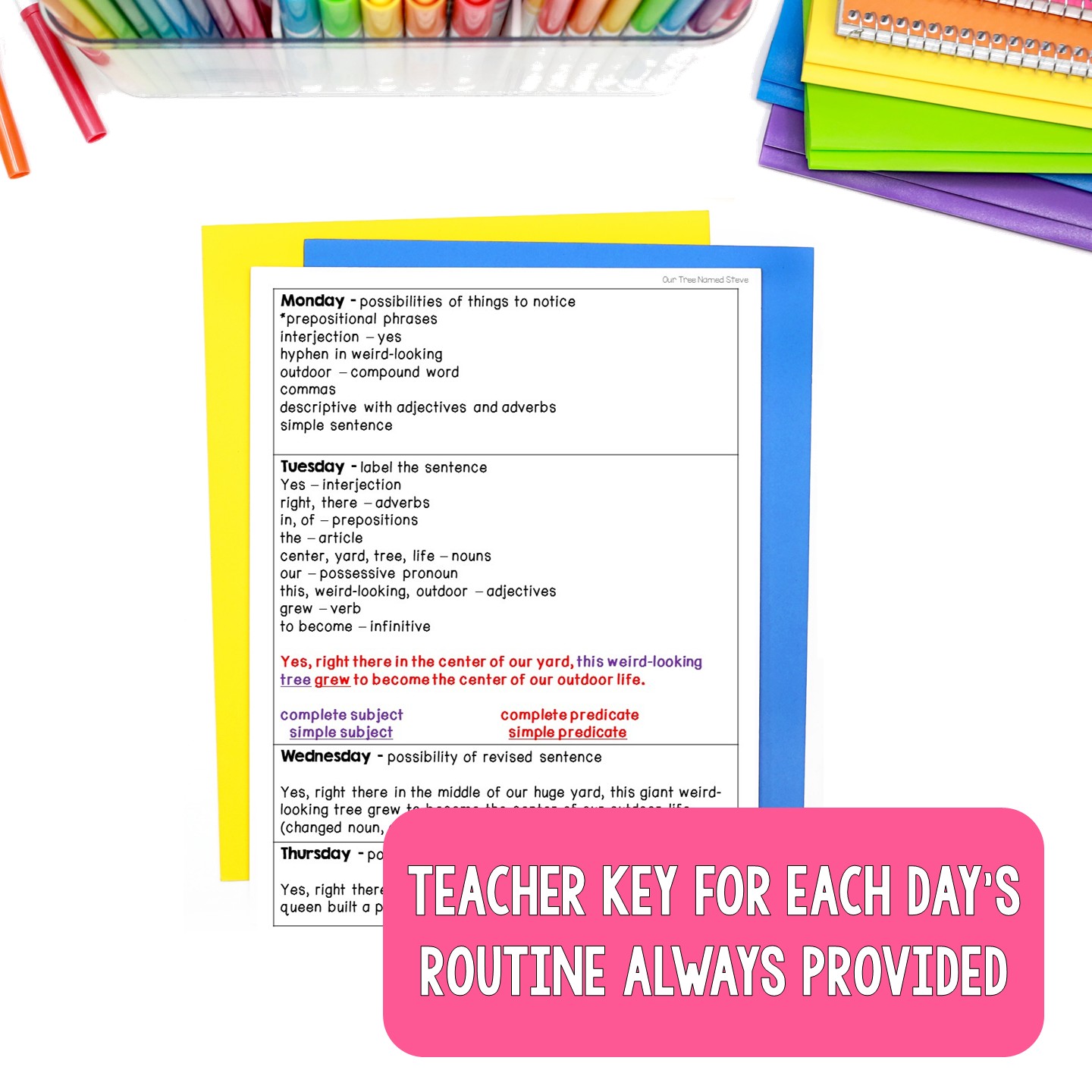
Each day, students spend 10 to 15 minutes with the same sentence, working with it in a new way: noticing, labeling, revising, and writing their own. You don’t need to be a grammar expert to teach it. I’ve already done the thinking for every day, right down to sample revisions and imitations, so you can open the lesson plan and go!
I chose favorite read-alouds that most school libraries already have.
Fix-the-sentence drills hand students a sentence full of mistakes. If they don’t already know the rule, they can’t spot the errors, and fixing someone else’s mistakes doesn’t show them what a strong sentence looks like. That’s why the practice so rarely shows up in their own writing.
Mentor sentences flip that! Each week starts with a model sentence from a published author, and students soak up the grammar by noticing it, talking about it, and trying it in a sentence of their own. They pick up craft along the way, too: figurative language, descriptive words and phrases, and sentence variety they can borrow for their own writing.
Research backs up teaching grammar in context instead of in isolation. A large review of writing studies for grades 4 to 12 found that grammar taught in isolation did not improve students’ writing (Graham and Perin, 2007).
The routine stays the same every week, so students of any ability know exactly what to expect. Each week focuses on one or two skills, but students also meet new and earlier skills in every sentence, and that spiral review keeps them in front of students all year!
New to mentor sentences? My Mentor Sentences for 3-5 page walks through how they work in upper elementary.
Volume 1 has four 10-week units. I put Units 1 to 3 in the order I taught them, so the skills spiral and get harder as the year goes on. Unit 4 can be used to fill gaps in between the seasonal books throughout the year. You don’t have to follow the unit order. The free Volume 1 At-A-Glance lists every book and skill in the volume so you can plan out your year.
All 40 weeks are in the Volume 1 Bundle, which has all four units.
Volume 2 and Volume 3 use different books, so teachers in different grades at the same school don’t repeat lessons.
This purchase is for one teacher. Please don’t share the files with other teachers. Thank you!
Copyright © 2013 Ideas By Jivey, LLC
All rights reserved by author, Jessica Ivey.
Permission to copy for single classroom use only.
Electronic distribution limited to single classroom use only.
Not for public display.
Thank you. Your review was received and will appear once it has been checked.
Please log in to the account you used to buy this resource. Only customers who bought it from this shop can leave a review.
Highly Recommended!
LOVE these mentor sentences bundles. Use them daily.
Helped My Students
I am a firm believe that mentor sentences are the way to go! These helped my students grasp a better understanding of grammar and it showed!
Step up my Mentor Game!
This resource has really helped to enhance our daily mentor sentence. My students enjoy the craft part of learning and it helps them to make connections. Thank you!
wonderful resource
I have all of the Mentor sentence units by ideas by jivey. I love using them to teach grammar, and my students love the mentor sentence routine. It is a great way to help my students be better writers.
This is a fantastic resource to help concrete grammar concepts!
I absolutely love these. They are such a great tool to use in the classroom!
My students loved using this resource. It really helped them practice and understand the concept better. Thank you!
This is one of the best resources that I have purchased on here. It really helps solidify my students' understanding of grammar concepts. I have recommended this resource to the rest of my teammates. Well done!
I love this resource so much and have used it with multiple grade levels. I pitched it to all the elementary teachers at my former school, and continue to use this year after year. My students learn grammar deeply with this approach, and “Mentor Sentences” time is a favorite part of the day. They groan when we skip a week! Highly recommend!
I loved it... my kids loved it.. saw their writing improve
I love using the mentor sentences with my students! It provides language skills while using quality literature!
This is an awesome way to get students thinking about sentence structure, boost grammar skills, and exposure to different books!
I always appreciate the hard work Ideas by Jivey puts into her units. This one is no exception! Buy it, it's worth it!
Great for practicing daily grammar --thanks so much!
Buy the bundle! Once you start using these daily you will want to have them all.
Thank you for a great resource. My students loved this activity!
I love using these mentor sentences. This is the second set that I have used and they are just as fantastic. My students look forward to working on mentor sentences each week. They've made so much progress since the beginning of the year.
Very helpful to get started using mentor sentences. Great resource!
I love using mentor sentences. My students have been able to hear great stories and work on building sentences and grammar.
Thank you for providing this. I have used this in my Tier 2 class.
I have all your mentor sentences and I truly love them all. My students love them also.


