
Students want to do math when it’s a game. These three math games were favorites in my classroom: Lucky Leftovers, one of my favorite division games, where remainders are the points; Make One Whole, where students try to get as close to one whole as they can; and Making Millions, a place value game. Lucky Leftovers and Make One Whole use manipulatives, so students see the math while they play.
I taught Lucky Leftovers while we worked on division strategies. It builds understanding of remainders and gives students practice with divisibility rules and multiples.

We played as a class first, me against the class.
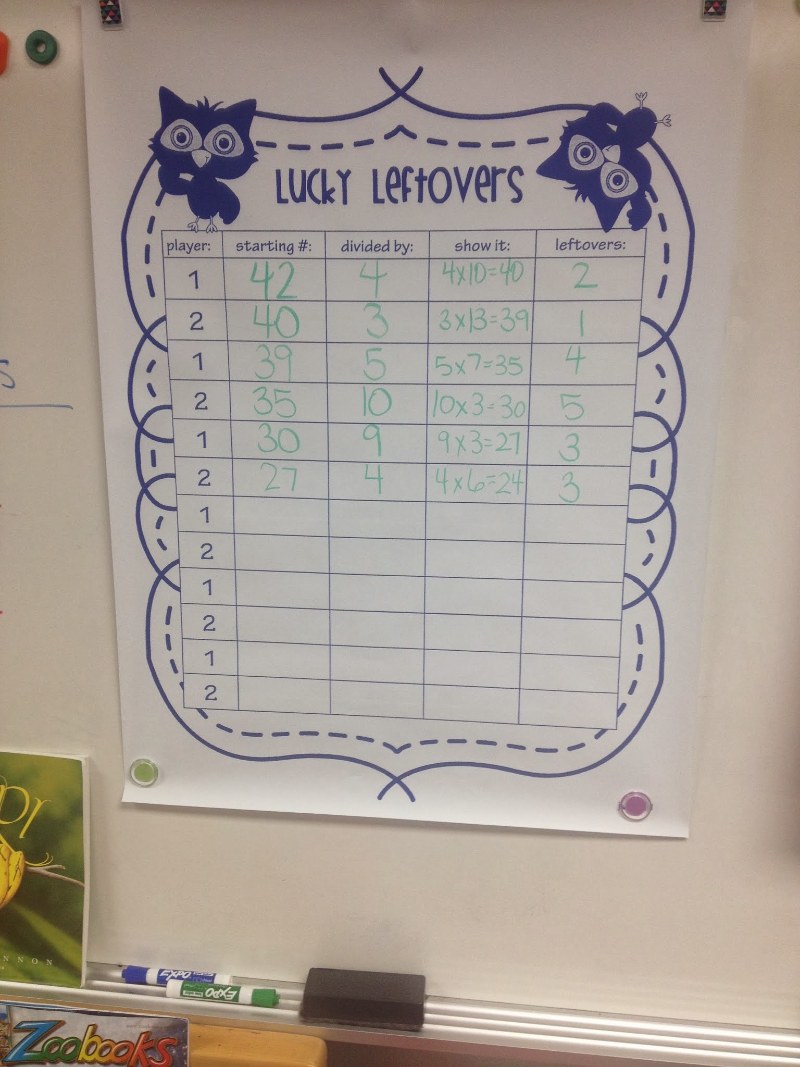
One year, my class needed more support, so students used unifix cubes to make their groups. They made groups of the number they were dividing by and counted how many equal groups they made, so they could actually see the remainder. The leftover cubes became their points instead of a running tally.
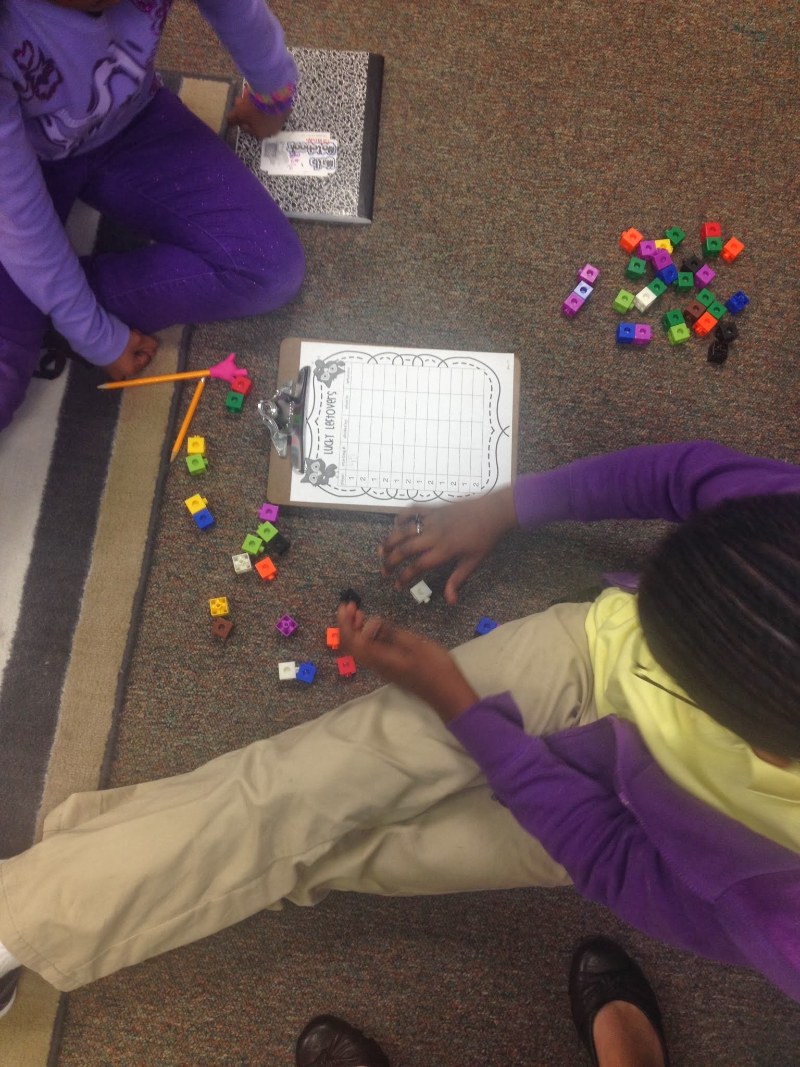
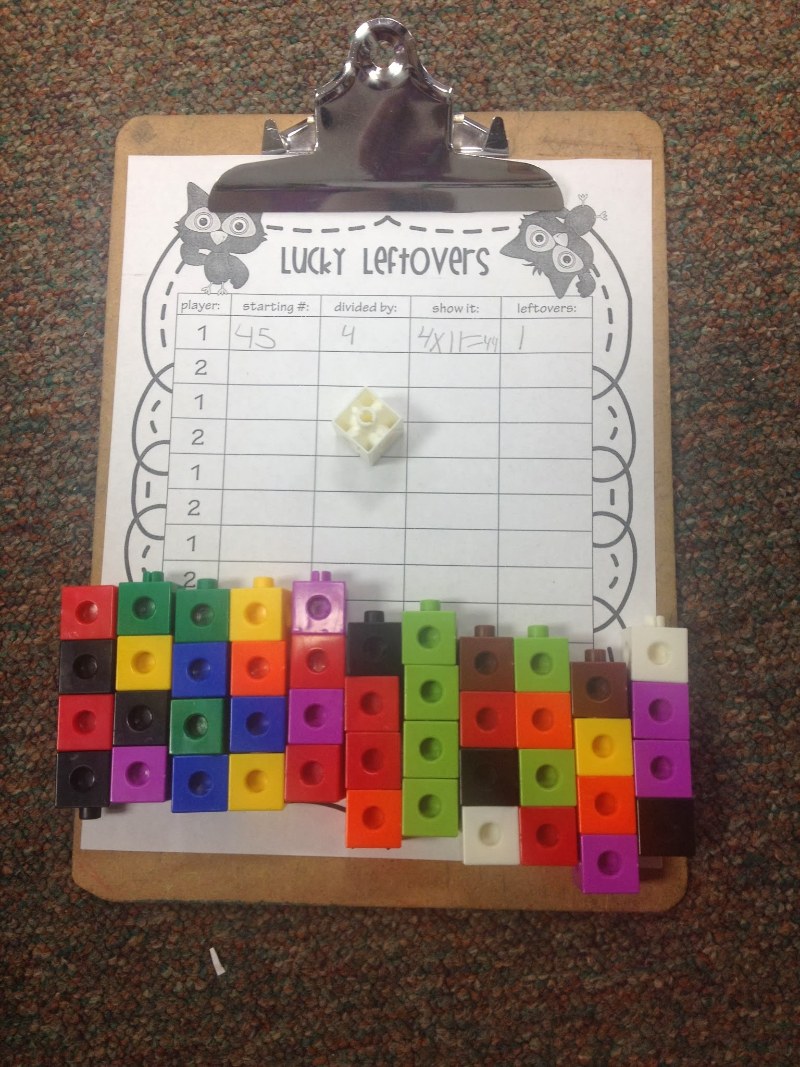
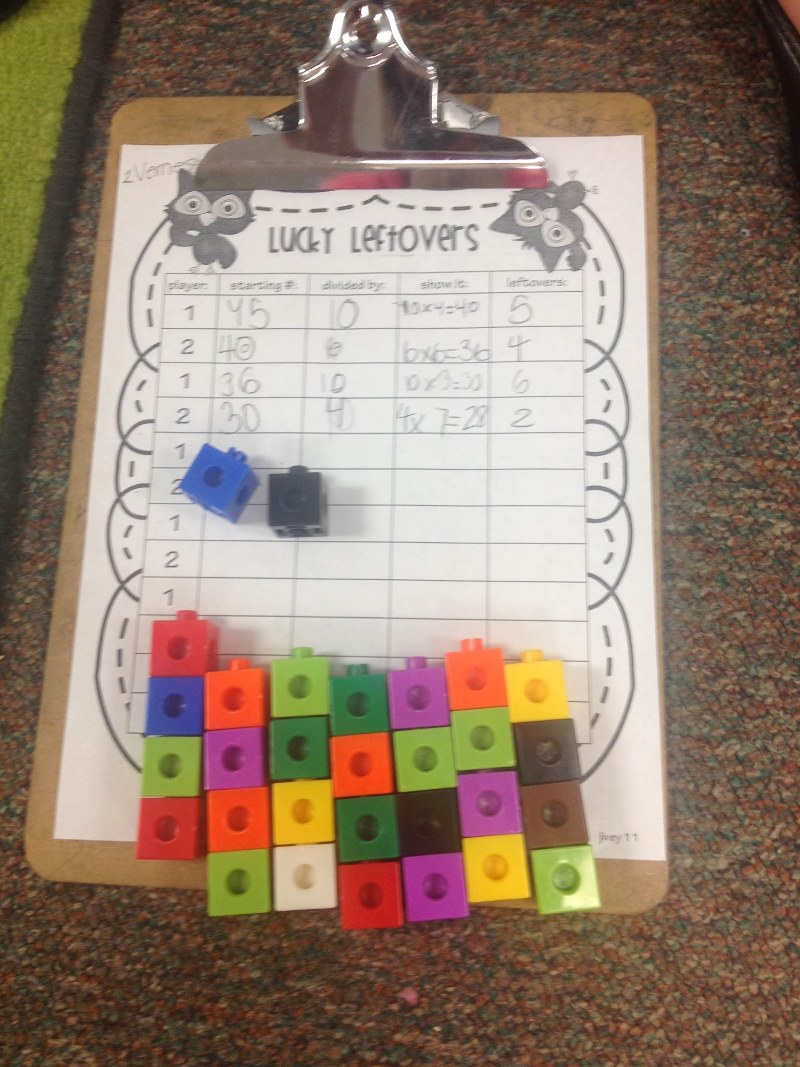
Make it concreteCubes let students see the leftovers, not just compute them.
Lucky Leftovers is one of the games in my 4th grade division unit, along with small group lessons, cooperative group lessons, organizers, and more activities for division and remainders.
When I introduced decimals, Make One Whole helped students understand that decimals are less than one whole and that hundredths are smaller than tenths.


In this game, I helped a student who wanted to use her 6 as six hundredths. We talked about how far she would still be from one whole if she did that, and she decided to make tenths instead, since she only had two turns left.

Another student made exactly one whole against her partner. I asked her if she rigged the die!

Make One Whole is one of the games in my 4th grade decimals unit, which is also part of my Fractions and Decimals Lessons Bundle.
Making Millions is a place value game my students loved. Players roll dice, arrange the digits to make a number, and try to make the greatest number they can over five rounds without going over a million.
You can differentiate it with the dice. Ten-sided dice make it harder, because students have to place the big numbers strategically. Six-sided dice make it easier.
My Launching Math Workshop guide has a version of Making Millions that only goes to 1,000.
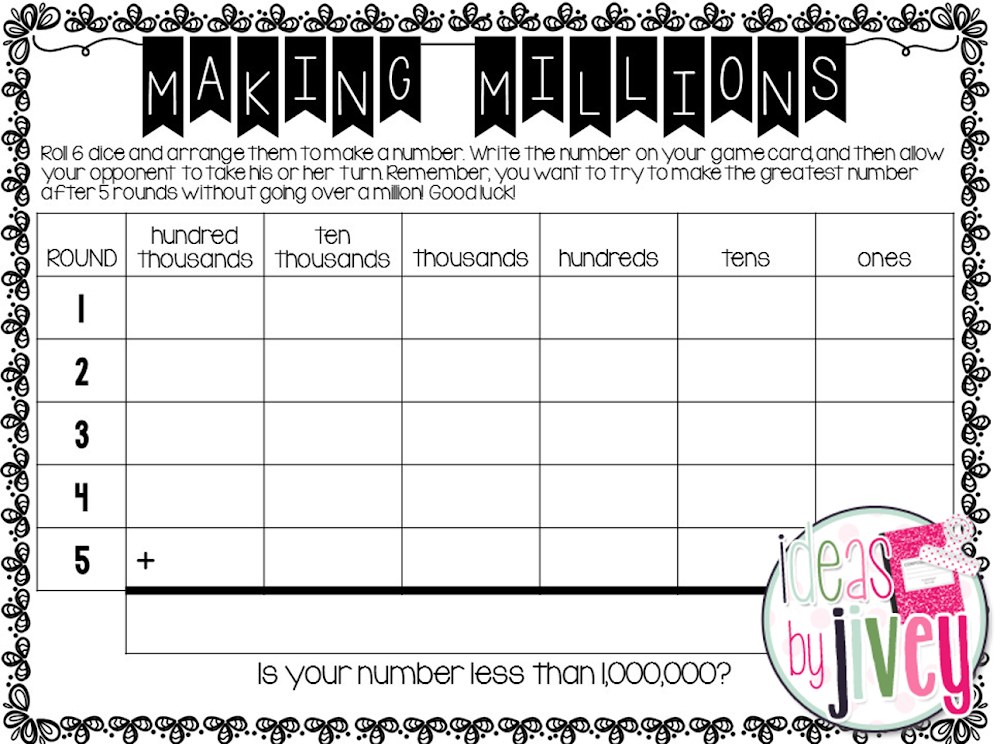
Free game
Making Millions place value game
A dice game for place value practice in math stations.
For complete lessons, see my 4th grade division and decimals units. For stations, my Division Differentiated Stations are open activities students can play all year.


