
Come On, Rain! by Karen Hesse covers a lot of ground in one book: reading, writing, grammar, vocabulary, and even a little science. Time is one of the biggest struggles teachers face, and integrating is one of the best ways to win some back. One or two lessons can hit several skills at once, and students get to practice real application. Here are the lessons and the free activity I used with this book.
This post contains affiliate links to books on Amazon. As an Amazon Associate, I earn from qualifying purchases, at no extra cost to you.
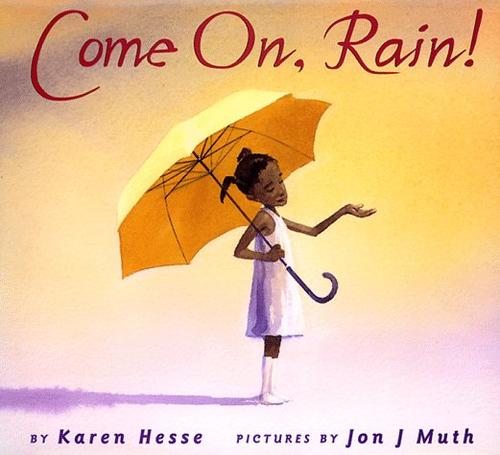
Come On, Rain! by Karen Hesse, illustrated by Jon J Muth
Get the book on AmazonFirst, I have to brag on the illustrations. They’re watercolor sensations! It’s easy to get stuck on comprehension of the text and forget about the pictures, but it’s important to “read” the pictures, too.
And I’d be remiss if I didn’t point out the BEAUTIFUL figurative language and imagery throughout the text. It’s a great book for teaching both, and for showing what writing in prose can sound like.

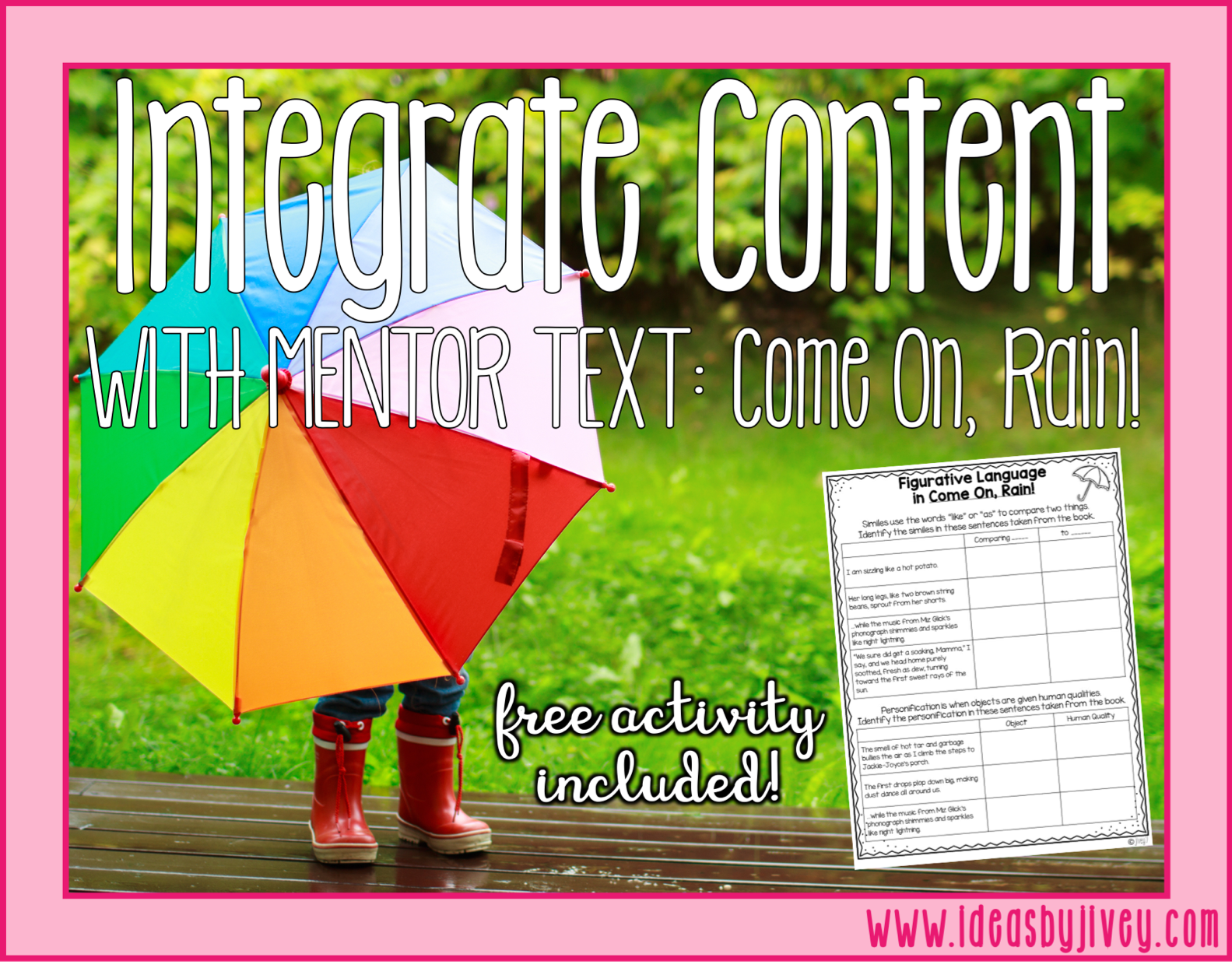
Free figurative language page for Come On, Rain!
Get the free pageCome On, Rain! is one of my favorite mentor texts for teaching word choice. A girl stuck in a hot, dried-out city begs for rain, and Karen Hesse describes those moments right before a storm, when the air cools, the wind picks up, and you can smell the rain coming. I used it in reading and writing for a whole week. For word choice, I focused on figurative language (the narrator is “sizzling like a hot potato”), awesome adjectives, and vivid verbs, like the way the smell of hot tar and garbage bullies the air.
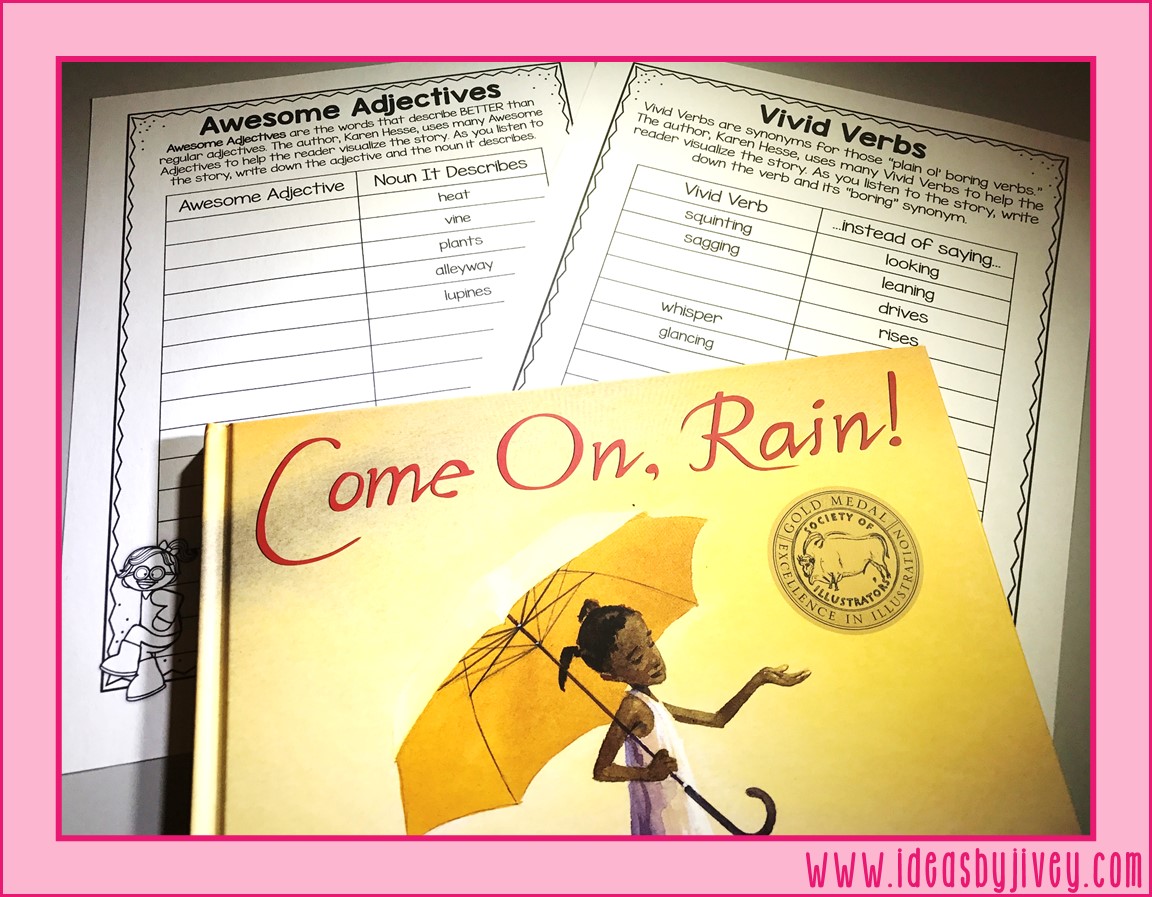
As you read, students “collect” the awesome adjectives and vivid verbs from the book. They end up with a list they can go back to later for their own writing.
If you teach weather, this is a great mentor text for a bit of science, even though it’s fiction! Karen Hesse gives clues that a rainstorm is coming, like the gray clouds rolling in and the wind picking up. You can also talk about the drought in the story.
Writing promptIf you teach fronts and forecasting, have students pretend to be the TV meteorologist forecasting Tessie and Mamma’s weather.
My students always had fun with that forecast prompt. For more of what we did during our weather unit, see my weather unit ideas.
When my class studied the water cycle and weather, I chose Come On, Rain! as our mentor text so reading and science could overlap. We were working on finding supporting evidence and using that evidence to draw conclusions.
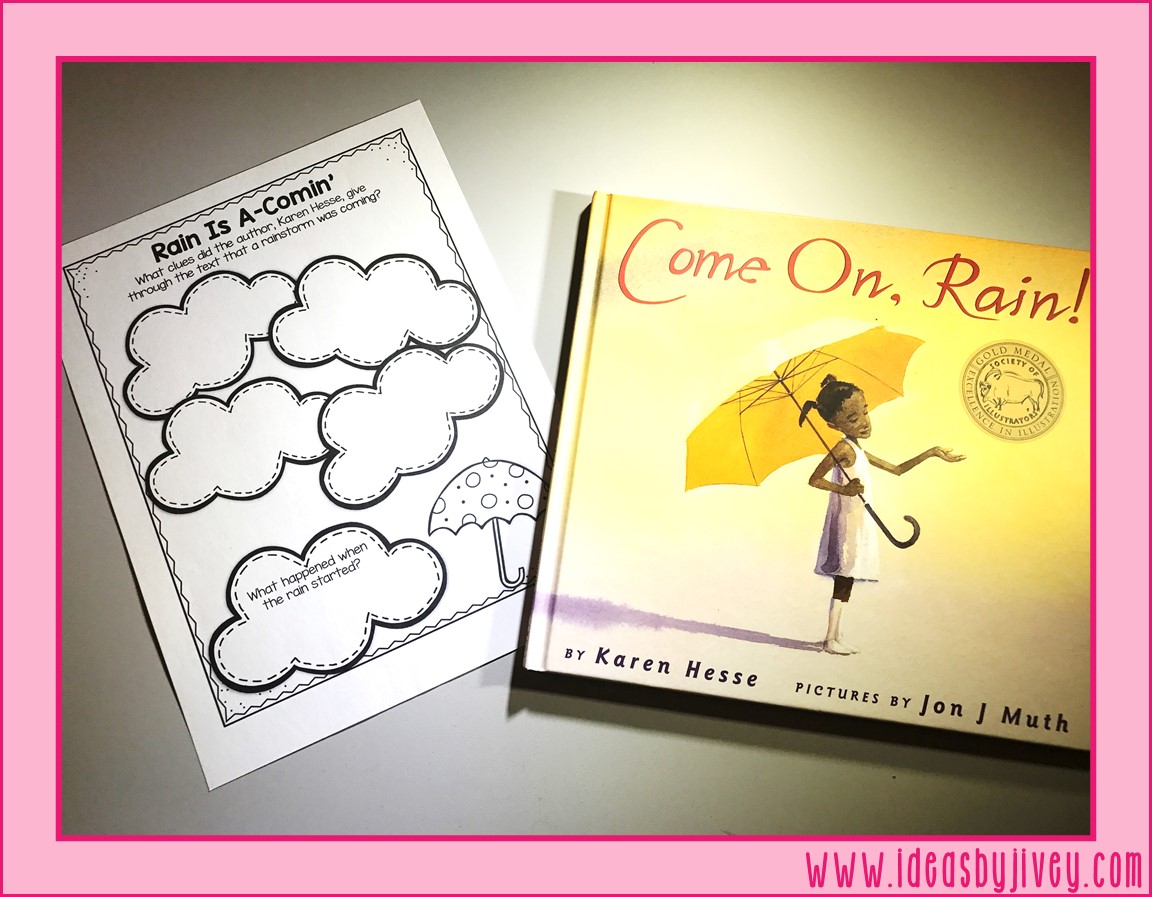
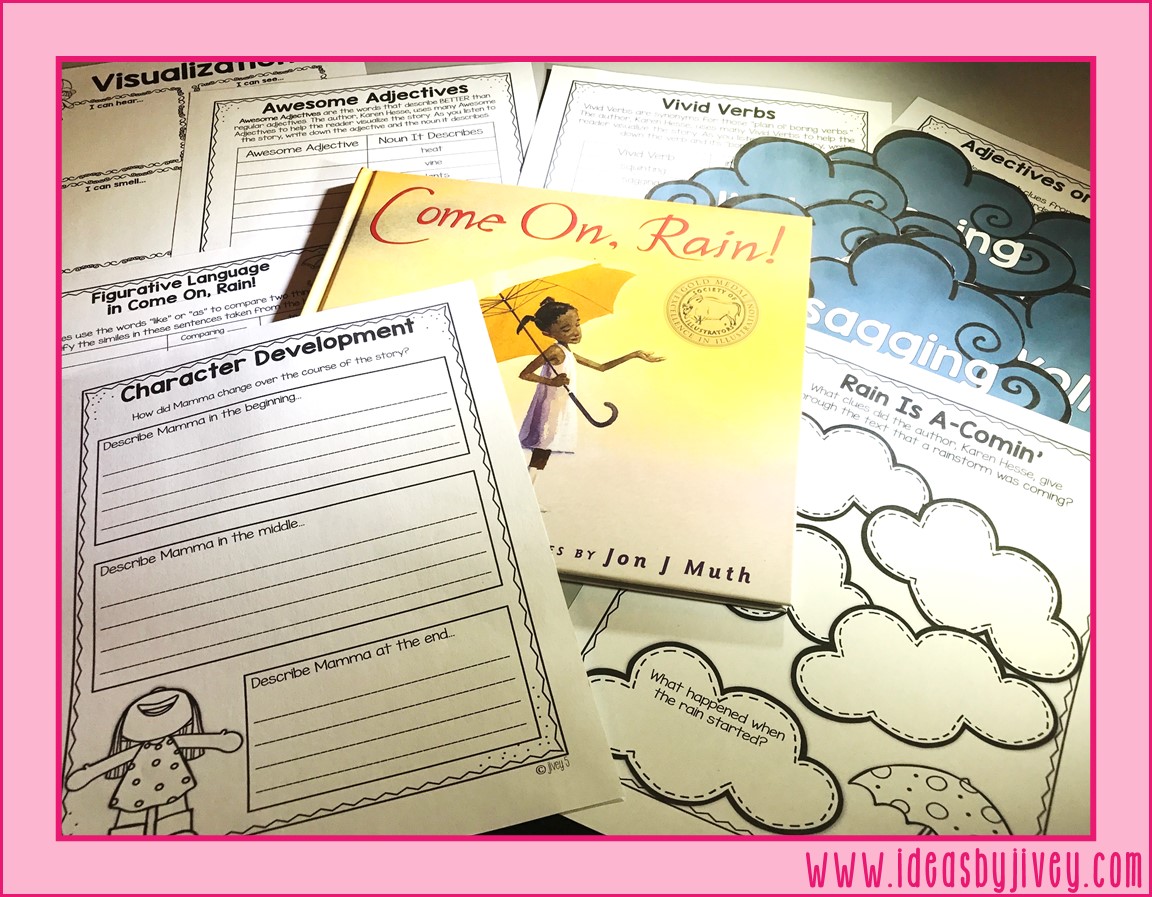
While I read the book aloud, students used the text evidence page from my Come On, Rain! activities to find evidence that rain was coming. Students wrote one clue from the text in each raindrop, like Tessie seeing gray clouds, Mamma smelling the rain, and the wind getting bolder.

Then make it their ownAfter the whole group lesson, students used the same skill in their own books and gave text evidence in their daily reading response.
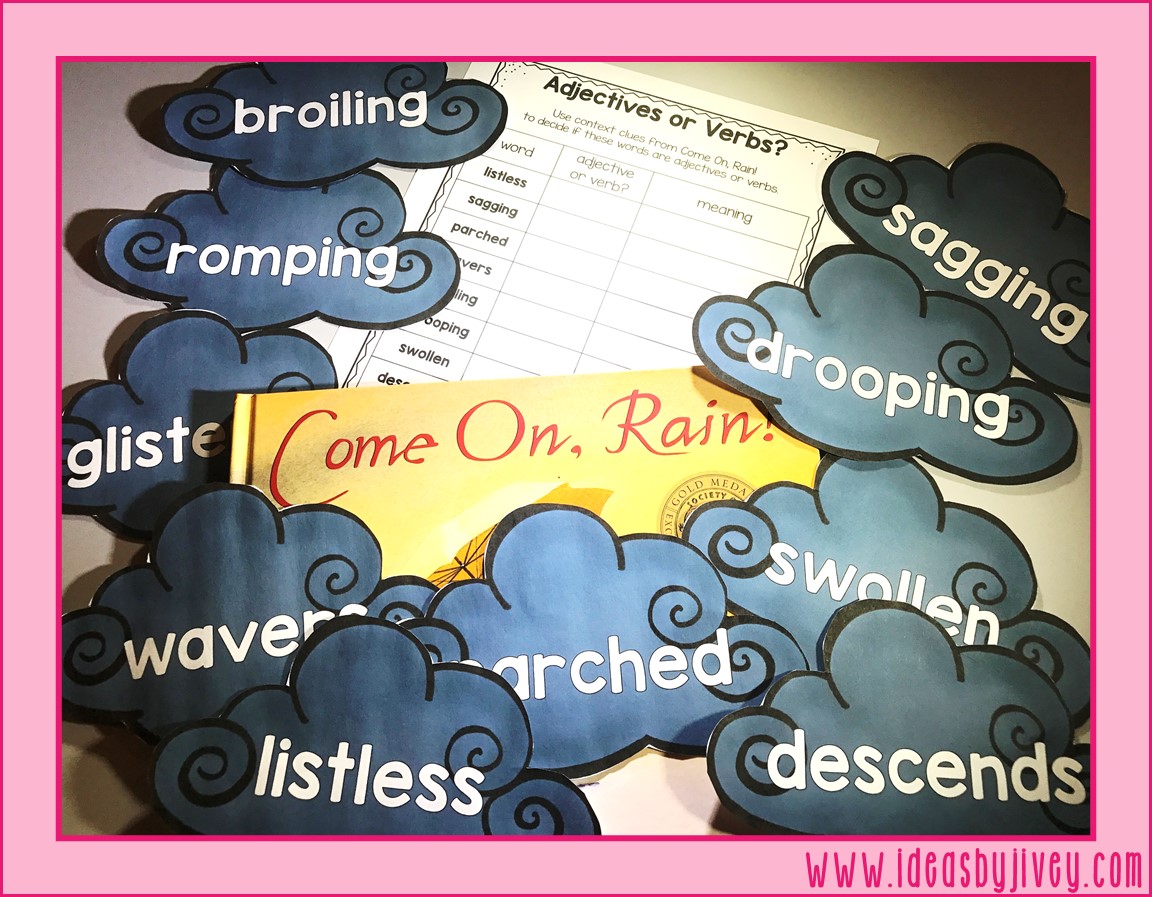
The book has fantastic vocabulary words that students can figure out through context clues. It’s also a great chance to look at each word’s part of speech, because some words that can be verbs are also adjectives. Talk about how you can tell which one a word is by how it’s used in the sentence.
Same word, two jobsDrooping is a verb in “the plants were drooping” and an adjective in “the drooping plants.”
For more on choosing and teaching words like these, see how to teach vocabulary in context.
This is definitely a “don’t miss” book. The print-and-go pages in this post are from my Come On, Rain! activities unit.
Choose the grade level you’d like to receive:

