
Nonfiction text features are the parts of a book or article that help readers find and understand information: headings, captions, bold print, the glossary, and more. Once students know what each one does, they can use a nonfiction text the way it was built to be used, instead of reading it front to back like a story. Here are the 10 features I taught, how I introduced them, and the magazine activity that sent students hunting for them on their own.
Text features are the tools an author or editor adds around the main text. Some help readers find information, like the table of contents, the index, and headings. Some explain words, like bold print and the glossary. Others show what the words can’t, like photographs, captions, diagrams, close-ups, and cut-aways.

Nonfiction text features anchor chart
Help readers find information
Explain important words
Show what the words can’t
I taught one feature at a time with a poster, then had students label the matching page in their own reference book. The book in my Nonfiction Text Features Activities has a dinosaur theme, so each page shows the feature in a short passage about dinosaurs, like a diagram of a Tyrannosaurus rex.
Quick pointTeach the features before students hunt for them, so they know what they’re looking for.
I kept bins of kids’ magazines in my classroom for nonfiction reading. Some came from subscription deals, and some were my much younger brother and sister’s magazines that my mom had saved. My students loved reading them.


Magazines aren’t leveled, so I paired students with their classroom book buddy, a lower reader with a higher reader, and they worked through the activity together.
Students picked a magazine and worked through the features in order:
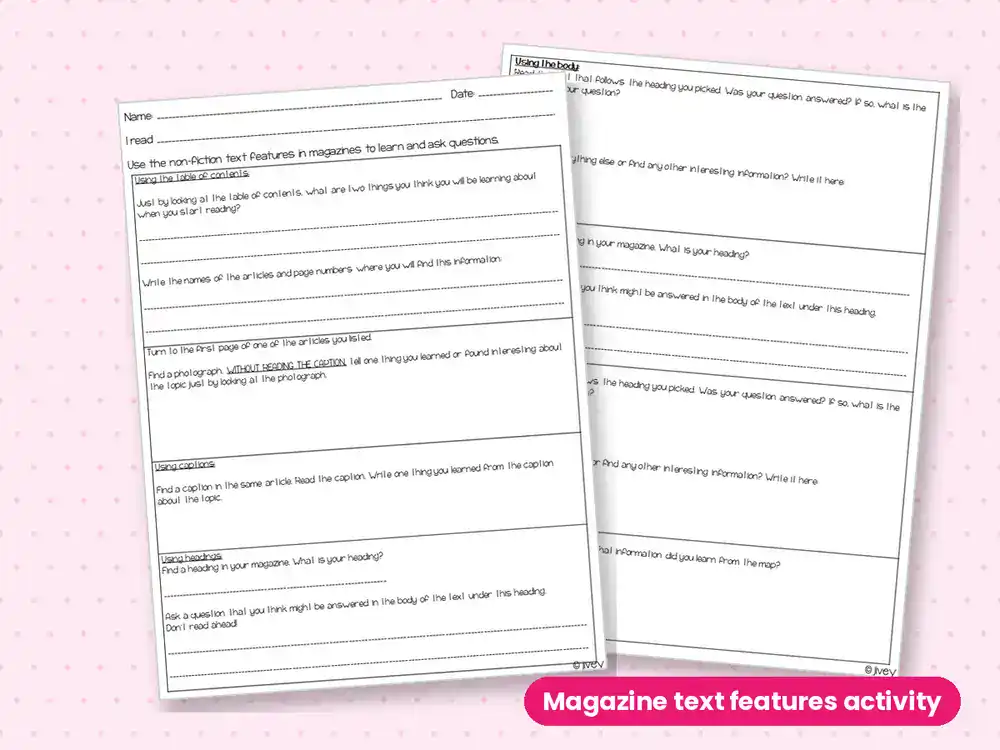


Everything I used here is in my Nonfiction Text Features Activities for grades 2-4: matching posters, the dinosaur reference book, and search-and-find activities for a magazine and a nonfiction book.

