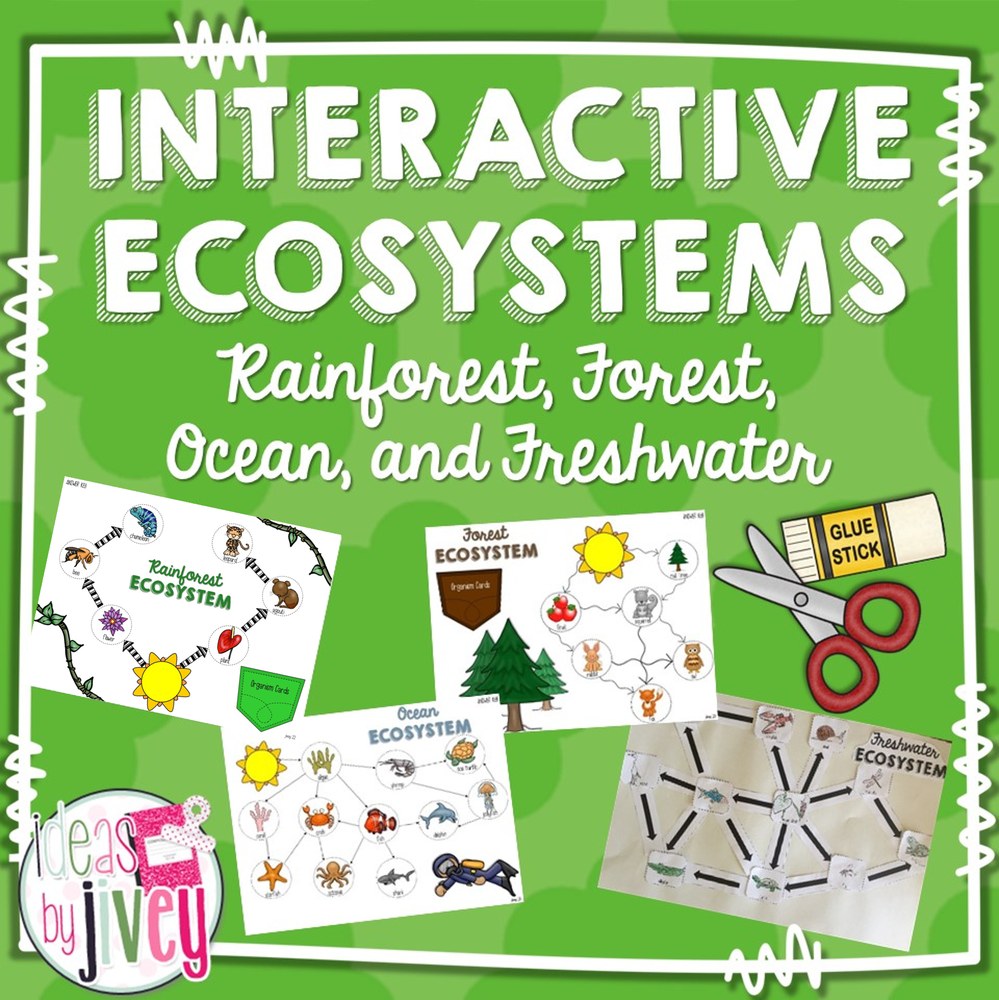
Food chains and food webs click for students when they build them with their own hands. When I taught ecosystems, my students read about four ecosystems, built food webs with partners, drew their own arrows, created food webs of their own, and finished by dissecting owl pellets. Here’s how to teach what the arrows mean, plus the hands-on activities that made energy flow stick.
This post contains affiliate links to books on Amazon. As an Amazon Associate, I earn from qualifying purchases, at no extra cost to you.
A food chain shows one path energy takes through an ecosystem, from a producer to the consumers that eat it. A food web connects many food chains, because most animals eat more than one thing and are eaten by more than one thing.
Quick pointA food chain is one path. A food web shows all the paths at once.
The arrows show the flow of energy. Each arrow points from the organism being eaten to the organism that eats it, because that’s the direction the energy moves.
This is where students get tripped up. They think “the owl eats the mouse,” so they draw the arrow from the owl to the mouse. In a food chain, the arrow goes the other way: mouse → owl, because the mouse’s energy moves into the owl.
Arrow ruleThe arrow points to the eater. Energy moves from the food to the one eating it.
Give students a sentence frame to say before they draw every arrow: “The ___ gives energy to the ___.” If the sentence sounds wrong out loud, the arrow is backward.
Many of my students didn’t have much background knowledge about what animals eat, other than the ones that live in our own ecosystem. So before they built anything, they read short passages about each ecosystem and the animals that live there.
Students worked with partners and in groups, so they had to use evidence from the passages to prove their thinking to each other. Their conversations were really awesome!
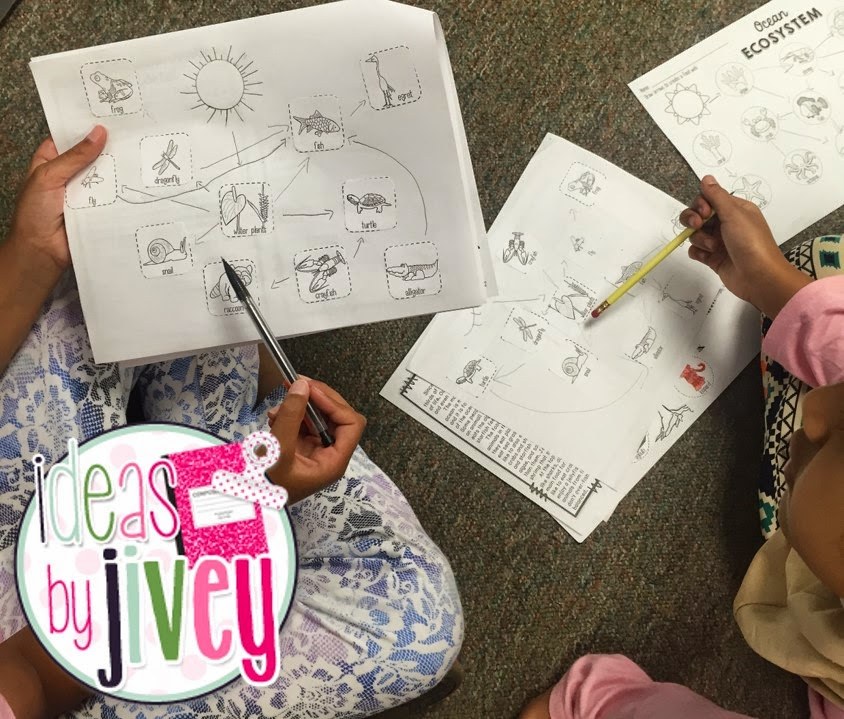
The last activity has students figure out where to place each organism to build a food web.
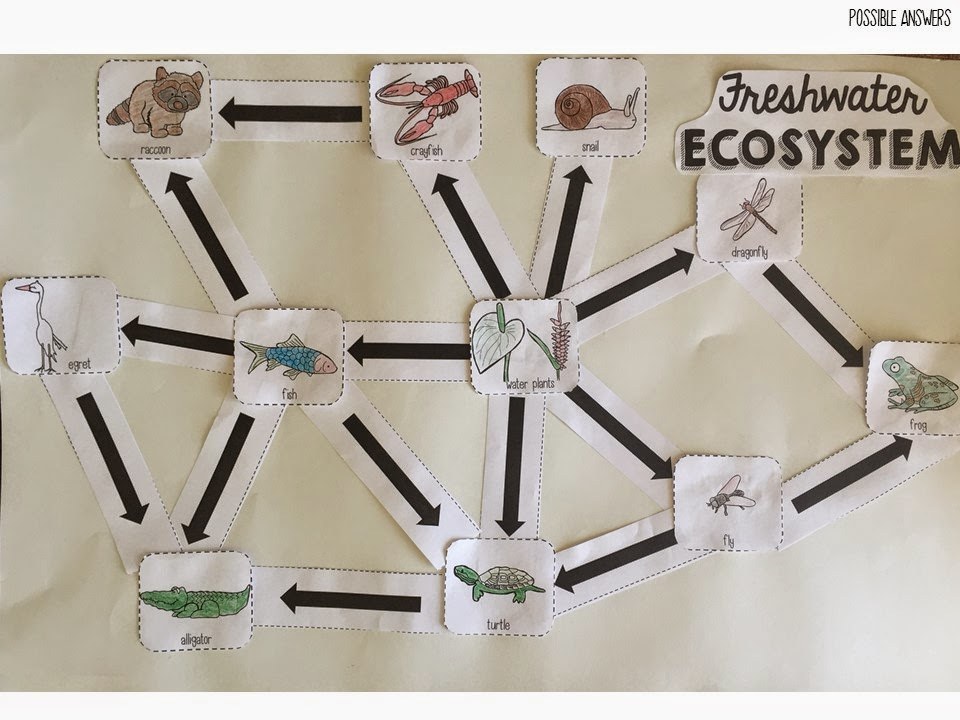
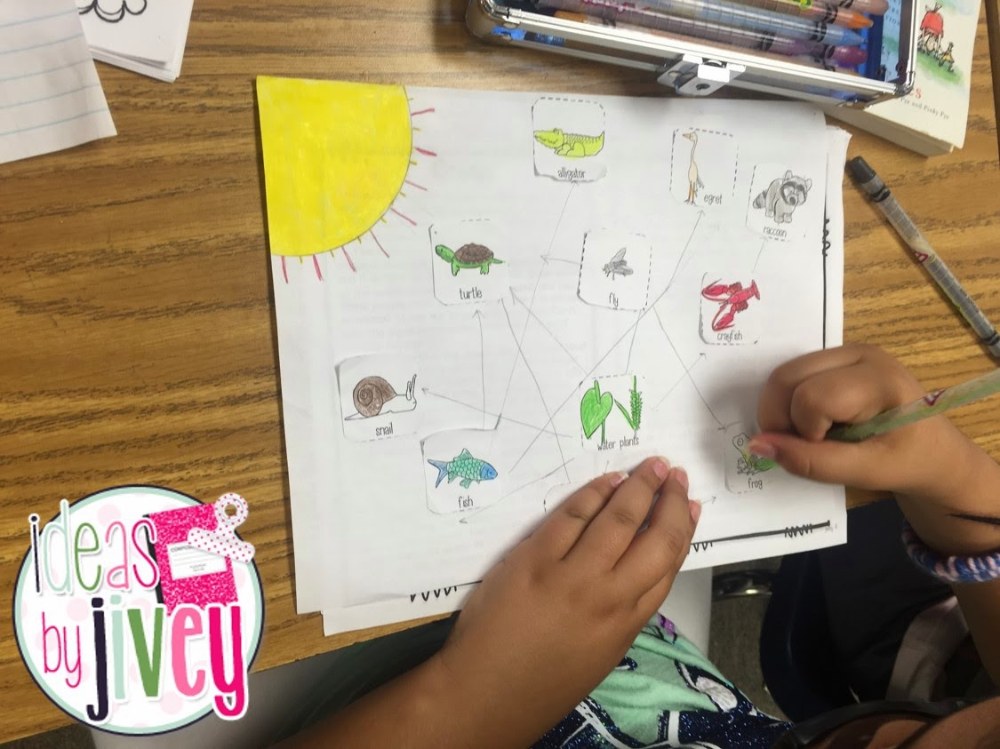
For the freshwater ecosystem, I printed two sets of organisms on one sheet of copy paper and didn’t give students the paper arrows. They drew their own arrows instead of trying to fit cut-out arrows between the animals, which also meant they had to decide the direction of every single arrow.
These activities are from my Food Chain and Food Web Activities, which cover the rainforest, forest, ocean, and freshwater ecosystems. Each comes as black and white student pages, color versions for stations, and Google Slides.
To wrap up the unit, students created their own food webs. Starting with the sun and the producers helped them place the arrows so energy flowed from the bottom of the web up to the top consumers.
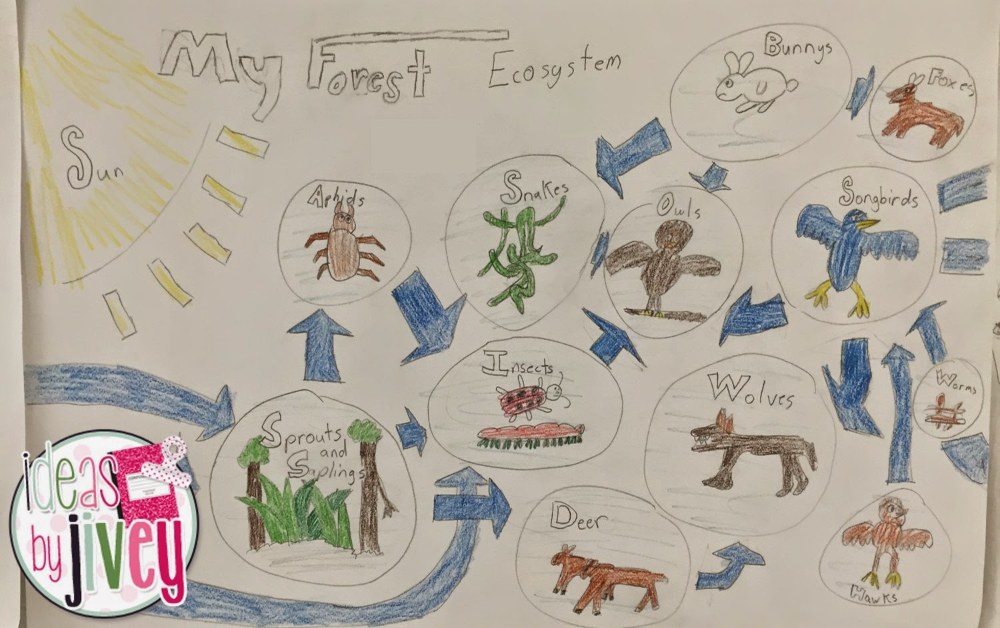
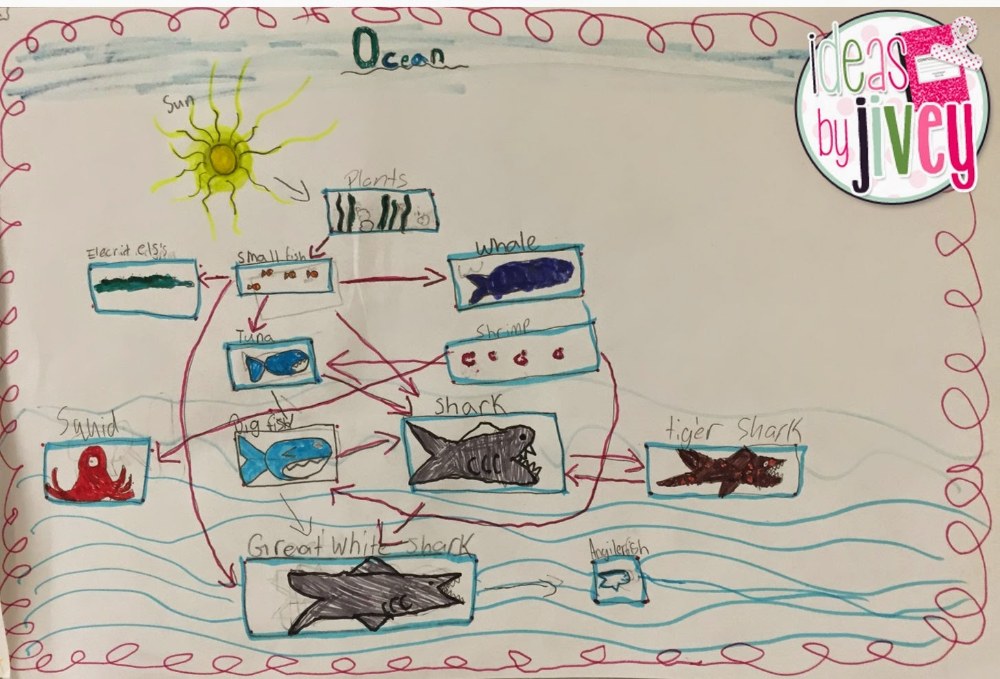
Check the arrowsBefore students color, have them trace each arrow and say the sentence frame.
Then we got our hands a little dirty! Dissecting owl pellets was a favorite every year. Even the students who said it was gross and didn’t want to touch it ended up the most excited, especially once they learned a pellet is not poop.
An owl swallows its prey whole, then coughs up the fur and bones it can’t digest as a pellet. Every bone inside is evidence of what the owl ate, which makes a pellet a food chain students can actually hold.
We spent a week learning about owls with nonfiction texts and websites. Students learned important vocabulary, how owls are different from other birds, and how owls hunt, eat, and digest their food. We read Owls by Gail Gibbons for this part.
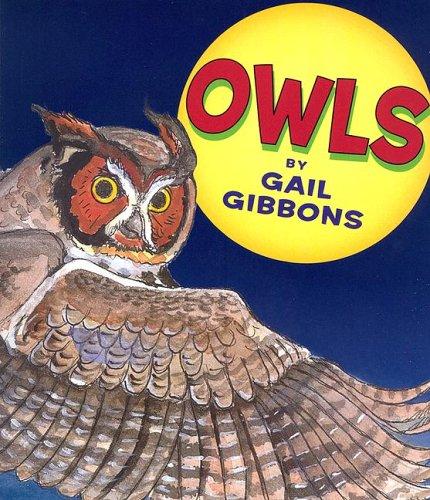
Owls by Gail Gibbons
Get the book on Amazon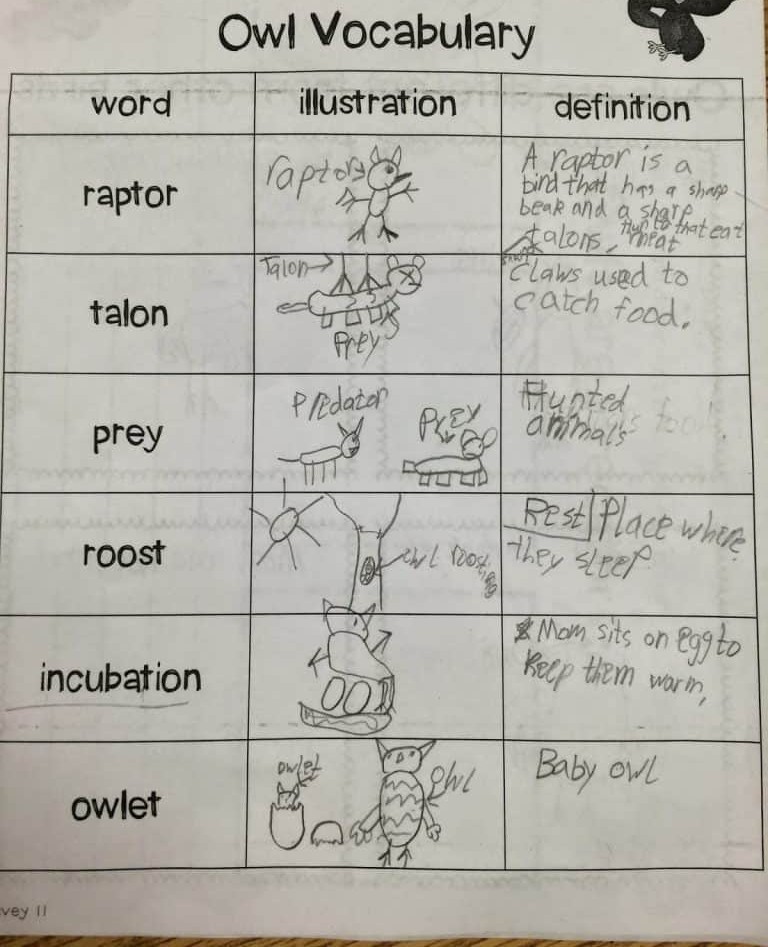


If you want to practice first, KidWings has a virtual owl pellet students can take apart on screen.
The first time I did this, students wore lab coats in our science lab and said they felt like real scientists. The company we ordered the pellets from sent an informational book with drawings of the skeletons of animals owls might eat. I copied those pages so students could figure out what their owl had eaten.
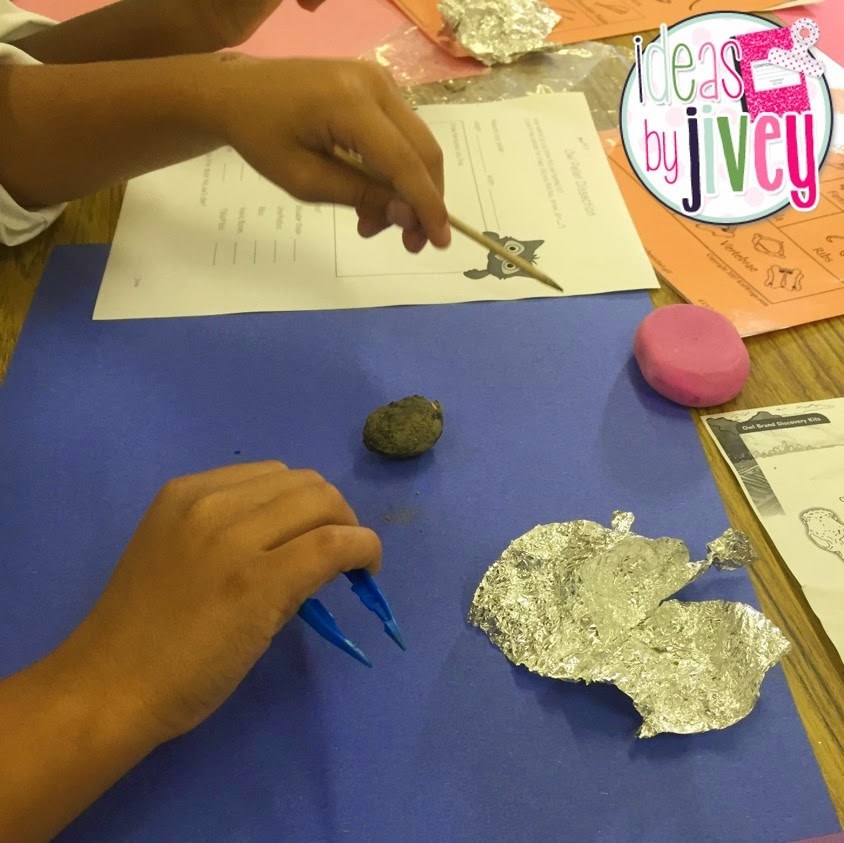
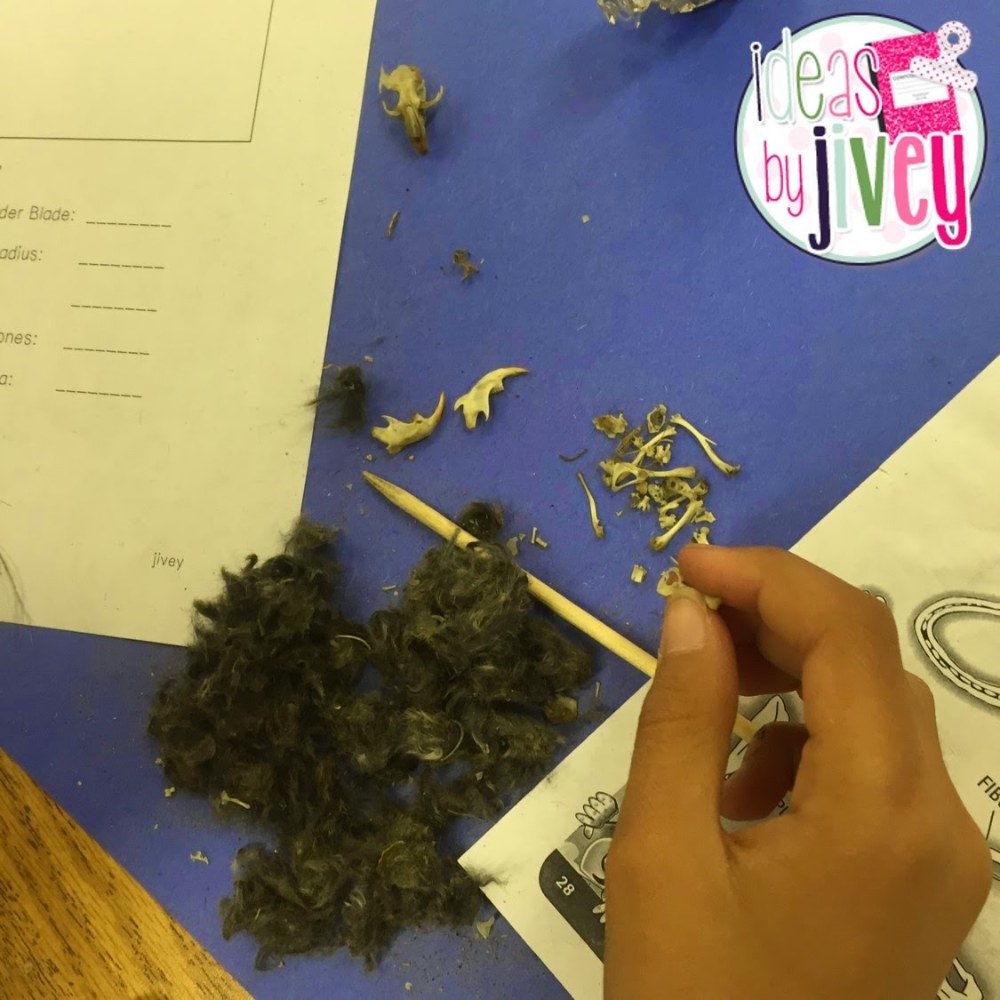
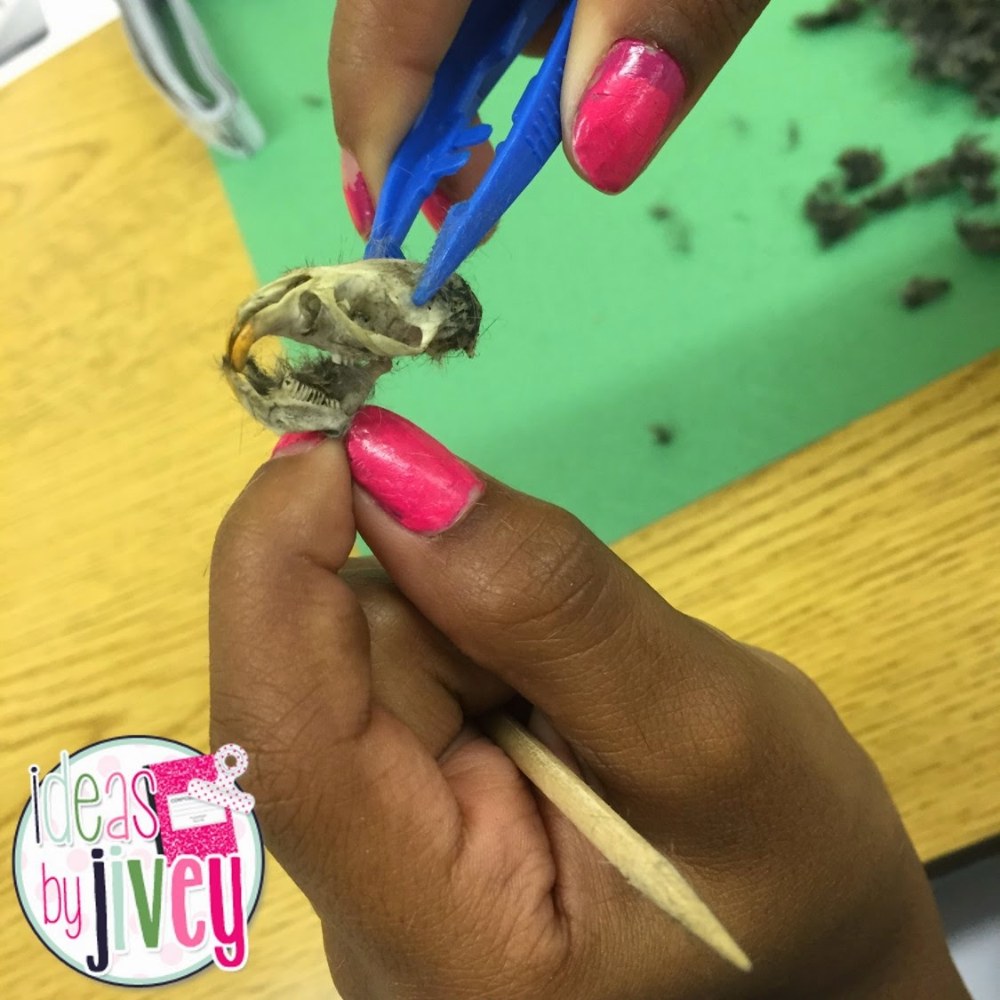


My favorite prankBefore handing out pellets, I “demonstrated” with a smooshed brownie wrapped in foil, sniffed it, and took a bite. The room went silent! Then I told them it was a brownie and NOT to eat their pellet.
After the dissection, have students turn their findings into a food chain. If they found a vole or mouse skull, the chain might be sun → seeds → mouse → owl. Students draw it, say the sentence frame for each arrow, and then add the owl to the food web they built earlier.
For owl reading passages to go with your dissection, my Bats, Owls, and Spiders Reading Passages are paired texts for grades 4-6.