My reading block in upper elementary was never as long as I wanted it to be, so every minute had a job. It had three parts: a whole-group lesson with a shared picture book or chapter book, small groups based on the skills students needed, and independent reading with short stations while I met with those groups. It’s what many of us used to call reading workshop. This is how I set it up.
This post contains affiliate links to books on Amazon. As an Amazon Associate, I earn from qualifying purchases, at no extra cost to you.
A reading block is the time in the school day set aside for reading instruction. In upper elementary, it usually includes a whole-group lesson, small-group instruction, and time for students to read and practice on their own. Some schools give one long stretch for reading and writing together. Mine was split: one year, I had 55 minutes for reading before lunch and an hour and 5 minutes for writing and grammar after lunch. You can see how the whole day fit together in my ELA schedule post.
Most reading blocks open with the whole-group lesson. When I had about an hour and every student was in the room, mine looked like this:
One year, a few students left for services right at the start of my reading block, so I flipped it:
My fourth graders were expected to read independently for at least 30 minutes, so my block ended up close to half independent work and half instruction. That split is also what let me get to a small group and confer with students in the same day. Your schedule might look different, and that’s OK. Use the time you have for what matters most.
I loved my picture book weeks. I read one picture book over a few days and taught a different skill with it each day. Other weeks, we read a chapter book together, a chapter a day, with a skill for each chapter.
I chose my picture books to match our science and social studies units whenever I could. While we were studying weather in science, we were working on finding supporting evidence and using it to draw conclusions during reading time.
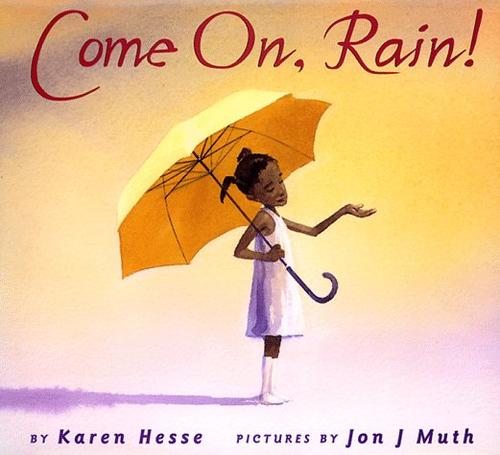
Come On, Rain! by Karen Hesse, illustrated by Jon J Muth
Get the book on AmazonOn Monday, I read Come On, Rain!, and students found the clues Karen Hesse gave that rain was coming.

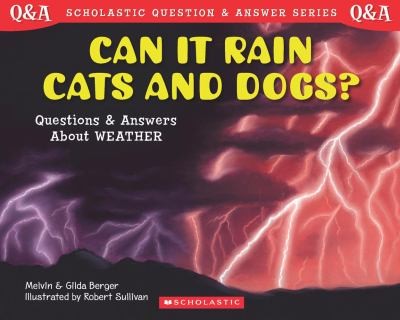
Can It Rain Cats and Dogs? Questions and Answers About Weather by Melvin and Gilda Berger
Get the book on AmazonOn Tuesday, I read just one page from Can It Rain Cats and Dogs?, and students answered “Why do clouds have different shapes and colors?” with evidence from the text. That gave us the same skill with fiction and nonfiction. After each lesson, students used the skill in their own books and gave evidence from the text in their reading response for the day.
For more ways I used this book in reading, writing, and vocabulary, see my Come On, Rain! integrated lesson ideas.
Planning around one picture book also cut my planning time, because the same book carried several skills. Read more in how I used mentor texts to save planning time, see the rest of this unit in my weather unit ideas, and find out why picture books are complex enough for upper elementary.
I pulled two small groups a day, about 15 minutes each (and we all know how hard it is to stop at exactly 15). I grouped students by the skill or strategy they needed, so the groups changed often.
To keep track, I used a file folder and mini sticky notes. Each student had a sticky note with their name, and I lined the notes up in columns by group. When a student was ready for something new, I just moved the sticky note, with no chart to rewrite or reprint.
In the upper grades, I didn’t script a lesson plan for every group. I used chapter books I knew well, so I knew the teachable moments ahead of time, and I took notes on labels I could stick in each student’s folder later. I share those labels in my independent reading post.
While I met with groups, students read independently or completed one 10-minute station. They chose whether to read first or do the station first, which gave them ownership over their time. All four stations had to be done by the end of the week, which left a little extra reading time one day.


Independent reading had its own routines: book nooks, sticky note thinking, weekly reading responses, and reading conferences. I share all of them in my independent reading post.
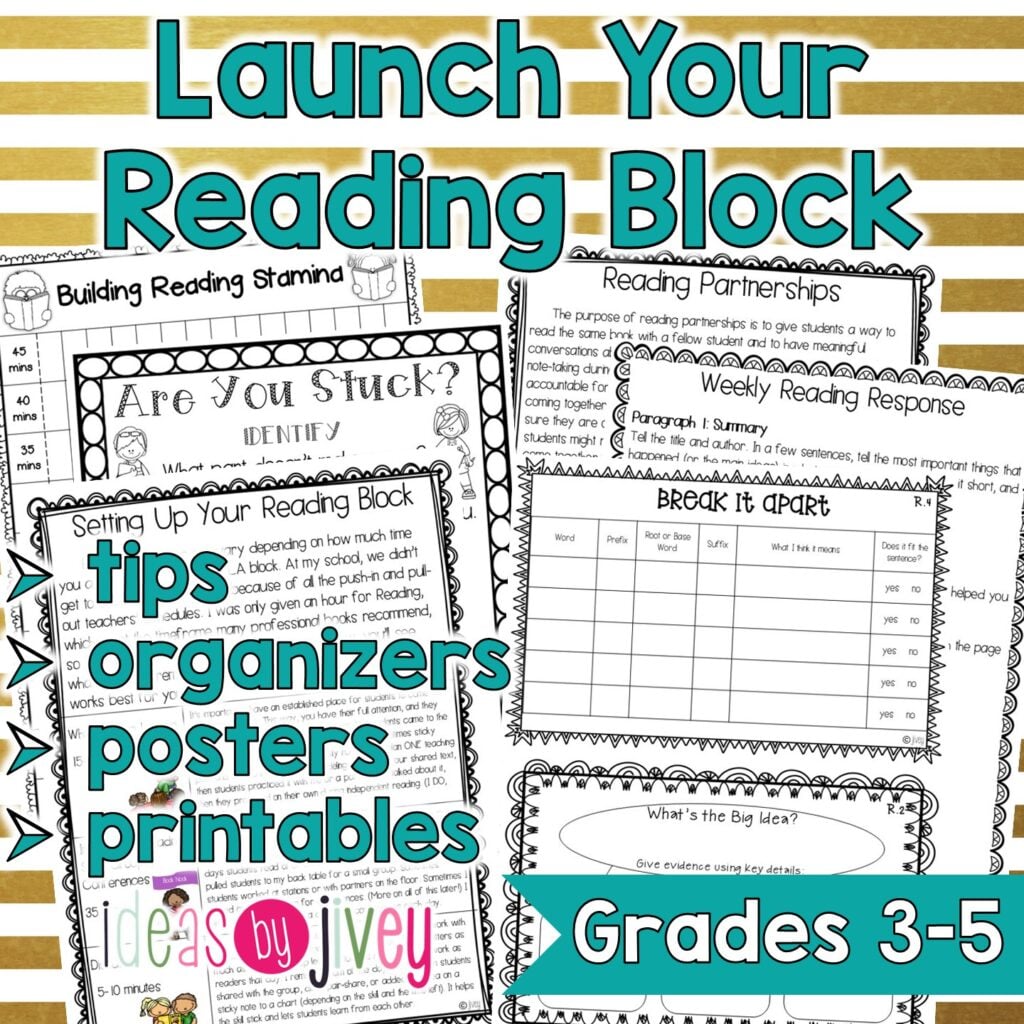
My Launching Your Reading Block in Grades 3-5 resource has both sample schedules, 11 launch lessons for the first three weeks, small group plans, station pages, and the printables I used for every part of my reading block.